 Save
Save There's something about the smell of ginger and sesame that takes me back to a crowded night market in Bangkok, watching vendors toss salads in massive woks with such ease. I came home determined to recreate that energy, and this spicy carrot salad became my shortcut to those flavors. The first time I made it, I stood at my kitchen counter shredding carrots furiously, worried I'd overdone the chili garlic sauce—but when I tasted it, my eyes lit up. It's been my go-to ever since for those moments when I need something bright, crunchy, and alive on the plate.
I made this for a potluck once and watched my friend take one bite, then immediately ask for the recipe while nodding silently. That's when I knew it was a keeper—not because it's fancy, but because it sneaks up on you with genuine flavor. The crunch of fresh carrots against that silky sesame oil is the kind of simple joy that makes eating feel intentional.
Ingredients
- Carrots: Use fresh ones with a bit of heft—they should shred into delicate strands, not turn to mush, so a box grater or mandoline works better than you'd think.
- Spring onions: The white and light green parts give you a gentle onion bite without overwhelming the dish.
- Fresh cilantro: Optional, but it adds an herbaceous brightness that makes the whole thing feel less like a side and more like an event.
- Soy sauce: Go for tamari if gluten is a concern, and don't skimp—it's the backbone of the dressing.
- Toasted sesame oil: Never cook with this, only drizzle it in at the end; the heat brings out its deepest, nuttiest notes.
- Rice vinegar: Its gentleness keeps the dressing balanced, not aggressively sour like some vinegars can be.
- Honey or maple syrup: A tiny touch to round out the sharp edges and let the spice sing.
- Chili garlic sauce or sriracha: Start with one teaspoon and taste as you go—heat is personal.
- Fresh ginger and garlic: Freshly grated or minced, they add life that bottled versions simply can't.
- Sesame seeds: They add a toasted crunch and visual interest that makes plating feel effortless.
- Roasted peanuts or cashews: Optional, but the textural contrast between soft carrots and crunchy nuts is where the magic happens.
Tired of Takeout? 🥡
Get 10 meals you can make faster than delivery arrives. Seriously.
One email. No spam. Unsubscribe anytime.
Instructions
- Prep your vegetables:
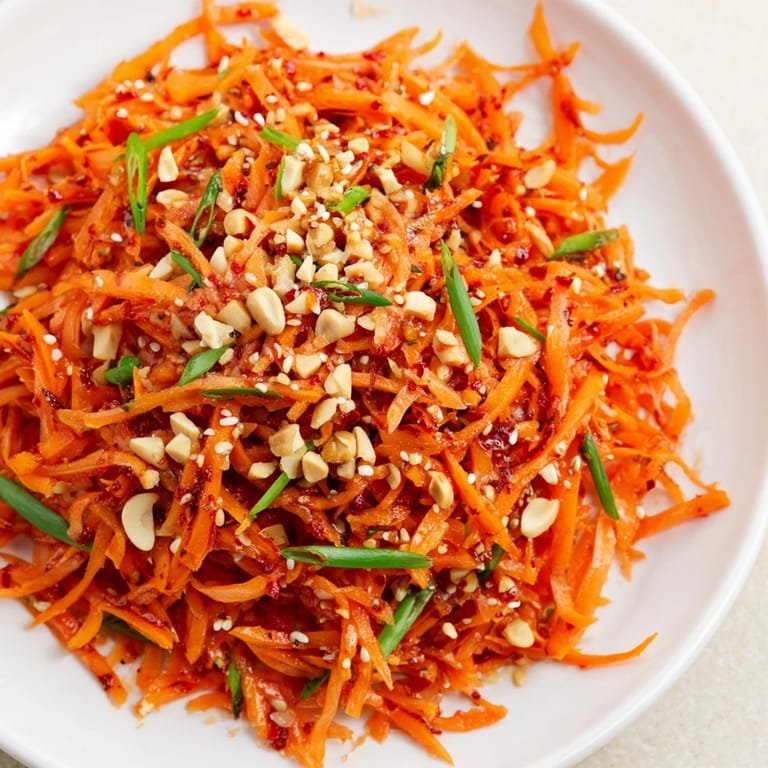
- Peel your carrots and shred them into a large bowl—they should be a tangle of thin strands, not thick chunks. Slice your spring onions thinly and chop your cilantro if you're using it.
- Build the dressing:
- In a small bowl, whisk together your soy sauce, sesame oil, rice vinegar, and honey until the honey dissolves. Add your ginger, garlic, and chili sauce, whisking until it feels cohesive—you want no streaks of oil on the surface.
- Dress and toss:
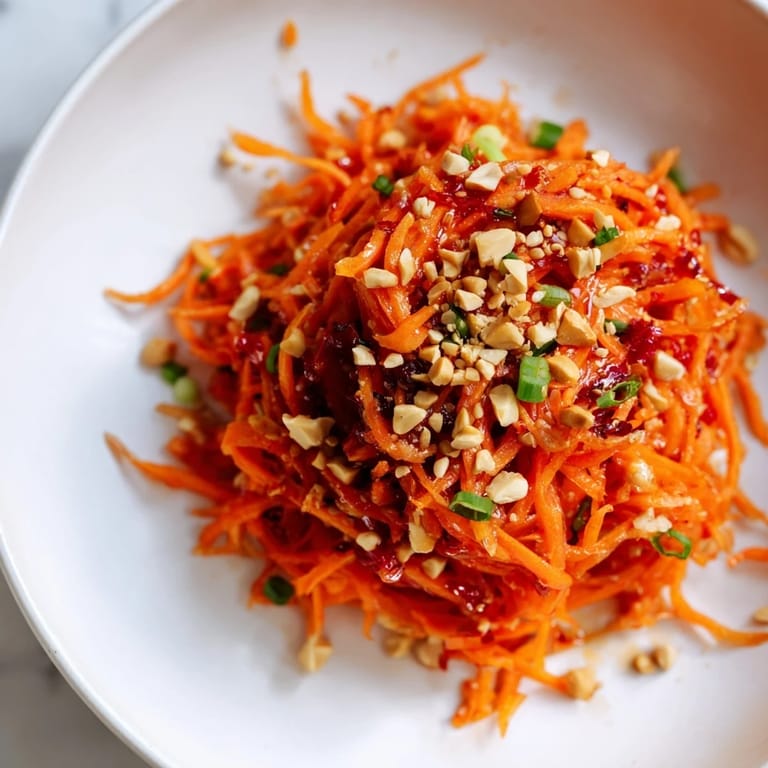
- Pour that dressing over your waiting carrots and spring onions, then toss with intention until every strand glistens. The dressing should coat everything evenly with no puddles at the bottom.
- Taste and adjust:
- Take a bite and let your instincts guide you—need more heat, add a bit more chili sauce; need more tang, a splash more vinegar. This is the moment to make it yours.
- Garnish and serve:
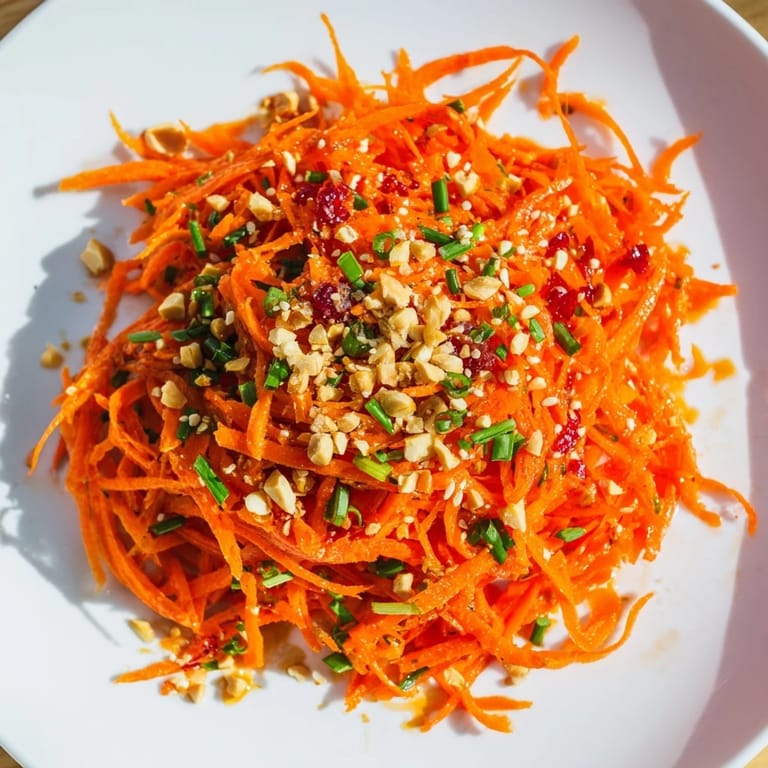
- Sprinkle your roasted nuts and extra sesame seeds on top just before serving so they stay crispy. If you have time, let it sit in the fridge for 10–15 minutes to let the flavors settle into each other.
 Save
Save My neighbor once asked if I was opening a restaurant after smelling this cooking, and I realized then that a salad this alive deserves to be treated with respect. It's the kind of dish that reminds you why eating well doesn't have to be complicated or time-consuming.
The Magic of Balance
This salad works because it doesn't let any single flavor dominate—the spice plays off the tang, the sesame oil softens the soy sauce, and the sweetness from the honey ties everything together in a bow. I've learned that Asian dressings are all about this conversation between opposing forces, each one making the others taste more like themselves. Once you understand that, you stop following recipes and start creating them.
Why Carrots Shine Here
Carrots are often overlooked as humble background players, but when you shred them and dress them properly, they become something else entirely. Their natural sweetness meets the spicy dressing with gratitude, and their crisp texture holds up beautifully even if the salad sits for a day. I've tried this with other vegetables, but carrots are the main character here—everything else is just supporting cast.
Serving and Pairing
This salad lives best alongside grilled proteins—chicken, tofu, fish—where it cuts through richness and brings everything into focus. It's also stunning as a side at a potluck or scattered on a bed of greens if you want to stretch it further. The beauty is its flexibility; it works as a light lunch on its own or as the opening note of a larger meal.
- Serve immediately for maximum crunch, or let it chill for flavors that have mellowed into harmony.
- Double the dressing recipe if you like things saucier, or make extra to dress other vegetables throughout the week.
- Store leftovers in an airtight container for up to 24 hours, though the texture softens slightly as it sits.
 Save
Save This salad has become my answer to the question of what to bring when someone asks you to bring something. It's reliable, delicious, and tastes like you cared enough to make it from scratch.
Recipe FAQ
- → What ingredients give the dish its spicy flavor?
The heat comes from chili garlic sauce or sriracha combined with fresh ginger and garlic, creating a balanced spicy kick.
- → Can I make this dish gluten-free?
Yes, by using tamari instead of soy sauce, this dish can be made gluten-free without sacrificing flavor.
- → What are some good garnishes for this dish?
Chopped roasted peanuts or cashews and extra sesame seeds add crunch and nutty depth as garnishes.
- → How long does this dish keep in the refrigerator?
It stays fresh for up to 24 hours when stored in an airtight container, allowing flavors to meld nicely.
- → Can I add other vegetables to this salad?
Yes, thinly sliced bell peppers or cucumber can be added for extra crunch and freshness.