 Save
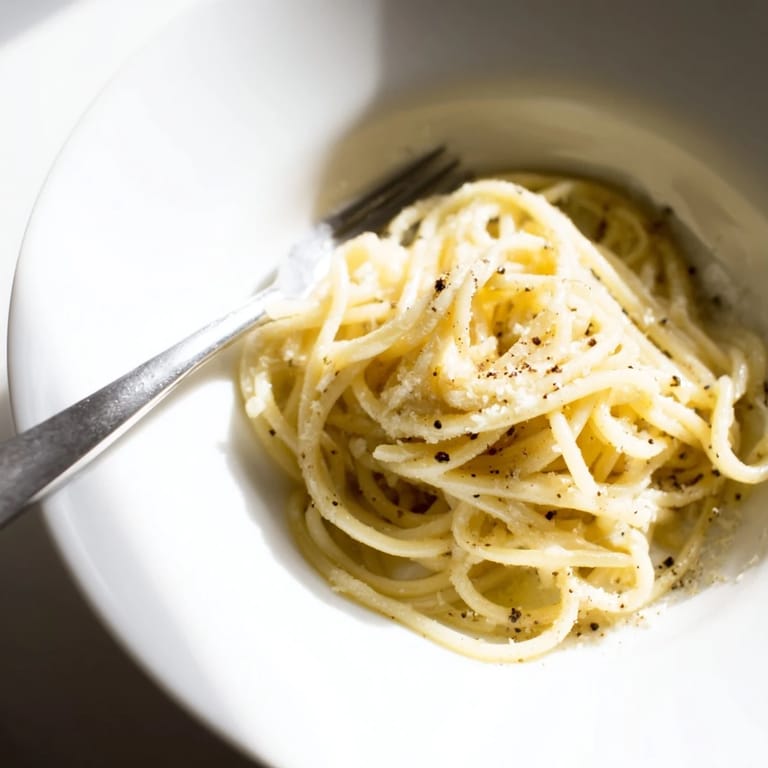
Save A friend once told me that cacio e pepe is where Roman cooks prove themselves, and I laughed until I tried making it myself. The cheese seized into grainy clumps, the pasta sat there naked and sad, and I realized those three ingredients were holding up a mirror. Now it's the dish I make when I need to feel grounded, when I want something honest that doesn't hide behind sauces or extras. There's a quiet thrill in watching that starchy water and cheese become silk in your hands.
I made this for my neighbor after she had surgery, and she called me two days later asking for the recipe. She'd never believed that restaurant-quality pasta could come from her own stove, and I heard her voice crack a little when she said it tasted like care. That's when I understood why this dish has survived centuries. It doesn't need complexity to carry love from one person to another.
Ingredients
- Spaghetti (400 g): The long strands hold the creamy cheese in every twirl, and cooking it just shy of done lets it finish in the pan where the magic happens.
- Pecorino Romano cheese (120 g, finely grated): This is the soul of the dish, salty and sharp, and grating it yourself makes all the difference because pre-grated cheese has coatings that prevent it from melting smoothly.
- Freshly cracked black pepper (2 tsp, plus extra): Toasting it wakes up oils you didn't know were there, turning simple pepper into something almost sweet and woody.
- Salt: For the pasta water, which becomes the secret ingredient that marries cheese and pepper into a sauce.
Tired of Takeout? 🥡
Get 10 meals you can make faster than delivery arrives. Seriously.
One email. No spam. Unsubscribe anytime.
Instructions
- Boil the Pasta:
- Bring a large pot of salted water to a rolling boil and cook the spaghetti until it still has a slight bite, about a minute less than the package says. Scoop out a full cup of that cloudy, starchy water before you drain anything, it's liquid gold.
- Toast the Pepper:
- While the pasta bubbles, add the black pepper to a large dry skillet over low heat and let it sizzle for a minute or two until your kitchen smells like a Roman trattoria. Don't rush this, the heat coaxes out flavors that raw pepper keeps hidden.
- Build the Base:
- Pour about half a cup of the hot pasta water into the skillet with the toasted pepper and let it simmer gently. This is where the sauce starts to think about becoming creamy.
- Toss the Pasta:
- Add the drained spaghetti directly into the peppery water and toss it around with tongs until every strand is glistening. The pasta will drink up some of that water and start to relax.
- Create the Sauce:
- Turn the heat to the lowest setting and sprinkle in the Pecorino a handful at a time, tossing constantly and vigorously like you're flipping a jump rope. Add splashes of reserved pasta water whenever it looks dry, and keep moving it until the cheese melts into a glossy, clinging sauce.
- Serve:
- Plate it immediately while it's still loose and creamy, then shower it with more cheese and pepper. Cacio e pepe waits for no one.
 Save
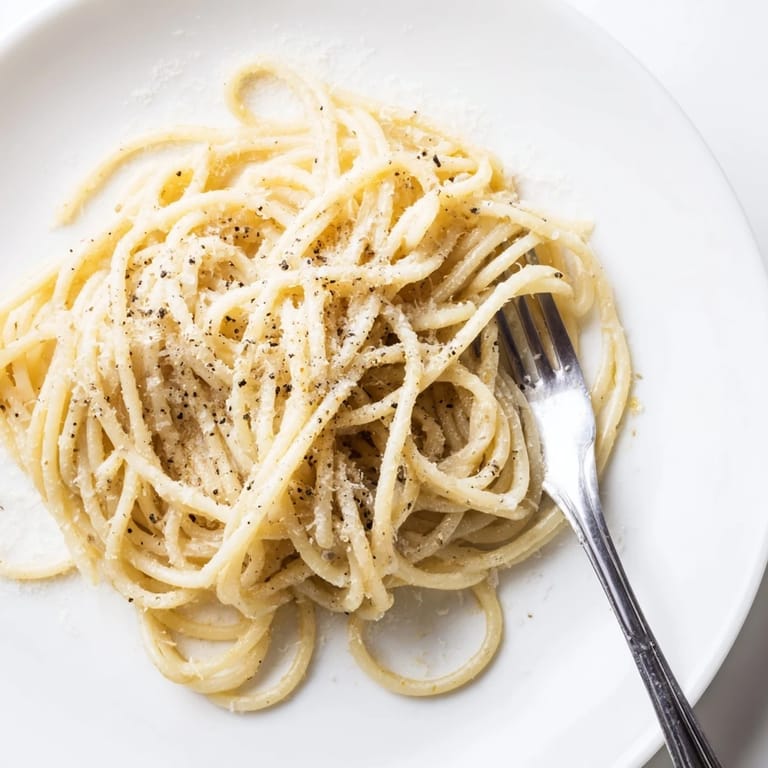
Save There was a night last winter when the power went out and I made this by candlelight, boiling water on the gas stove and grating cheese by hand. My kids sat at the table in their coats, and we ate it in near silence, and somehow it tasted even better in the dim glow. That's the thing about cacio e pepe: it doesn't need anything extra, not even electricity, to feel complete.
Choosing Your Cheese
Pecorino Romano is traditional and brings a sharpness that defines the dish, but I've swapped in Parmigiano Reggiano when I wanted something gentler and it was still wonderful. The key is using something aged and hard, something that has enough character to stand up to just pepper and pasta. If you can find a wedge from a good cheese shop and grate it yourself, you'll taste the difference in the first bite.
Getting the Texture Right
The sauce should cling to the pasta like a silk scarf, not a thick blanket, and definitely not a puddle at the bottom of the bowl. I learned to add pasta water in tiny splashes, tossing after each one, because it's easier to loosen a sauce than to fix one that's too thin. The moment it looks glossy and moves as one cohesive tangle, that's when you stop and eat.
Serving and Pairing
I like to serve this in warm bowls because it helps keep the sauce loose, and I always bring extra cheese and a pepper grinder to the table. A crisp white wine like Vermentino cuts through the richness beautifully, or even just cold sparkling water with lemon feels right. This isn't a dish that needs sides or salads, it's perfect as it is, maybe with good bread to chase the last creamy bits.
- Warm your serving bowls in a low oven while the pasta cooks.
- Have your cheese grated and your pepper cracked before you start so you're not scrambling mid-toss.
- Leftovers don't reheat well, so make only what you'll eat in one sitting.
 Save
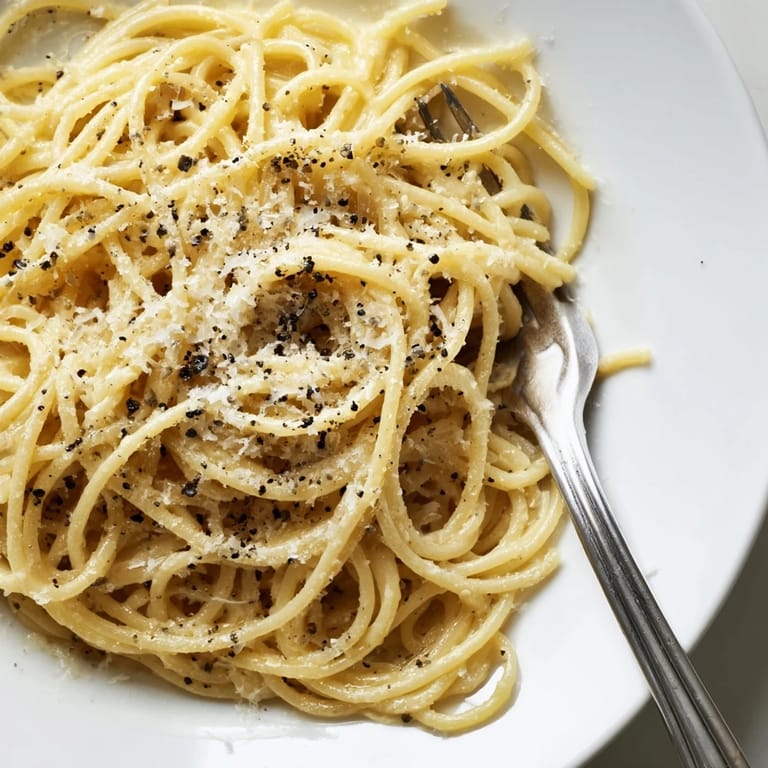
Save This is the recipe I come back to when I need to remember that cooking doesn't have to be complicated to be soul-satisfying. Let it teach you patience, and it'll reward you every time.
Recipe FAQ
- → What does cacio e pepe mean?
Cacio e pepe is Italian for cheese and pepper. Cacio refers to Pecorino Romano cheese, while pepe means black pepper. This traditional Roman dish celebrates the combination of these two simple ingredients.
- → Can I use Parmigiano Reggiano instead of Pecorino Romano?
Yes, Parmigiano Reggiano works as a substitute, though it will yield a milder, less sharp flavor. Pecorino Romano is traditional and provides the authentic salty, tangy profile characteristic of this dish.
- → Why is pasta water essential in this dish?
Pasta water contains starch that emulsifies with the cheese and pepper, creating a silky, creamy sauce without added cream. This starchy liquid prevents the cheese from clumping and helps coat the spaghetti evenly.
- → How do I prevent the cheese from clumping?
Work quickly and continuously stir while adding grated cheese gradually. Keep the heat low to prevent the cheese from seizing. Add reserved pasta water incrementally to maintain the proper consistency and temperature.
- → What type of pepper should I use?
Freshly cracked black pepper is essential for authentic cacio e pepe. Pre-ground pepper loses its aromatic oils and won't provide the same depth of flavor. Toast the pepper briefly to enhance its peppery notes.
- → Is this dish vegetarian?
Yes, cacio e pepe is naturally vegetarian. However, verify that your Pecorino Romano cheese is suitable for vegetarians, as some varieties may contain animal rennet.