 Save
Save There's something about making coleslaw that takes me back to summer cookouts at my uncle's place, where the picnic table always seemed to have a big wooden bowl of it sitting front and center. I'd watch him shred cabbage with this old box grater, the sound almost meditative, and I realized years later that what made his version so good wasn't some secret ingredient—it was that he actually took time to let it sit before serving. The first time I made it myself, I couldn't wait and tossed it all together just before people arrived, and it tasted flat and watery. Now I know better.
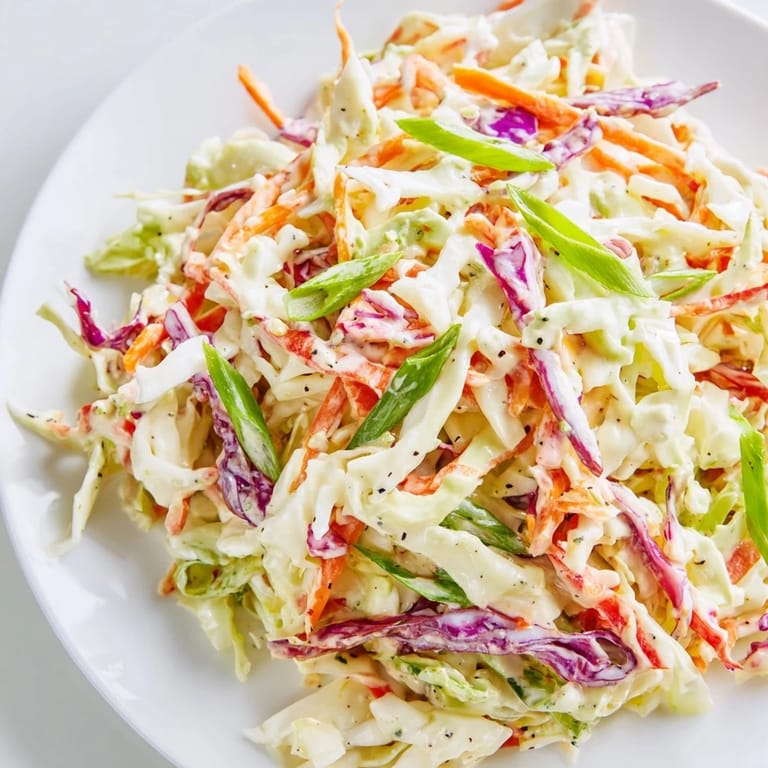
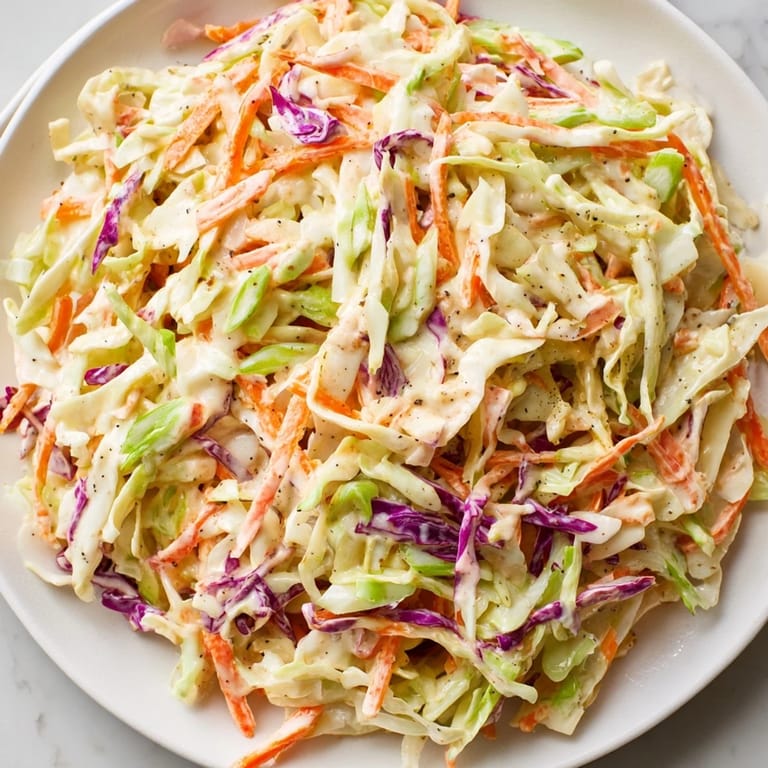
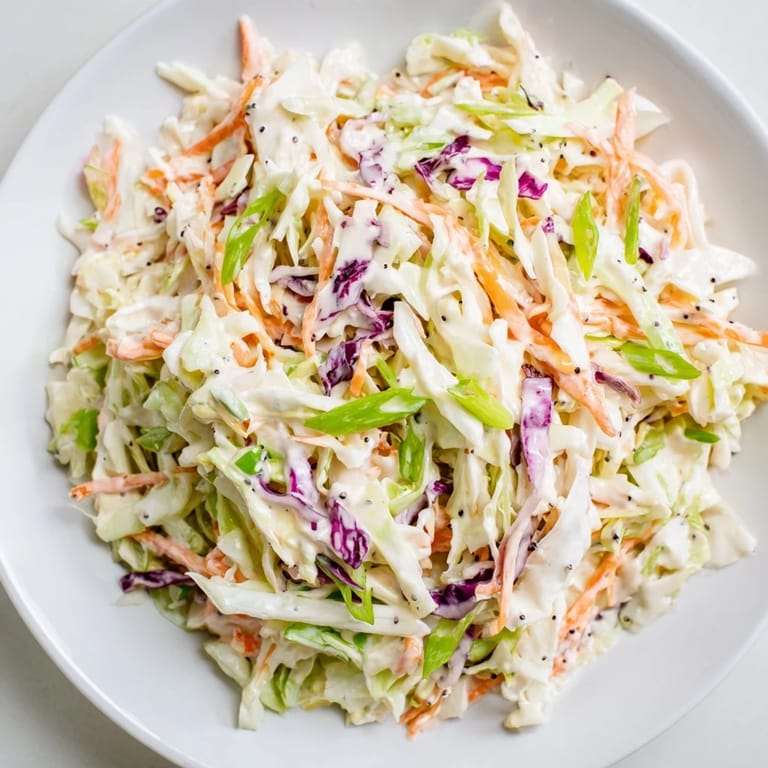
I made this for a neighborhood potluck once and brought it in a clear glass bowl so people could see all those colors—the pale green and deep purple cabbage with the bright orange carrots. Someone asked for the recipe right away, and I remember feeling a little proud that something so simple could make people actually want the recipe. That's when I realized coleslaw isn't boring at all—it's just honest food that does its job beautifully.
Ingredients
- Green cabbage: The foundation of any good slaw; choose one that feels dense and heavy for its size, which means it's fresh and crisp.
- Red cabbage: More than just color—it has a slightly sweeter, earthier flavor that balances the sharp bite of the green.
- Carrots: Grating them fine helps them absorb the dressing and prevents hard, chewy pieces.
- Green onions: They add a gentle onion flavor that doesn't overpower; slice them thin so they distribute evenly.
- Mayonnaise: The creamy base; don't skip this just because you think it's heavy—it's what makes this taste like real coleslaw.
- Sour cream or Greek yogurt: I use half and half because sour cream feels richer but Greek yogurt keeps it lighter and tangier.
- Apple cider vinegar: Sharp and clean-tasting, it cuts through the richness and wakes up your palate.
- Dijon mustard: A small amount adds complexity without making it spicy; it's the secret that keeps people guessing.
- Sugar: Just enough to soften the acidity and let the vegetables shine.
- Celery seed: Optional but worth finding; it tastes like concentrated celery flavor and changes everything if you're into it.
Tired of Takeout? 🥡
Get 10 meals you can make faster than delivery arrives. Seriously.
One email. No spam. Unsubscribe anytime.
Instructions
- Prep your vegetables with intention:
- Shred the cabbage as fine as you can manage—a box grater or mandoline makes this faster, but the finer you go, the better it absorbs the dressing. Toss everything into a large bowl so it's ready to go.
- Build the dressing separately:
- In a small bowl, whisk together the mayo, sour cream, vinegar, mustard, sugar, and celery seed until it's completely smooth and there are no streaks of mayo left. This takes just a minute but makes a difference in how evenly the flavors distribute.
- Bring it all together:
- Pour the dressing over your vegetables and toss aggressively—really work it in so every piece gets coated. You'll notice the cabbage starts to soften immediately from the acid in the vinegar.
- Rest and adjust:
- Taste it, add salt and pepper if it needs it, then cover and refrigerate for at least 30 minutes. If you're in a hurry, it's still good right away, but that resting time does something special to the flavor.
 Save
Save My friend brought her kids to a backyard dinner once, and I watched the youngest one actually eat coleslaw without being asked—her mom was shocked. That's the moment I understood that this dish works because it feels fresh and light even when it's creamy, and that's a combination most vegetables can't pull off.
Why This Works as a Side
Coleslaw lives in this sweet spot where it complements almost everything without trying too hard. The cool, creamy texture balances hot grilled meats or spicy foods, and the acidity helps cut through rich sauces. I've used it on pulled pork sandwiches, alongside fish tacos, and as a bed under grilled chicken, and it works every single time because it gets out of the way while still adding something essential to the plate.
The Dressing Philosophy
The magic here isn't in any one ingredient but in the balance between creamy and tangy. Mayo alone would be too heavy; vinegar alone would be too sharp; together they create something that tastes brighter and less cloying than you'd expect. I've tried versions with less mayo and more yogurt, and they're perfectly good if that's what you prefer, but this ratio feels like the sweet spot where no single flavor bosses the others around.
Timing and Storage
Make this recipe ahead whenever you can—it actually improves as it sits, unlike some salads that get soggy and sad. The cabbage absorbs the flavors and becomes silkier while staying crisp, which feels like a small miracle. It keeps well in the fridge for up to three days, and honestly, it might taste better on day two than day one.
- Prep the vegetables the night before and store them dry in a container, then dress them just before serving or a few hours ahead.
- If you make it far in advance and it releases liquid, just drain it off before serving—that's just cabbage being cabbage.
- Bring it back to room temperature for 15 minutes before serving if you have time, because cold dressing tastes muted compared to room temperature.
 Save
Save This coleslaw has become one of those things I make without thinking anymore, the way some people bake bread or brew coffee. It's the kind of dish that reminds you that simple food, made with a little care, tastes infinitely better than complicated food made with none.
Recipe FAQ
- → Can I use low-fat mayonnaise in this dish?
Yes, substituting low-fat mayonnaise and Greek yogurt creates a lighter version without sacrificing creaminess.
- → How long should the salad be chilled before serving?
For best flavor, refrigerate the mixture for at least 30 minutes to allow the dressing to infuse the vegetables.
- → What can I add for extra sweetness?
Try adding grated apple or a handful of raisins for a gentle, natural sweetness that complements the tangy dressing.
- → Are there any common allergens in this salad?
This salad contains eggs from mayonnaise and may include dairy from sour cream or yogurt. Always check labels carefully.
- → What dishes pair well with this coleslaw?
It complements grilled meats, sandwiches, and tacos, offering a crisp, refreshing contrast.