 Save
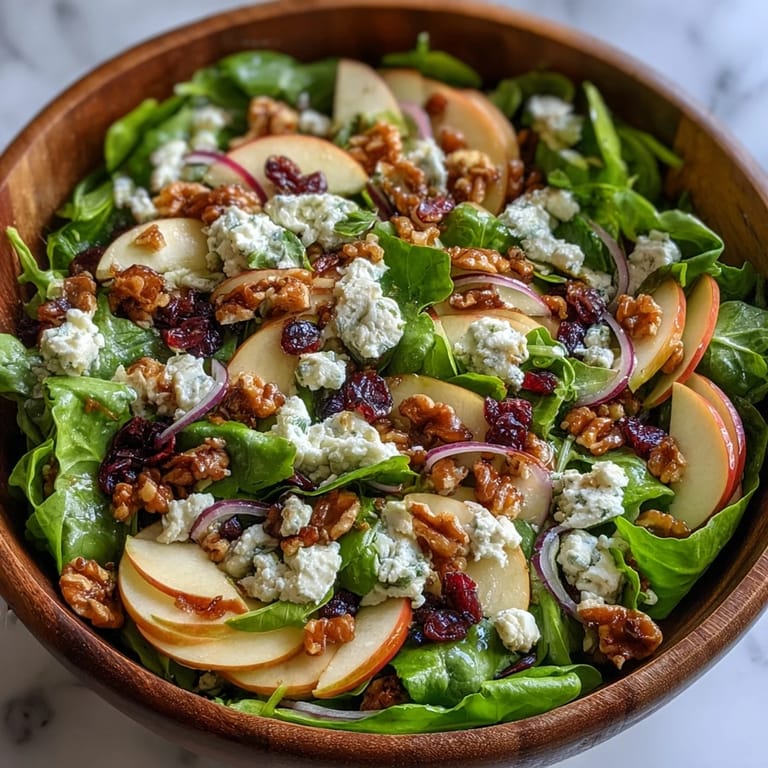
Save There's something about late afternoon light filtering through the kitchen window that makes me crave this salad. I was standing at the farmers market one autumn, overwhelmed by the bounty of apples and crisp greens, when the vendor casually mentioned that tart Granny Smiths play beautifully against creamy cheese. That simple observation sparked an idea, and within minutes I'd assembled the makings of what would become my go-to lunch when I needed something that felt both nourishing and celebratory. The beauty of this bowl is that it comes together faster than you can set a table, yet tastes like you've spent hours thinking about flavor.
I made this for a friend who'd just moved into her first apartment with a bare pantry, and watching her face light up when she tasted that first forkful taught me something about simple food. She'd been living on takeout for weeks, convinced that anything homemade required a cookbook and serious skill. This salad proved otherwise, and now it's her default when she wants to feel grounded and in control of what she's eating.
Ingredients
- Mixed salad greens (6 cups): Use whatever combination speaks to you—arugula brings peppery bite, spinach adds earthiness, romaine provides crunch—and honestly, a prewashed bag saves time without sacrificing quality.
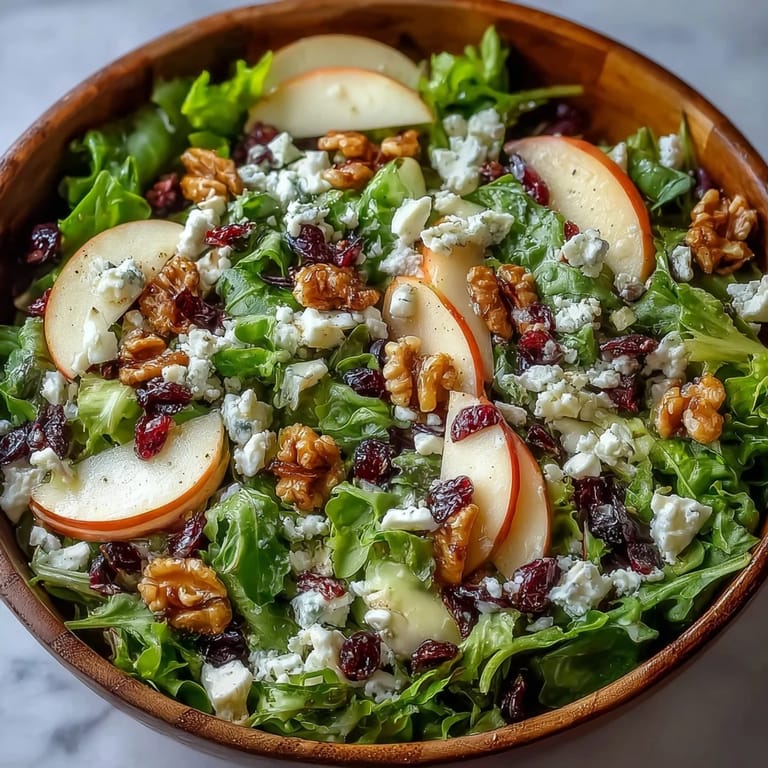
- Apples (2 medium, Gala or Granny Smith): Gala apples are sweeter and more forgiving if you prefer gentler flavor, while Granny Smith's tartness creates fascinating contrast with the cheese and nuts.
- Walnuts (1/2 cup, roughly chopped): Raw walnuts taste fresher and pack more nutritional punch than roasted, though toasted ones add deeper flavor if you have time.
- Goat cheese or feta (1/3 cup, crumbled): These creamy, tangy cheeses are essential to the salad's personality—they're not just an add-on but the flavor anchor.
- Red onion (1/4 cup, thinly sliced, optional): The thin slices let you taste onion's sharpness without it overwhelming the plate, adding textural interest that shouldn't be skipped.
- Dried cranberries (1/4 cup, optional): They bring subtle sweetness and chew, balancing the vinaigrette's acidity beautifully.
- Apple cider vinegar (3 tablespoons): This is the vinaigrette's backbone—it echoes the apple in the salad and gives the dressing its distinctive character.
- Honey or maple syrup (1 tablespoon): Honey dissolves more smoothly into cold dressing, while maple syrup adds woodsy undertones that some people prefer.
- Dijon mustard (1 teaspoon): The mustard emulsifies the vinaigrette and adds a subtle sharpness that pulls everything together.
- Salt and black pepper (1/4 teaspoon each): Season to your taste—start here and adjust after tasting, since saltiness varies wildly between brands.
- Extra virgin olive oil (1/3 cup): Quality matters here because oil is nearly half the dressing, so use one you'd actually enjoy drinking.
Tired of Takeout? 🥡
Get 10 meals you can make faster than delivery arrives. Seriously.
One email. No spam. Unsubscribe anytime.
Instructions
- Build your vinaigrette base:
- In a small bowl or jar, whisk together the apple cider vinegar, honey, Dijon mustard, salt, and pepper until the honey dissolves completely and the mixture turns slightly glossy. You'll know it's ready when the spoon glides through without any graininess lingering.
- Emulsify with oil:
- Drizzle the olive oil in slowly—almost as if you're being stingy with it—while whisking constantly so the oil breaks into tiny droplets instead of sitting in a slick on top. This patience pays off with a creamy, cohesive dressing that coats greens instead of pooling at the bottom of the bowl.
- Combine your salad components:
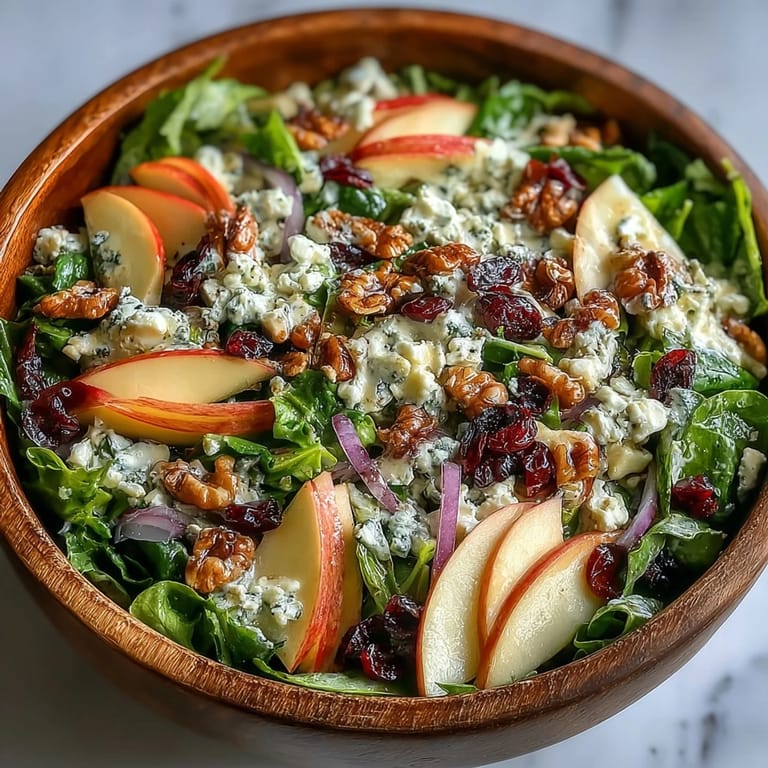
- Toss the mixed greens, apple slices, walnuts, cheese, red onion, and cranberries together in a large bowl, using your hands if you prefer to feel how everything mingles. The greens should be the quiet foundation that lets each element shine.
- Dress and serve immediately:
- Pour the vinaigrette over the salad just before serving and toss gently—aggressive tossing bruises delicate greens and makes everything wilt. Serve right away while everything is still crisp and the flavors haven't started melting together.
 Save
Save I learned the true power of this salad on a rainy Tuesday when my neighbor stopped by unannounced, and I assembled this from what I had lingering in my crisper drawer. She stayed for an hour longer than planned, and we talked about everything while eating straight from the bowl, the way people do when the food is good but the company matters more. That's when I realized this wasn't just lunch—it was an excuse to slow down.
The Cider Vinaigrette Magic
The dressing is where all the intention lives in this salad. It sounds simple until you realize that apple cider vinegar, honey, and mustard together create something almost autumnal—sophisticated without trying too hard. I once made it with regular white vinegar and regretted it immediately; the dressing tasted sharp and one-dimensional, missing that subtle fruitiness that makes this recipe feel like comfort. The mustard acts as an invisible bridge, helping oil and vinegar stay friends instead of separating into layers.
Why This Salad Works Year-Round
Spring spinach, summer heirloom tomatoes with basil, fall apples and walnuts, winter chicory—this salad shape accommodates whatever your market offers without losing its essential character. The foundation of the vinaigrette remains constant, grounding you no matter how you improvise the greens or fruit. I've made this with pears instead of apples when August peaches weren't what I wanted, and with pecans when walnuts seemed too heavy for the season.
Variations That Actually Work
The best thing about mastering a simple salad is discovering how to make it feel new without starting from scratch. I've learned through experimentation which swaps honor the original and which ones fight against it. Blue cheese brings saltiness and funk that demands less vinaigrette, while shaved Parmesan leans lighter and more delicate. If you add protein, chicken tastes obvious and safe, but roasted chickpeas add earthiness and texture that surprised even me.
- Swap walnuts for pecans or almonds depending on what's in your pantry and what flavors you're leaning toward that day.
- Use blue cheese or shaved Parmesan instead of goat cheese to completely shift the salad's personality while keeping its soul intact.
- Add grilled chicken, roasted chickpeas, or crumbled tempeh if you need this to become a full meal instead of a side dish.
 Save
Save This salad has taught me that sometimes the most satisfying meals are the ones that demand almost nothing of you except good ingredients and a few minutes of attention. It's become my answer to the question of what to eat when everything else feels complicated.
Recipe FAQ
- → What apples work best in this bowl?
Gala and Granny Smith apples are ideal choices. Gala offers mild sweetness and holds its texture well, while Granny Smith provides tart contrast to the sweet vinaigrette. Any crisp apple variety that doesn't brown quickly will work beautifully.
- → Can I make the vinaigrette ahead?
Yes, prepare the cider vinaigrette up to a week in advance and store it in an airtight container in the refrigerator. The olive oil may solidify when cold—simply let it sit at room temperature for 10 minutes and whisk well before using.
- → How do I prevent apples from turning brown?
Toss sliced apples immediately with a tablespoon of lemon juice before adding them to the salad. The citric acid prevents oxidation and keeps apples looking fresh for hours. You can also slice them just before serving for maximum crispness.
- → What proteins can I add for a complete meal?
Grilled chicken breast, roasted chickpeas, or hard-boiled eggs make excellent protein additions. For vegetarian options, try quinoa, hemp seeds, or toasted pecans. These additions transform this side into a satisfying main course.
- → Can I use different nuts?
Absolutely. Pecans offer buttery sweetness that complements the apples, while almonds provide subtle crunch. For a nut-free version, try sunflower or pumpkin seeds. Toast any nuts lightly beforehand to enhance their natural flavors.