 Save
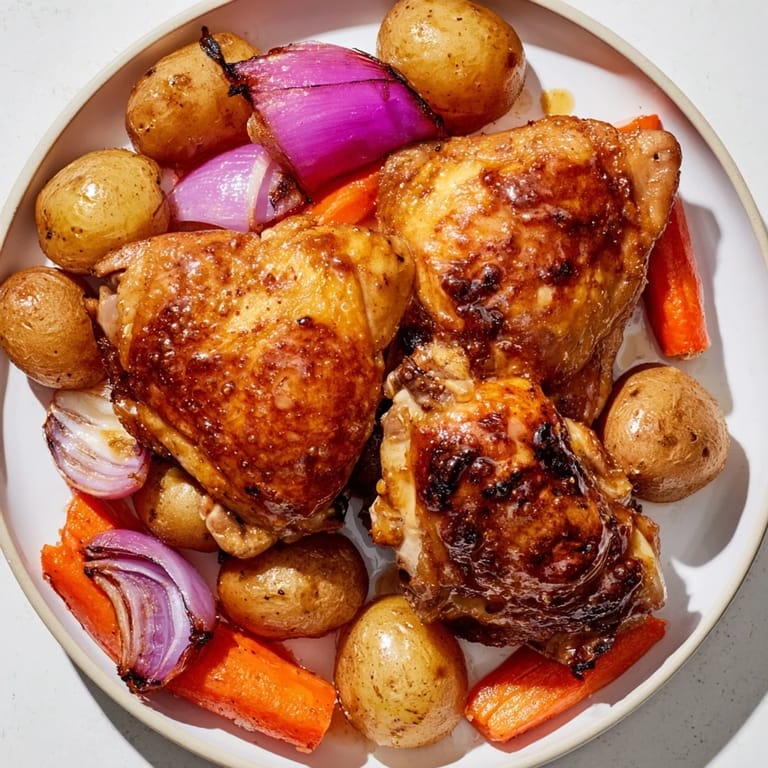
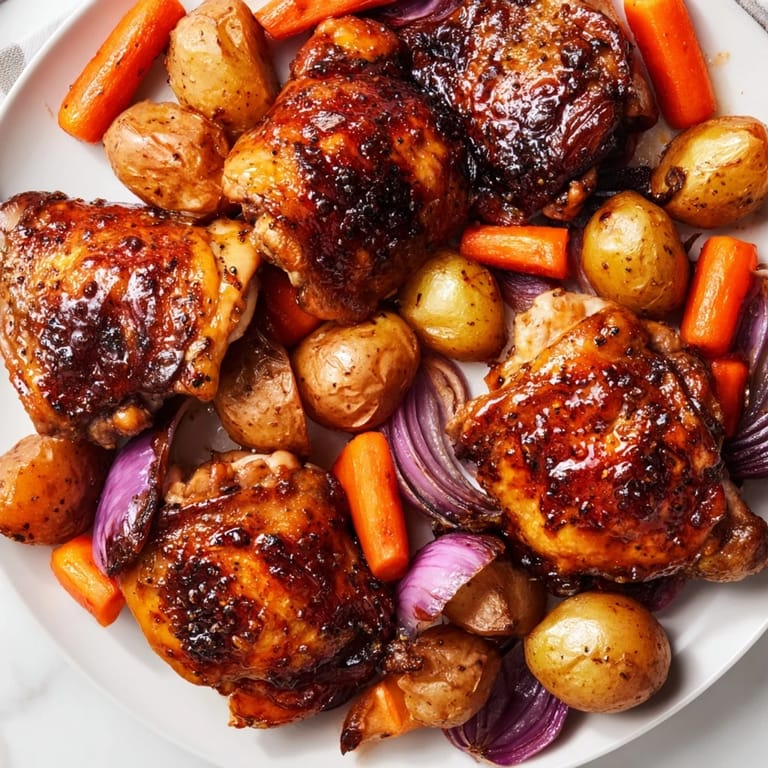
Save There's something about the smell of maple and mustard hitting hot chicken skin that makes you stop and actually pay attention to cooking. I found this recipe on a Tuesday evening when I was tired of the usual rotation, and something about the simplicity of it—one pan, minimal fuss—felt like exactly what I needed. The first time I made it, I was honestly skeptical that such straightforward ingredients would deliver anything memorable, but the glaze caramelized into this glossy amber coat that caught the light, and I understood immediately why this would become a weeknight staple.
I made this for my partner on a night when neither of us had energy for anything complicated, and there was this quiet moment when they took the first bite and just went silent—not the bad kind of silent. That's when I knew this recipe had staying power, the kind that gets requested without you having to suggest it.
Ingredients
- Chicken thighs: Bone-in, skin-on is non-negotiable here; they're more forgiving than breasts and the bones add flavor to the pan juices. Pat them dry before seasoning—this small step is what separates soggy skin from crispy.
- Maple syrup: Use the real stuff, not pancake syrup; you'll taste the difference in depth and how the glaze caramelizes.
- Dijon mustard: The tangy backbone that keeps the maple from becoming one-dimensional; whole-grain or smooth both work, depending on your texture preference.
- Apple cider vinegar: This cuts through the richness and adds brightness that makes you want another bite.
- Garlic and thyme: Fresh thyme is worth buying if you can; it adds an earthy note that ties everything together.
- Smoked paprika: A small amount that whispers rather than shouts, adding depth without overwhelming.
- Vegetables: Potatoes and carrots roast beautifully in this time frame; halving the potatoes helps them cook through before the chicken finishes.
Tired of Takeout? 🥡
Get 10 meals you can make faster than delivery arrives. Seriously.
One email. No spam. Unsubscribe anytime.
Instructions
- Heat your oven and prep your workspace:
- Preheat to 220°C (425°F) and line your sheet pan with parchment or foil—this small act saves you from scrubbing caramelized maple off metal later. Give yourself room to work; rushing this step leads to crowded pans and uneven cooking.
- Dry and season the chicken:
- Pat those thighs completely dry with paper towels; moisture is the enemy of crispy skin. Season generously on both sides with salt and pepper, letting your hand feel the coverage rather than guessing.
- Make the glaze:
- Whisk maple syrup, Dijon mustard, olive oil, apple cider vinegar, minced garlic, thyme, and smoked paprika together until smooth and glossy. Taste it on your finger if you're unsure—it should make you lean back and smile at the sweet-tangy balance.
- Arrange the vegetables:
- Toss potatoes, carrots, and red onion with a drizzle of olive oil, salt, and pepper, spreading them in a single layer around the edges of your pan. This creates space for the chicken in the center where it'll brown best.
- Position the chicken and brush the glaze:
- Nestle the thighs skin-side up among the vegetables, then brush each one generously with glaze, holding some back for a second coat midway through. The goal is a thin, even layer that'll caramelize into something irresistible.
- Roast and baste:
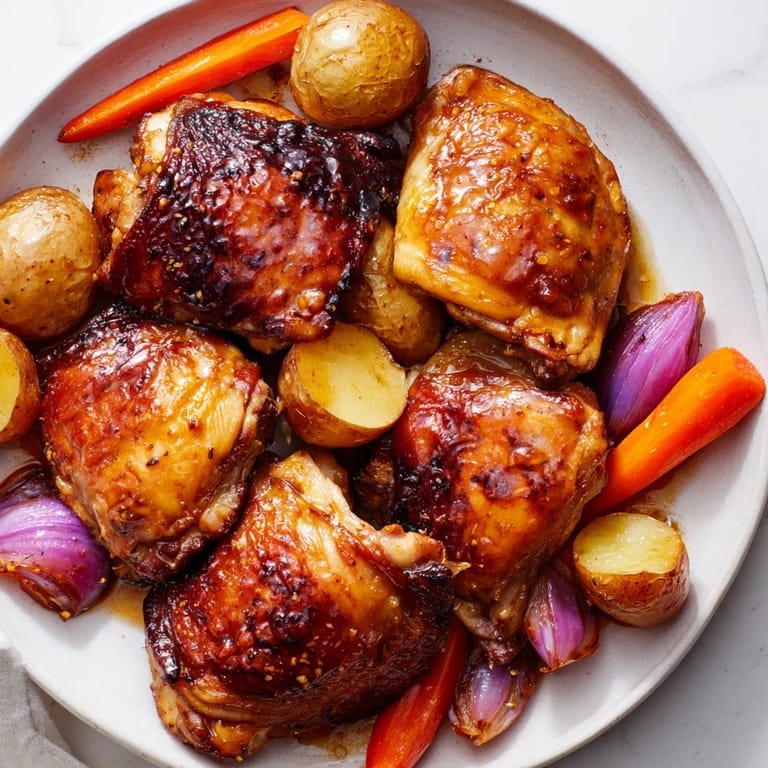
- Into the oven for 30 minutes, then pull the pan out and brush with that reserved glaze, making sure every thigh gets a coat. Return to the oven for 5–10 minutes until the internal temperature reaches 74°C (165°F) and the skin is deep golden and crispy.
- Rest before serving:
- Let the chicken sit for 5 minutes—this small pause lets the juices redistribute so you don't lose them the moment you bite in. Garnish with extra thyme leaves if you want that restaurant touch.
 Save
Save There was a moment during a dinner party when someone asked for seconds before finishing their first plate, and another guest quietly asked for the recipe—that's when this dish stopped being just dinner and became something that gets remembered.
Why This Glaze Works
The magic is in the balance between the maple's sweetness and the mustard's sharp bite, neither overpowering the other. When the glaze hits hot chicken skin, it caramelizes into this amber shellac that's crispy on the outside and sticky-delicious on the inside. The apple cider vinegar and garlic keep everything from tasting like dessert, which is the line this recipe walks perfectly.
Vegetable Swaps and Variations
I've made this with Brussels sprouts halved and tossed in the pan, with parsnips cut into batons, even with a mix of regular and sweet potatoes. The timing stays the same as long as you cut vegetables to roughly the same size, so everything finishes together. One time I added fresh rosemary instead of thyme and discovered a slightly different personality to the dish—still wonderful, just a shade earthier.
What Happens Next
Leftovers reheat beautifully at 180°C (350°F) for about 12 minutes, and cold chicken pieces are shockingly good torn into salads the next day. The pan juices concentrate and deepen as they cool, so don't discard them. If you're serving this to people who care about wine, a crisp Chardonnay or dry Riesling complements the sweet-savory glaze without competing.
- Store leftovers in an airtight container in the fridge for up to three days.
- The glaze formula works equally well on pork chops or salmon if you want to change proteins.
- Make the glaze the night before if you're planning ahead; it actually tastes better after a few hours of the flavors mingling.
 Save
Save This is the kind of recipe that proves you don't need complicated techniques or endless ingredients to cook something that makes people actually satisfied. It's become one of those dishes I reach for when I want to feel like I've cooked something real.
Recipe FAQ
- → What is the best way to get crispy chicken skin?
Pat chicken thighs dry before seasoning and roast skin-side up at a high temperature to render fat and crisp the skin effectively.
- → Can I use boneless thighs instead of bone-in?
Yes, boneless thighs can be used but reduce the cooking time to prevent drying out the meat.
- → What vegetables pair well with this dish?
Baby potatoes, carrots, and red onion are excellent choices, but sweet potatoes, parsnips, or Brussels sprouts can be great alternatives.
- → How do I make the maple-Dijon glaze?
Whisk together pure maple syrup, Dijon mustard, olive oil, apple cider vinegar, minced garlic, fresh thyme, and smoked paprika for a balanced sweet and tangy glaze.
- → Should the chicken rest after cooking?
Yes, resting the chicken for 5 minutes after roasting allows the juices to redistribute, resulting in a more tender and juicy texture.