 Save
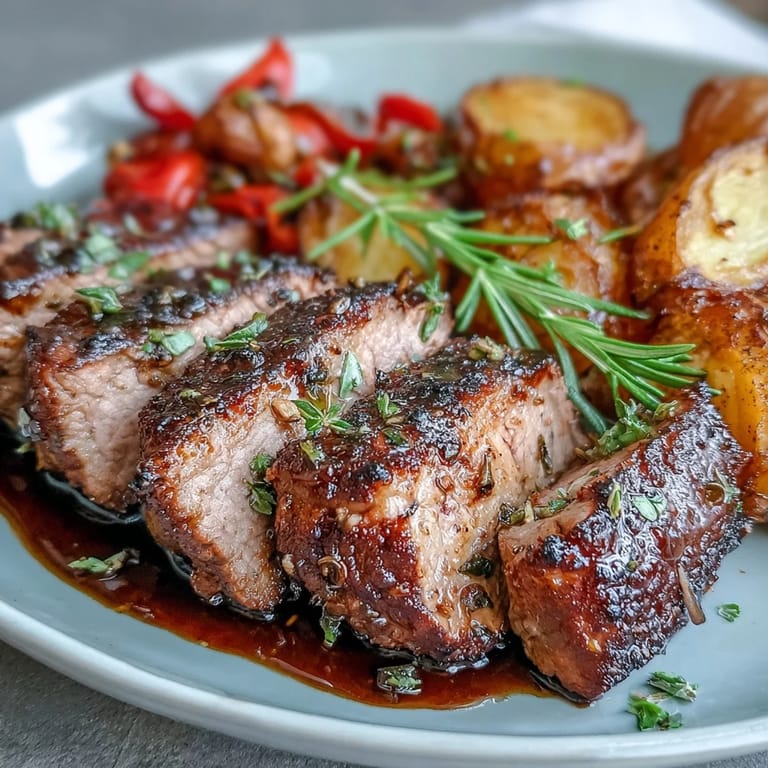
Save The smell of rosemary and garlic hit me before I even opened the fridge that morning. I'd forgotten about the pork fillet sitting in its marinade overnight, and suddenly the whole day shifted—I had something worth making a fuss over. Ibérico pork isn't something I buy often, but when I do, I treat it like the occasion it deserves. That marbled, deep-red meat practically begs for smoke and citrus. By evening, my kitchen smelled like a corner bistro in Seville, and I hadn't even plated it yet.
I made this the first time for a dinner party where half the guests were late and I was spiraling. But because the pork had marinated overnight and everything else just needed oven time, I stayed calm. When they finally arrived, I pulled golden potatoes and caramelized peppers from the oven, sliced the pork into perfect pink rounds, and watched everyone go quiet. One friend asked if I'd trained in Spain, and I didn't correct her.
Ingredients
- Ibérico pork fillet: This is the star, with rich marbling that keeps it moist and flavorful even under high heat.
- Extra virgin olive oil: Use a good one for the marinade, it carries all the aromatics into the meat.
- Fresh rosemary: Chop it fine so it clings to the pork and crisps slightly in the pan.
- Smoked paprika: The soul of Spanish cooking, it adds warmth without any sharpness.
- Lemon zest and juice: Brightness that cuts through the richness and wakes up every bite.
- New potatoes: Their thin skins crisp beautifully and their creamy insides soak up all the seasoning.
- Red bell peppers: Roasting them brings out their natural sweetness and they soften into silky, caramelized strips.
- Fresh thyme: A whisper of earthiness that ties the potatoes to the pork.
- Garlic: Used twice, once minced in the marinade and once sliced with the peppers for a gentler, sweeter note.
Tired of Takeout? 🥡
Get 10 meals you can make faster than delivery arrives. Seriously.
One email. No spam. Unsubscribe anytime.
Instructions
- Marinate the Pork:
- Whisk together olive oil, garlic, rosemary, smoked paprika, lemon zest and juice, salt, and pepper until it smells like a Spanish hillside. Massage it all over the pork fillet, cover tightly, and let it sit in the fridge overnight so the flavors soak deep into the meat.
- Prepare the Oven:
- Preheat to 220°C so everything roasts fast and gets those crispy, caramelized edges. A hot oven is your friend here.
- Roast the Potatoes:
- Toss quartered potatoes with olive oil, salt, pepper, smoked paprika, and thyme until every piece is coated. Spread them out on a baking tray and roast for 35 to 40 minutes, stirring halfway so they brown evenly and get crispy on all sides.
- Roast the Red Peppers:
- Toss pepper strips with olive oil, thin garlic slices, and a pinch of salt, then spread them on a second tray. Roast for 20 to 25 minutes until they soften, char slightly, and taste like candy.
- Cook the Pork:
- Pat the pork dry so it sears instead of steams, then heat a tablespoon of olive oil in an ovenproof skillet over medium high heat. Sear it for 2 to 3 minutes per side until deeply browned, then slide the whole skillet into the oven and roast for 12 to 15 minutes until it hits 63°C inside. Let it rest for 5 minutes before slicing so the juices settle back in.
- Serve:
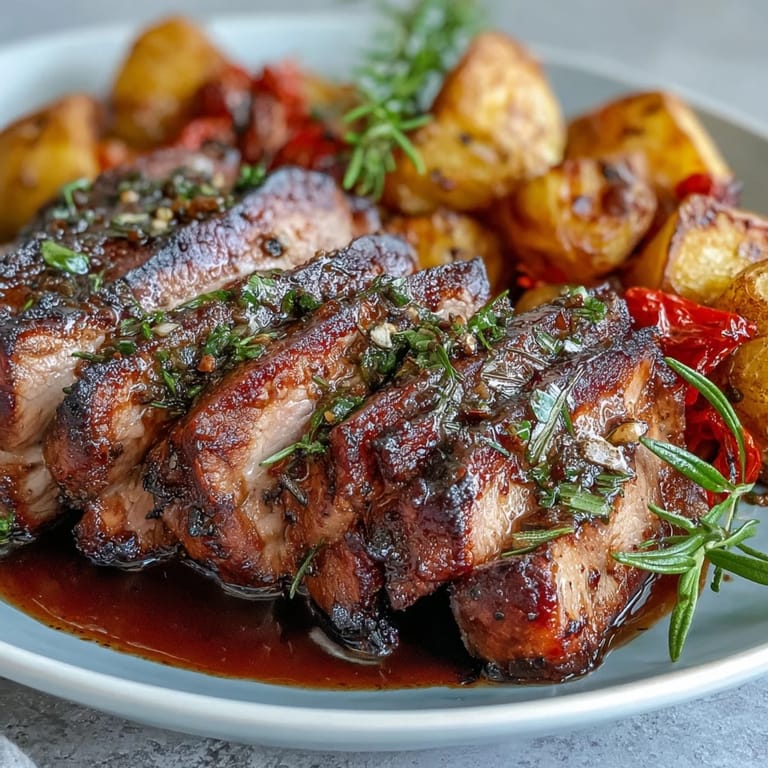
- Slice the pork into thick rounds and arrange them on plates with the crispy potatoes and sweet peppers. Drizzle any pan juices over the top for extra richness.
 Save
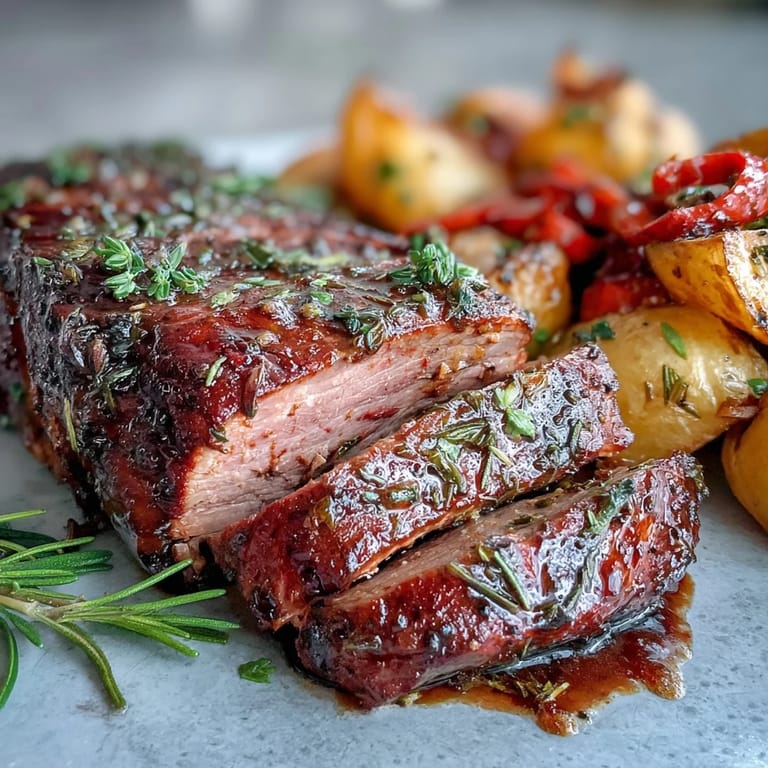
Save The best part came later, after everyone had gone home and I was standing at the counter with a plate of leftovers. Cold roast pork, a few potatoes, a strip of pepper—it tasted even better the next day, like the flavors had kept talking to each other overnight. I ate it straight from the fridge with my fingers, and it felt like a secret reward for pulling off something I wasn't sure I could.
Choosing Your Pork
Ibérico pork is worth seeking out if you can find it, the marbling makes it almost impossible to dry out and the flavor is deeper and sweeter than regular pork. But if you can't get it, a good quality pork tenderloin works beautifully, just watch the timing since it can be leaner. Look for meat that's pale pink with a bit of fat still attached, and don't be afraid to ask your butcher what they recommend. I've learned that a conversation at the meat counter often leads to better dinners than any recipe alone.
Getting the Potatoes Right
New potatoes are my go to here because their thin skins get crispy and you don't have to peel them, which saves time and adds texture. Cut them into quarters so they have enough surface area to brown, and make sure they're spread out on the tray with space between each piece. If you crowd them, they'll steam instead of roast, and you'll miss out on those golden, crunchy edges. I toss them halfway through not just to turn them, but to scrape up any stuck bits that are starting to caramelize on the pan.
Making It Your Own
This recipe is flexible enough to handle your mood and your pantry. Swap thyme for oregano, add a splash of sherry vinegar to the peppers, or toss in some cherry tomatoes during the last 10 minutes of roasting. I've served it with a handful of arugula on the side, and I've also stirred leftover pork and peppers into scrambled eggs the next morning. The bones of the recipe are strong enough that you can improvise without losing the spirit of it.
- Try adding sliced red onion to the peppers for extra sweetness and texture.
- A handful of green olives on the plate adds a briny punch that cuts through the richness.
- If you want more smoke, finish the pork on a hot grill instead of the oven.
 Save
Save This dish has become my answer to the question what should I make when it matters. It's impressive without being fussy, and it leaves you feeling like you actually know what you're doing in the kitchen.
Recipe FAQ
- → Can I use regular pork tenderloin instead of Ibérico?
Yes, regular pork tenderloin works well as a substitute. Monitor the cooking time closely as it may cook slightly faster than Ibérico pork due to differences in fat content.
- → How long should I marinate the pork?
Marinate the pork overnight or for a minimum of 8 hours to allow the flavors of garlic, rosemary, and smoked paprika to fully penetrate the meat.
- → What internal temperature should the pork reach?
Cook the pork fillet until it reaches an internal temperature of 63°C (145°F) for a juicy, slightly pink center. Let it rest for 5 minutes before slicing.
- → Can I prepare the potatoes and peppers ahead of time?
You can cut and season the vegetables in advance, but roast them fresh for the best texture. The potatoes need high heat to achieve that crispy golden exterior.
- → What wine pairs well with this dish?
A Spanish Rioja or other medium-bodied red wine complements the smoky paprika and rich pork flavors beautifully. Choose a wine with good acidity to balance the dish.
- → How do I know when the pork is properly seared?
Sear each side for 2-3 minutes over medium-high heat until a golden-brown crust forms. The meat should release easily from the pan when ready to flip.