 Save
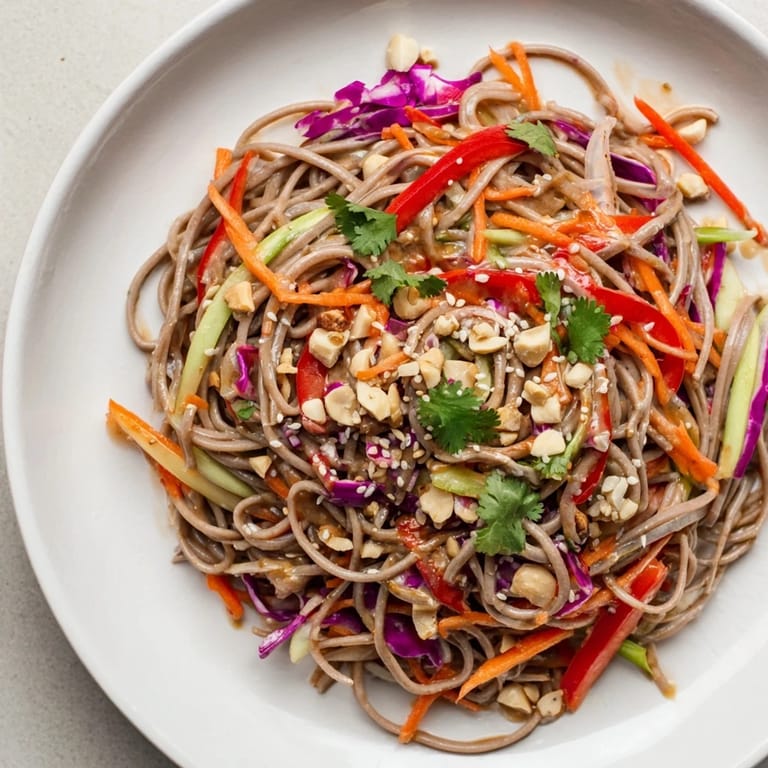
Save One sticky August afternoon, my neighbor brought over a container of cold noodle salad—said it was what she'd eaten almost daily through a sweltering Beijing summer. I was skeptical until I tasted it: the noodles were silky, the vegetables crisp against that nutty-sharp dressing, and suddenly I understood why she'd kept going back for more. Now it's my go-to when the heat makes cooking feel impossible, and I've learned that the real magic isn't in any single ingredient but in the contrast of temperatures and textures coming together on one plate.
I made this for a potluck once and watched people go back for seconds before anyone else's dishes were even opened. A friend with dietary restrictions mentioned she could actually eat something for once, and the relief on her face stuck with me—that's when I realized simple, adaptable recipes matter more than fancy ones.
Ingredients
- Soba or rice noodles (250 g): Soba brings an earthy depth, but rice noodles work just as well and are naturally gluten-free; I learned to rinse them in cold water until they're completely cool, or the residual heat will wilt your vegetables.
- Carrot (1 medium, julienned): The sweetness balances the dressing's sharpness; use a vegetable peeler or mandoline if you have one, since thin matchsticks distribute more evenly.
- Red bell pepper (1 small, thinly sliced): Adds a watery crunch that keeps the salad from feeling heavy, and the bright color makes people want to eat it before they even taste it.
- Cucumber (1, seeded and julienned): Seeds hold moisture and make the salad soggy by the next day, so I always scoop them out with a spoon—this one detail changed everything for me-ahead meals.
- Spring onions (3, finely sliced): The raw bite cuts through richness; save some of the greens for topping so you get color in every bite.
- Red cabbage (50 g, thinly shredded): It stays crisp for days and adds an almost purple-wine color that makes the whole bowl look fresher.
- Fresh cilantro (2 tbsp, chopped): Not everyone loves cilantro—if it tastes like soap to you, swap it for mint or just skip it entirely.
- Soy sauce (3 tbsp): The umami foundation; tamari works if you need gluten-free, and the flavor is nearly identical.
- Rice vinegar (2 tbsp): This is the secret sharpness that wakes up your palate; regular vinegar is too harsh, so don't substitute.
- Toasted sesame oil (2 tbsp): A little goes a long way—it's potent and nutty, and raw sesame oil tastes flat by comparison.
- Honey or maple syrup (1 tbsp): Rounds out the acidity and keeps the dressing from being one-note sour.
- Fresh ginger (1 tbsp, finely grated): This is where the warmth comes from; I grate it on a microplane so it spreads evenly instead of sitting in chunks.
- Garlic clove (1, minced): Just one, unless you're a garlic person—it's meant to whisper, not shout.
- Sriracha or chili sauce (1 tsp, optional): If you want heat, add it; if you want subtle warmth, leave it out or use half a teaspoon.
- Toasted sesame seeds (1 tbsp, for dressing): Raw seeds taste grassy; toasted ones are the whole point of this dressing.
- Roasted peanuts or cashews (2 tbsp, roughly chopped): The crunch you actually feel when you eat; cashews are milder, peanuts have more personality.
Tired of Takeout? 🥡
Get 10 meals you can make faster than delivery arrives. Seriously.
One email. No spam. Unsubscribe anytime.
Instructions
- Bring water to a rolling boil:
- Use enough water so the noodles can move freely as they cook—crowded noodles stick together and turn gluey. A large pot matters here.
- Cook the noodles until just tender:
- Follow the package time but taste a strand at the one-minute mark before it finishes; you want them soft enough to eat but still with a hint of resistance. Drain into a colander and hold it under cold running water while you stir with chopsticks or a fork until the noodles are room temperature and completely separated.
- Cut every vegetable while the noodles cool:
- Get them all prepped—julienned carrots, sliced peppers, cucumber without the seeds, spring onions, shredded cabbage, chopped cilantro. Organized prep means the actual assembly takes seconds.
- Whisk the dressing in a small bowl:
- Add soy sauce, rice vinegar, sesame oil, honey, ginger, garlic, sriracha if using, and sesame seeds; whisk or stir until the honey dissolves. Taste a tiny bit on your finger—it should taste bold and almost strong on its own, because it's about to coat bland noodles. Adjust salt or acid here.
- Toss everything together in a large bowl:
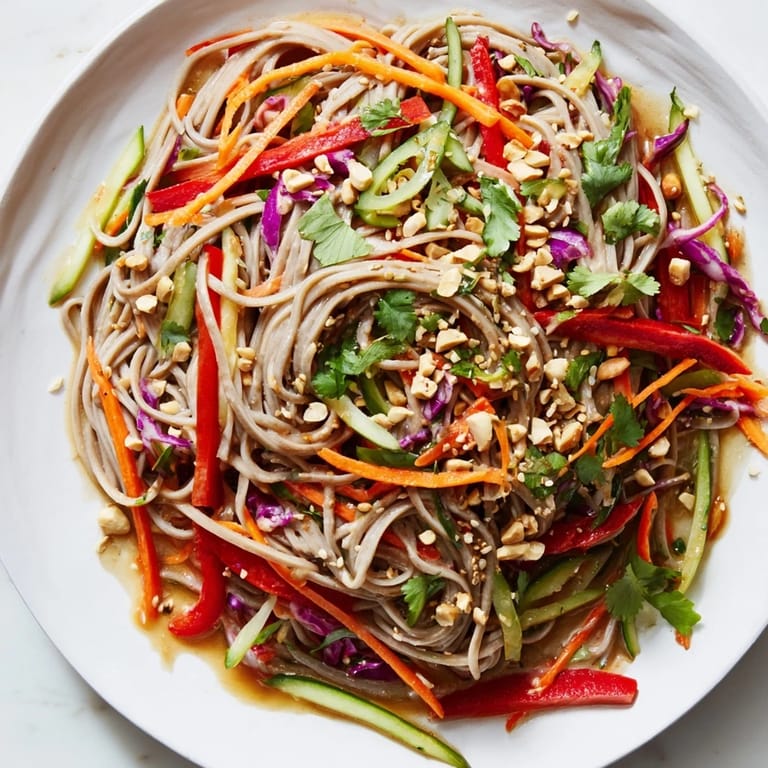
- Put cooled noodles in, add all the vegetables, pour the dressing over, and use salad tongs or two forks to lift and turn everything until every noodle is coated. You'll see the dressing cling to the vegetables and darken the noodles slightly.
- Divide among bowls and garnish:
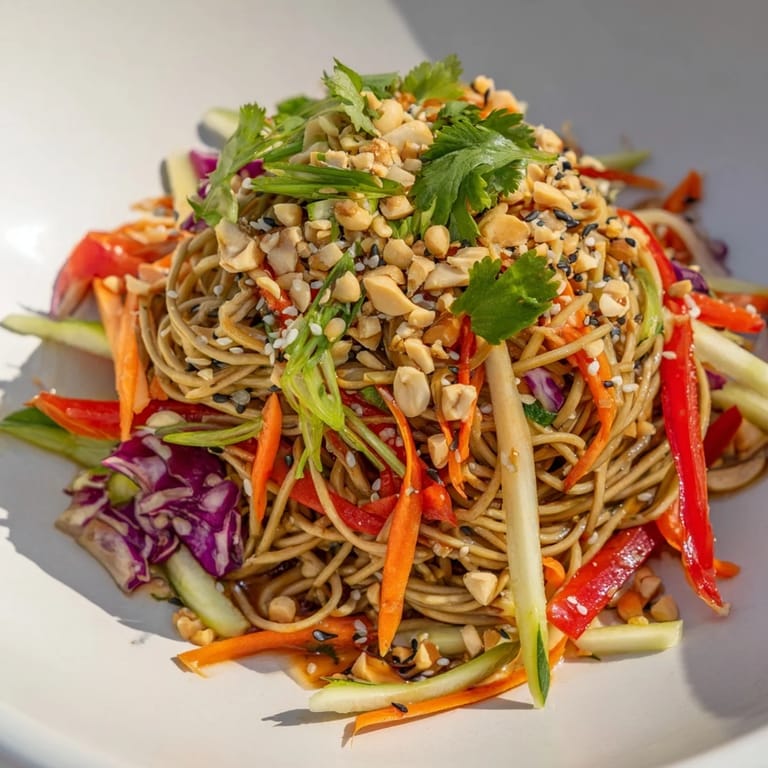
- Scatter chopped peanuts and extra sesame seeds over the top. Serve right away, or cover and chill for up to an hour if you prefer it ice-cold.
 Save
Save I once made this for myself on a day everything felt too much, and something about the ritual of slicing vegetables slowly and whisking the dressing with intention pulled me back together. Food doesn't always need an audience to matter.
Why This Salad Works in Heat
Cold noodles with a dressing that's equal parts tangy and nutty don't sit heavy in your stomach on days when your appetite feels confused. The vegetables stay crisp even after a day in the fridge, the sesame oil doesn't congeal like butter would, and there's enough salt and acid to make you actually crave another bite instead of pushing the plate away. It's the kind of meal that tastes light but keeps you full, which is exactly what summer eating should be.
Making It Your Own
This is one of those recipes that invites improvisation without falling apart. I've added shredded cooked chicken when I had some, scattered in edamame, swapped the peanuts for toasted cashews or crushed pistachios, used mint instead of cilantro, even added thin ribbons of cucumber skin when I was seeding. A friend with shellfish allergies makes it with chopped shrimp from a can and no one questions it. The dressing is flexible enough that you could lighten it with lime juice, deepen it with a touch more ginger, or skip the Sriracha entirely if heat isn't your thing.
Making Ahead and Storing
The noodles and dressing stay separate in the fridge for three days, which means you can assemble this in the morning, afternoon, or whenever hunger hits. The vegetables can be cut the day before and kept in separate containers so nothing gets soggy. I've learned to keep the peanuts and sesame seeds in a small bowl on the side rather than tossing them in, so they stay crunchy even if someone eats half the salad and leaves the bowl sitting open. This kind of flexibility is why I make it constantly.
- Store noodles and dressing in separate containers so you can control when they meet.
- Cut vegetables the night before and keep them in individual bowls or bags so nothing wilts into its neighbor.
- Nuts and seeds always go in at the last second, right when you're ready to eat.
 Save
Save This salad taught me that the simplest meals often taste the best, and that feeding yourself well on a difficult day is an act of kindness worth taking seriously.