 Save
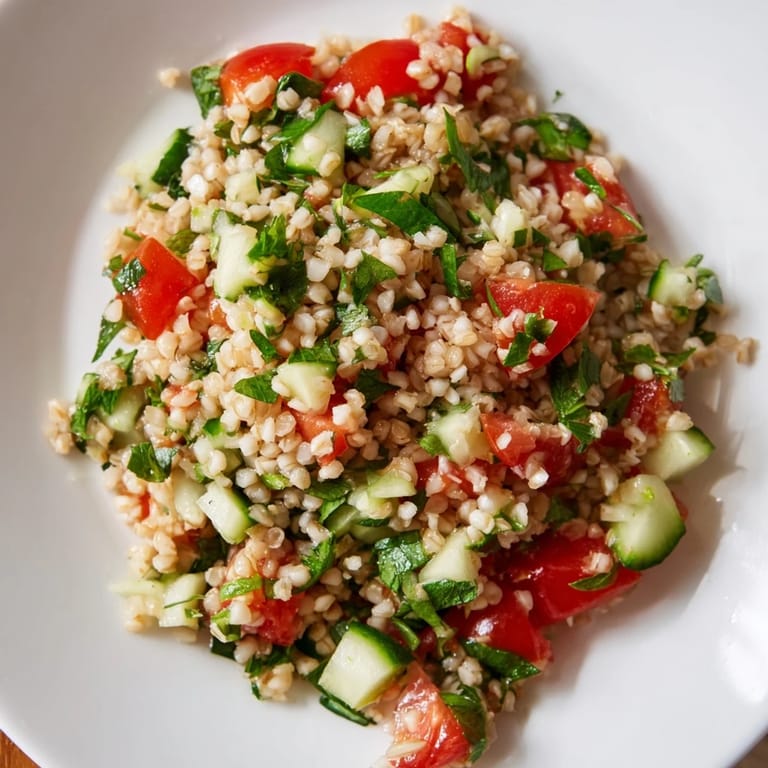
Save The summer I discovered tabbouleh changed how I thought about salads entirely. My Lebanese neighbor had invited me over for what she called a simple lunch, and when she brought out this bowl of emerald green flecked with ruby tomatoes, I honestly thought it was just garnish. Then she scooped a generous portion onto my plate, and one bite of those bright, herbaceous flavors hitting that lemon soaked bulgur completely rearranged my expectations.
I made this for my sisters birthday picnic last year, doubling the recipe because I was convinced it would not be enough food. Everyone hovered around the serving bowl, and honestly, watching people go back for third servings of something so refreshingly simple made me understand why this dish has traveled across generations and oceans.
Ingredients
- Fine bulgur wheat: The fine grind absorbs the dressing beautifully while keeping a pleasant chew, unlike larger grains that can feel heavy
- Boiling water: Pouring it hot over the bulgur cuts the soaking time dramatically and gives the wheat a head start on absorbing flavor
- Ripe tomatoes: Choose ones that yield slightly to pressure because underripe tomatoes will make the salad taste watery and flat
- English cucumber: Fewer seeds and thinner skin mean no bitter surprises and a consistently crisp texture throughout
- Flat leaf parsley: Curly parsley has a weird texture in raw salads, and flat leaf brings that clean, peppery brightness that defines the dish
- Fresh mint: Do not skip this, it is not optional, it provides that cooling contrast that makes the whole salad sing
- Extra virgin olive oil: Use something you would drizzle on bread because the oil carries every other flavor
- Freshly squeezed lemon juice: Bottled juice lacks the aromatic complexity that fresh lemons provide, and it shows
- Garlic clove: Minced it releases its oils into the dressing, creating that aromatic backbone
- Fine sea salt: It dissolves easily and distributes evenly, avoiding those harsh salty pockets
- Freshly ground black pepper: Adds just enough warmth to balance the sharp lemon without overwhelming the delicate herbs
Tired of Takeout? 🥡
Get 10 meals you can make faster than delivery arrives. Seriously.
One email. No spam. Unsubscribe anytime.
Instructions
- Wake up the bulgur:
- Place the bulgur in your largest bowl, pour that cup of boiling water over it, and cover it with a plate or kitchen towel. Walk away for 10 to 15 minutes, and when you return, the wheat should have absorbed all the water and transformed into tender, fluffy pearls. Fluff it with a fork to release the steam and let it cool completely because warm bulgur will wilt your fresh herbs in seconds.
- Pile on the freshness:
- Once the bulgur is cool to the touch, add those diced tomatoes, cucumber, scallions, parsley, and mint right on top. Do not mix yet, just let everything sit in a colorful mound while you make the dressing.
- Whisk up brightness:
- In a small bowl, combine the olive oil, lemon juice, garlic, salt, and pepper, whisking until the mixture thickens slightly and looks glossy. The garlic should start mellowing immediately in the acid.
- Bring it together:
- Pour the dressing over the salad and toss everything gently with your hands or a large spoon, being careful not to bruise the herbs. Taste a bite and adjust the salt or lemon if needed, then let it chill for at least 20 minutes because those flavors need time to become friends.
- Serve and share:
- Tabbouleh can be served cold straight from the fridge or at room temperature, and both ways are equally perfect. It pairs beautifully with grilled meats, falafel, or can absolutely stand alone as a light meal on a hot day.
 Save
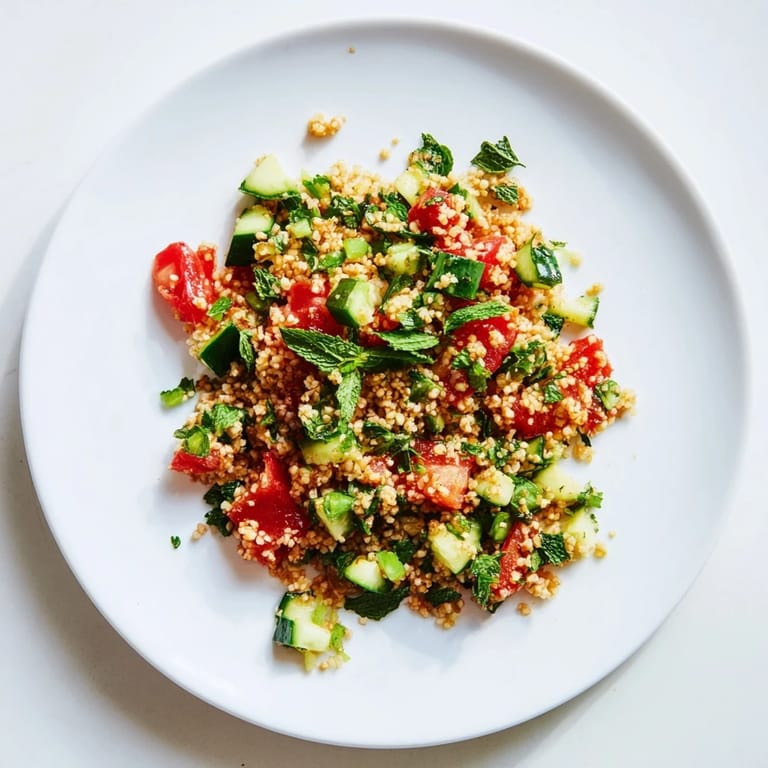
Save Something magical happens when you let this salad sit. The third day of leftovers, if they even last that long, somehow tastes even better than the first because everything has had time to really know each other.
Making It Your Own
While traditional tabbouleh is perfect as written, I have found that pomegranate seeds add these jewel like bursts of sweetness that contrast beautifully with the sharp lemon. During autumn, I sometimes add diced roasted pumpkin for a warmer version that still feels true to the spirit of the dish.
Herb Wisdom
Washing and thoroughly drying your herbs is non negotiable here. Any water clinging to the parsley or mint will dilute that perfect dressing and turn your salad soggy. I roll mine in a clean kitchen towel and give it a firm shake before chopping.
Serving Suggestions
This salad shines alongside almost anything grilled, but I have learned it is equally delicious tucked into a pita with some hummus. The fresh, bright flavors cut through rich foods perfectly, balancing a heavy meal without weighing you down.
- Serve with warm pita bread for scooping up every last bite
- Top with crumbled feta if you want to add some creaminess
- Make extra because it disappears faster than you expect
 Save
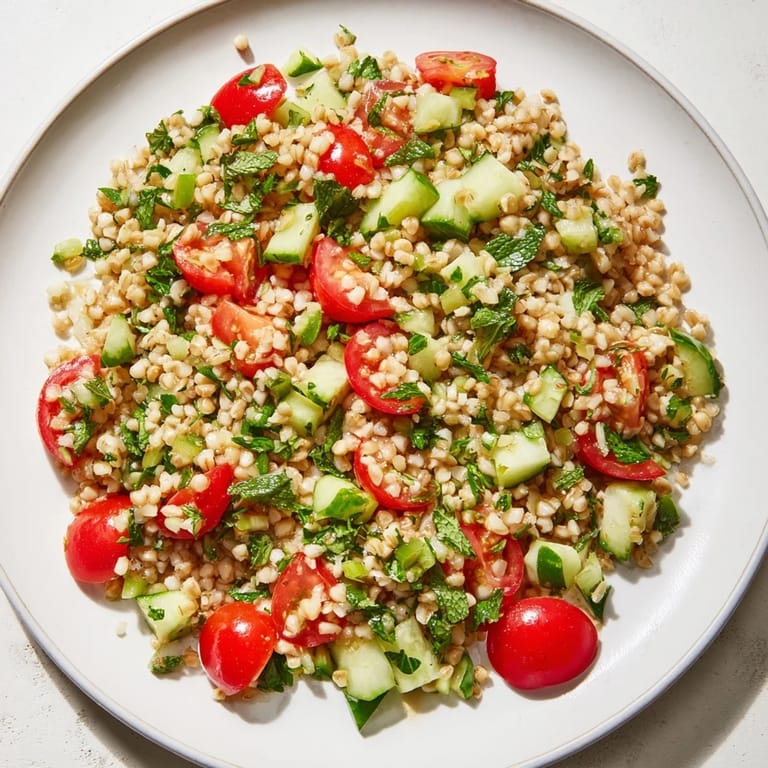
Save Every time I make this now, I think of that afternoon on my neighbors porch and how something so simple taught me that sometimes the most vibrant flavors come from the humblest ingredients.
Recipe FAQ
- → What is tabbouleh made of?
Tabbouleh features bulgur wheat as the base, combined with generous amounts of fresh flat-leaf parsley and mint. The salad includes diced tomatoes, cucumber, and scallions, all tossed in a bright dressing of olive oil, lemon juice, garlic, salt, and pepper.
- → Is bulgur wheat healthy?
Yes, bulgur wheat is a nutritious whole grain offering fiber, protein, and essential minerals. It's lower in calories than many grains while providing sustained energy. The fresh herbs and vegetables add vitamins and antioxidants, making this a nutrient-dense choice.
- → Can I make tabbouleh ahead of time?
Absolutely. In fact, tabbouleh tastes better after chilling for at least 20 minutes, allowing the flavors to meld together. It keeps well in the refrigerator for 2-3 days, though the herbs may darken slightly. The texture remains enjoyable for several days.
- → What can I serve with tabbouleh?
This versatile salad pairs wonderfully with grilled chicken, lamb kebabs, or falafel for a complete meal. It also complements other Middle Eastern dishes like hummus, baba ganoush, and pita bread. Serve it as part of a mezze platter or alongside roasted vegetables.
- → Is tabbouleh gluten-free?
Traditional tabbouleh contains bulgur wheat, which has gluten. However, you can easily make it gluten-free by substituting cooked quinoa, millet, or rice for the bulgur. The preparation method remains the same, and the result is equally delicious.
- → How do I prevent the bulgur from becoming mushy?
Use fine bulgur wheat and measure the water precisely—one cup boiling water per cup of bulgur. Let it stand covered for just 10-15 minutes until all water is absorbed. Fluff immediately with a fork and allow it to cool completely before adding the vegetables and dressing.