 Save
Save The first time I cooked venison, I was terrified of ruining it. A friend had given me a packet from a local hunt, and I stood in my kitchen holding it like a fragile heirloom. I settled on a stew, figuring low and slow would forgive my nerves. When I added the sloe gin, the kitchen filled with a sweet, woodsy warmth that made the whole house smell like a winter forest. That stew turned out better than I ever imagined, and I've been making it ever since.
I made this for a small dinner party one January evening when the wind was rattling the windows. My guests arrived cold and skeptical about venison, but by the time I ladled the stew over the polenta, they were leaning over their bowls in silence. One of them later told me it was the first time she'd ever enjoyed game meat. That night, I realized this dish has a way of converting people.
Ingredients
- Venison shoulder or stewing venison: This cut is lean and benefits from slow cooking, turning meltingly tender and rich without any gamey toughness if treated right.
- Olive oil: Use a good fruity olive oil for browning, it adds a subtle backdrop that complements the meat without overpowering it.
- Onion, carrots, and celery: The classic base trio that sweetens and deepens as it cooks, creating a foundation of flavor that holds everything together.
- Garlic cloves: Freshly minced garlic brings a warm, aromatic punch that blooms beautifully when cooked with the tomato paste.
- Tomato paste: A small amount adds umami and a slight tang that balances the sweetness of the sloe gin and redcurrant jelly.
- Sloe gin: This is the magic ingredient, its berry notes and slight bitterness cut through the richness and make the stew unforgettable.
- Beef or game stock: Choose a good quality stock, homemade if possible, as it forms the heart of the sauce and carries all the other flavors.
- Redcurrant jelly: A spoonful brings a gentle sweetness and gloss to the sauce, rounding out the sharper notes without making it sugary.
- Bay leaves and fresh thyme: These herbs add an earthy, herbal backbone that makes the stew smell like a proper winter kitchen.
- Juniper berries: Lightly crushed, they release a piney, floral note that pairs beautifully with venison and enhances the gin.
- Polenta: Quick cooking or regular both work, but stir it constantly to avoid lumps and achieve that creamy, cloud like texture.
- Whole milk and water: The milk makes the polenta luxurious and soft, while the water keeps it from becoming too heavy.
- Unsalted butter and Parmesan cheese: Stirred in at the end, they transform plain polenta into something silky, savory, and utterly indulgent.
Tired of Takeout? 🥡
Get 10 meals you can make faster than delivery arrives. Seriously.
One email. No spam. Unsubscribe anytime.
Instructions
- Brown the venison:
- Heat the olive oil in a large, heavy based casserole over medium high heat and brown the venison cubes in batches, letting them develop a deep, caramelized crust. Don't rush this step, the color you build here is flavor you'll taste later.
- Soften the vegetables:
- Add the onion, carrots, and celery to the same pan, scraping up any browned bits from the bottom as they cook for 5 to 7 minutes until softened. Stir in the garlic and tomato paste, cooking for another minute until fragrant and slightly darkened.
- Deglaze with sloe gin:
- Return the venison to the pan and pour in the sloe gin, letting it bubble and reduce slightly for 2 minutes. The alcohol will cook off, leaving behind a fruity, complex sweetness that clings to the meat.
- Build the stew:
- Add the stock, redcurrant jelly, bay leaves, thyme, and juniper berries, then season with salt and pepper. Bring everything to a gentle simmer, cover, and cook on low heat for 2 hours, stirring occasionally until the venison is fork tender.
- Prepare the polenta:
- While the stew is cooking, heat the milk and water in a saucepan until just simmering, then gradually whisk in the polenta. Cook over low heat, stirring constantly, for 5 to 10 minutes or according to packet instructions until thick and creamy.
- Finish and serve:
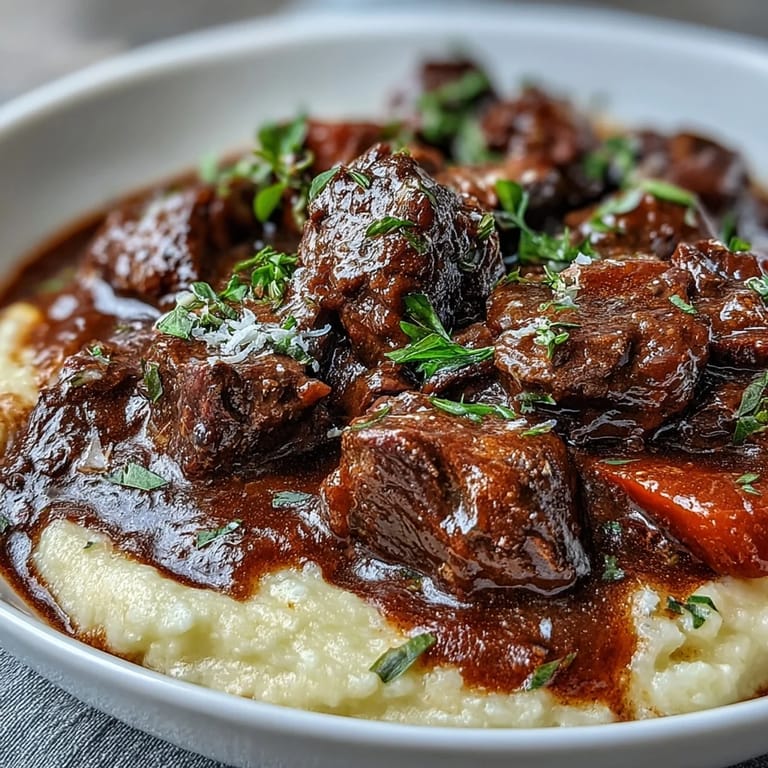
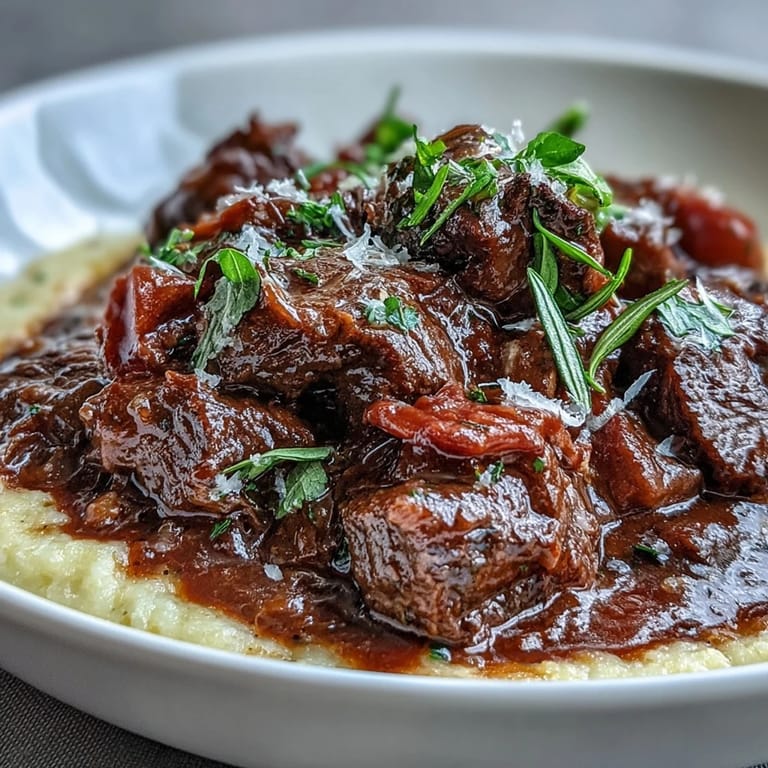
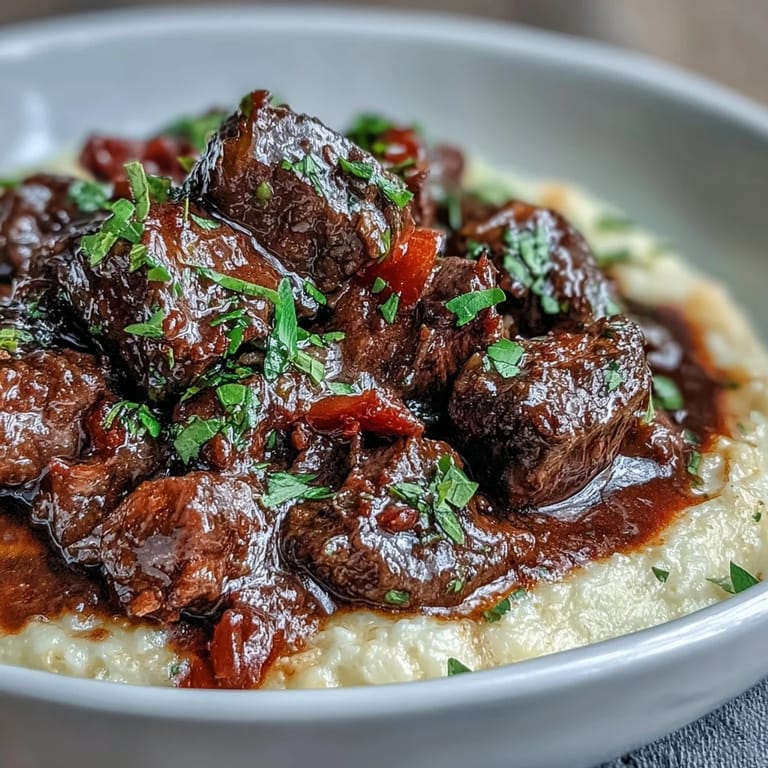
- Stir the butter and Parmesan into the polenta and season to taste with salt. Remove the bay leaves and thyme sprigs from the stew, then serve the venison hot over creamy polenta, ladling the glossy sauce over the top.
 Save
Save One cold February night, I made this stew for my father, who had always been skeptical of anything fancy. He sat quietly at the table, mopping up the sauce with a piece of bread, and finally said it tasted like something you'd eat in a proper old inn. That was the highest compliment he'd ever given me, and I've never forgotten it.
Choosing and Preparing Venison
Venison shoulder is ideal for stewing because it has just enough connective tissue to break down into silky tenderness without drying out. If you can only find diced venison, make sure the pieces are at least 3 cm so they don't shrink too much during the long simmer. I once used venison leg by mistake, and while it was lean and lovely, it didn't have the same melt in your mouth quality. Ask your butcher for stewing cuts, and don't be shy about requesting larger cubes if they're cutting it fresh.
The Role of Sloe Gin
Sloe gin is not just a quirky addition, it's what makes this stew sing. The tartness of the sloes and the botanicals in the gin add layers of flavor that red wine alone can't achieve. If you can't find sloe gin, a good quality port or a berry liqueur like cassis will work, though the flavor will shift slightly. I've also tried it with a splash of red wine and a handful of frozen berries, and while it was delicious, it missed that wild, hedgerow edge that sloe gin brings.
Serving and Pairing Suggestions
This stew is rich and warming, so I like to serve it in wide, shallow bowls with the polenta spread underneath and the stew spooned generously over the top. A handful of fresh parsley or thyme on top adds a pop of color and a hint of brightness. For wine, reach for something bold like a Shiraz or Cabernet Sauvignon that can stand up to the game and the gin.
- Leftovers reheat beautifully, the flavors deepen overnight and the polenta can be reheated gently with a splash of milk.
- If you want to stretch the meal, serve it with crusty bread or roasted root vegetables on the side.
- For a lighter option, swap the polenta for mashed potatoes or even creamy cannellini beans.
 Save
Save This stew has become my go to when I want to feed someone well and make them feel looked after. It's the kind of dish that wraps around you like a warm blanket, and I hope it does the same for you.
Recipe FAQ
- → Can I substitute the venison with another meat?
Yes, beef chuck or lamb shoulder work well as alternatives. Use the same cooking time and method for tender results.
- → What can I use instead of sloe gin?
Port, red wine, or berry liqueur make excellent substitutes. They provide similar depth and fruity notes to complement the venison.
- → How do I know when the venison is properly cooked?
The meat should be fork-tender and easily pull apart after 2 hours of gentle simmering. If still tough, continue cooking for another 30 minutes.
- → Can I make this dish ahead of time?
Absolutely. The stew tastes even better the next day as flavors develop. Reheat gently and prepare fresh polenta just before serving.
- → What type of polenta should I use?
Quick-cooking polenta works perfectly for weeknight meals, taking 5-10 minutes. Traditional polenta requires longer cooking but offers deeper corn flavor.
- → Why add redcurrant jelly to the stew?
Redcurrant jelly adds subtle sweetness and helps balance the rich, gamey flavor of venison while creating a glossy, luxurious sauce.