 Save
Save I'll never forget the afternoon I discovered that a platter could be so much more than just a way to serve food. My friend Maya invited me to her garden, and as we picked the most vibrant vegetables and fruits together—rainbow carrots still dusty from the soil, snap peas still warm from the sun—she casually mentioned she was hosting a gathering that evening. "Let's make something beautiful," she said, and within an hour, we had arranged the most stunning spread I'd ever seen. It wasn't just delicious; it was a conversation starter, a work of art, a celebration of abundance. That's when I realized that a vegan global gardener platter isn't just about nourishing people—it's about showing them that plant-based eating is joyful, colorful, and absolutely generous.
I served this platter at a potluck where I didn't know many people, and something magical happened. As folks gathered around it, conversations started naturally—someone asked about the cashew tzatziki, another person discovered they loved radishes for the first time, and a child was absolutely mesmerized by the pomegranate seeds. By the end of the evening, that platter had become the centerpiece of connection, and I realized that feeding people well is really about creating moments where they can be themselves.
Ingredients
- Rainbow carrots (1 cup, sliced): These aren't just prettier than regular carrots—each color brings different nutrients and a slightly different sweetness. I learned to slice them on a slight angle, which makes them catch the light beautifully and shows off their natural beauty.
- Baby cucumbers (1 cup, sliced or quartered): The smaller ones are crunchier and more tender than their larger cousins. I prefer to quarter them lengthwise so they stand upright on the platter, almost like little boats.
- Cherry tomatoes (1 cup, assorted colors): The mix of red, yellow, and orange tomatoes is what makes this platter sing visually. They should be at room temperature—cold tomatoes lose their subtle sweetness.
- Radishes (1 cup, thinly sliced): I used to skip these until someone showed me how to slice them paper-thin. That's when everything changed—they become almost translucent and peppery, adding a sophistication to the platter.
- Baby bell peppers (1 cup, sliced): Slice them lengthwise to show off their natural chambers and seeds. They're naturally sweet and so visually stunning in their jewel tones.
- Snap peas (1 cup): I leave these whole because eating them is part of the fun—guests love the satisfying crunch and the way they're naturally sweet.
- Seedless grapes (1 cup, mixed colors): The sweetness offers a beautiful counterpoint to the savory dips. I've learned that grapes taste best when they're served at room temperature, never straight from the fridge.
- Strawberries (1 cup, halved): Cut them just before serving so they stay bright and don't weep into the platter. The red is absolutely essential for visual impact.
- Pineapple chunks (1 cup): Fresh pineapple's brightness makes the entire platter feel tropical and celebratory. I always taste a piece to make sure it's sweet enough.
- Kiwi (1 cup, peeled and sliced): The jewel-like green is absolutely irreplaceable on this platter. Slice these last, right before serving, so they don't oxidize.
- Classic hummus (1 cup): This is your anchor flavor—creamy, familiar, and a perfect vehicle for showcasing the vegetables' natural sweetness.
- Beetroot hummus (1 cup): This one's a secret weapon. Its earthy sweetness and gorgeous magenta color create visual drama and add complexity to the tasting experience.
- Guacamole (1 cup): Creamy, rich, and slightly luxurious—it's the component that makes people feel they're getting something special. Make it fresh, just before serving.
- Cashew tzatziki (1 cup): This is the revelation. Soaked cashews blended with lemon and fresh dill create something that tastes indulgent but feels light. I learned to taste and adjust the lemon—it should be bright and herbaceous.
- Pomegranate seeds (1/4 cup): These are jewels. They add tartness, crunch, and visual sparkle. I always tell people they're optional, but they're really essential.
- Fresh herbs (1/4 cup mint, basil, parsley): Sprinkle these throughout the platter in little clusters. They add fragrance and a whisper of flavor. I've learned that torn herbs are more aromatic than chopped.
- Edible flowers (optional): Nasturtiums, pansies, or borage flowers are stunning. They're purely about beauty here, but they make the platter feel like it came from a fairy tale.
- Gluten-free crackers or pita chips (1 cup): These are the vehicles for the dips. I arrange them casually around the edges, filling in gaps and creating pathways across the platter.
Tired of Takeout? 🥡
Get 10 meals you can make faster than delivery arrives. Seriously.
One email. No spam. Unsubscribe anytime.
Instructions
- Prepare your ingredients with intention:
- Start by washing all your vegetables and fruits thoroughly under cool running water, gently rubbing them as you rinse. Pat each one dry with a clean kitchen towel—this is important because moisture makes things slide around and dilutes flavors. As you work, notice the colors. Really see them. This isn't busywork; it's the beginning of the arranging process. Slice everything according to the amounts listed, taking your time. I've learned that the quality of your cuts matters more than speed—consistent, thoughtful slicing shows respect for the ingredients.
- Choose your canvas:
- Select a large platter or wooden board that will be the stage for your creation. I prefer something with a neutral background so the colors of the vegetables really pop. Make sure it's clean and dry. If you're using a wooden board, you might want to lightly oil it—this helps the colors appear more vibrant. Step back and imagine what you want the platter to feel like before you start arranging.
- Position your dips strategically:
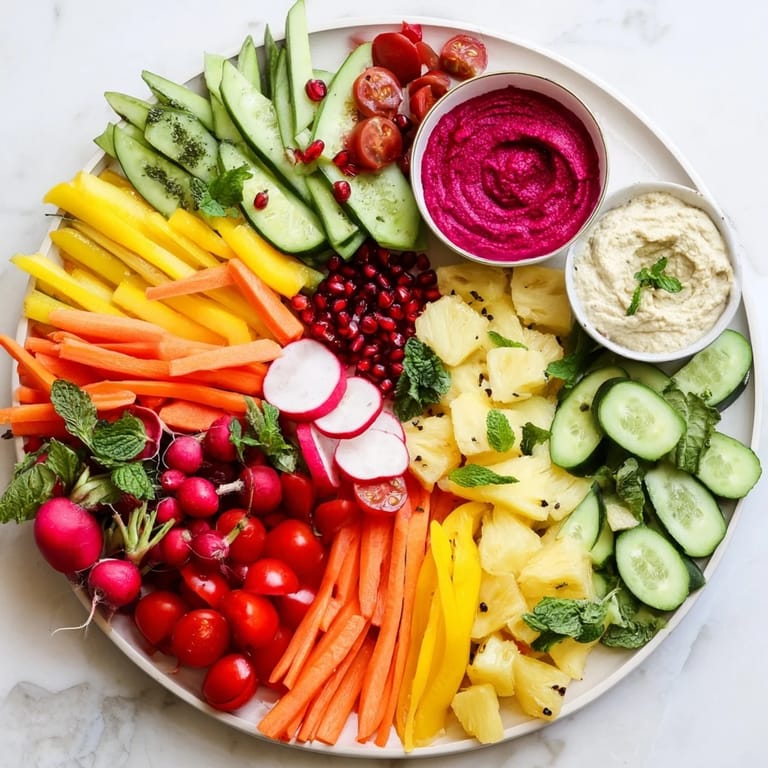
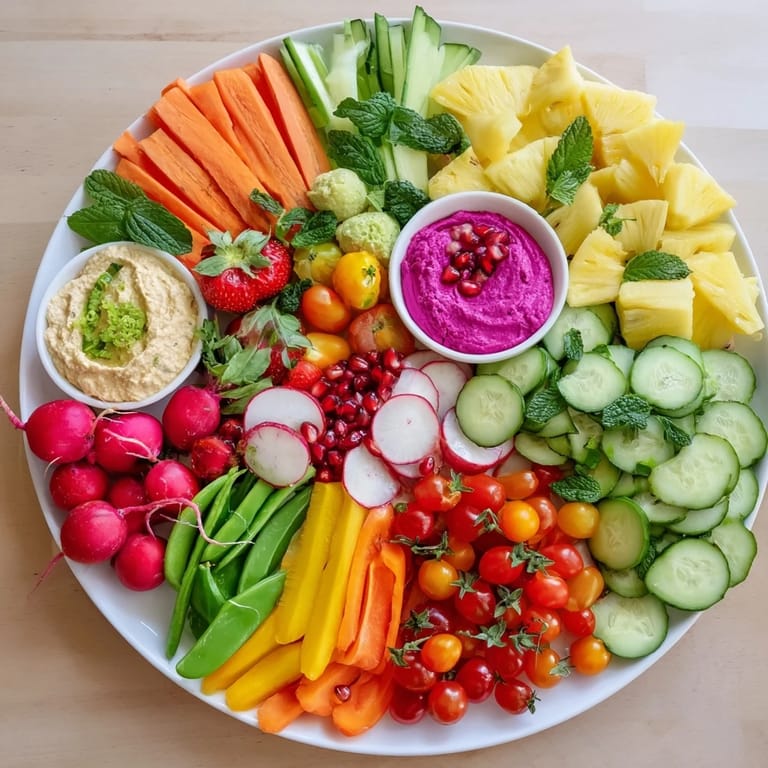
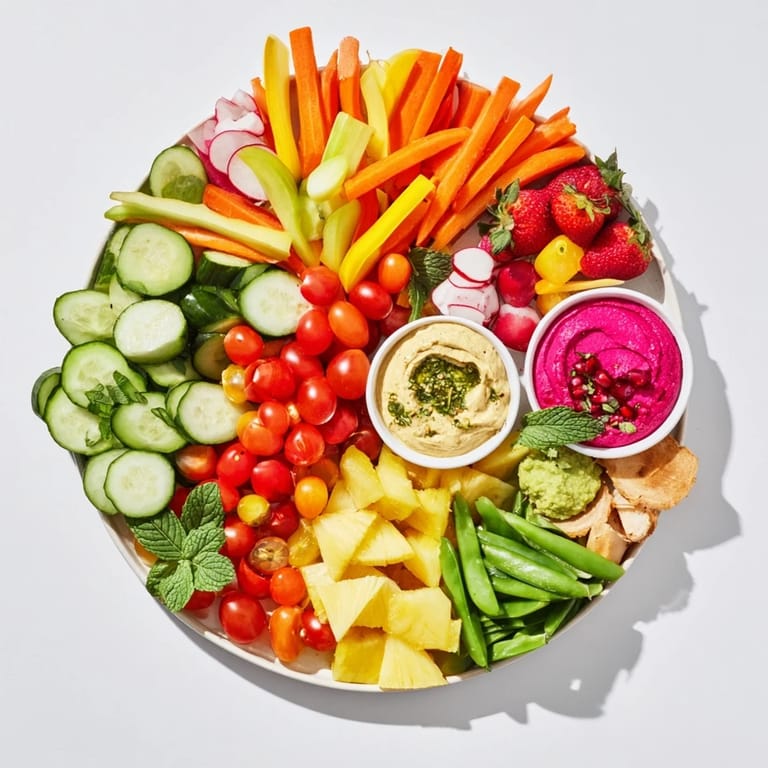
- Place small bowls containing each dip at different points across your platter—imagine them as anchors. Don't put them all in a line; scatter them. I usually place them at 12, 3, 6, and 9 o'clock positions, creating natural pathways for people to move around the platter. Make sure each dip is visible and accessible from multiple angles.
- Build your color blocks with care:
- Now comes the choreography. Group each type of vegetable together, creating color-blocked sections. Put all the carrots together, all the cucumbers in another area, the tomatoes somewhere else. But here's the secret I learned: don't let the colors become predictable. Alternate warm reds and oranges with cool greens and purples. Let a bright yellow or orange section next to a deep magenta one. Think of it like painting—you're creating visual harmony through intentional contrast. Step back frequently to see what you're creating from a distance.
- Weave in fruits for sweetness and surprise:
- Scatter the fruits throughout, letting them sit among the vegetables. The pineapple's golden chunks next to purple radishes, strawberries emerging from sections of greens. Fruits add an element of surprise—people often don't expect them on a vegetable platter, and that joy of discovery is part of the magic.
- Fill the gaps with personality:
- Look at your platter. Where are the empty spaces? This is where the magic happens. Sprinkle pomegranate seeds into gaps—they catch the light and add jewel-like sparkle. Scatter fresh herbs in little clusters. Add edible flowers if you have them, tucking them into visible spots. Arrange crackers and pita chips around the edges and in gaps, creating natural pathways. This step transforms the platter from nice to absolutely stunning.
- Serve with presence:
- If you're serving immediately, carry your platter to the table with intention and place it where people can easily gather around it. If you need to cover and refrigerate it, use a breathable cover—a clean kitchen towel or loosely tented plastic wrap—so condensation doesn't accumulate. Before serving, give it a final look. Add a few more herb sprinkles if needed. The platter is as much about the moment you present it as it is about the food itself.
 Save
Save The most beautiful moment with this platter came when my 6-year-old nephew spent 20 minutes arranging and rearranging sections, asking questions about colors, textures, and why certain things tasted the way they did. His curiosity transformed a platter into a learning experience, and I realized that food prepared with this kind of care invites people to engage differently with what they're eating. It's not just sustenance; it's an invitation to slow down and notice.
The Story Behind Global Platters
I discovered the concept of global platters while traveling through the Mediterranean, watching how people gathered around shared food. There was something about the abundance and variety that felt inclusive, celebratory, and deeply connected to how humans have always eaten together. A global platter isn't a trend—it's a return to an ancient way of sharing that says "there's something here for everyone, take what nourishes you." When I brought this concept home and made it entirely plant-based, I found that it didn't diminish the experience at all. Instead, it deepened it, proving that generosity and abundance aren't about what you remove—they're about how thoughtfully you arrange what remains.
Making This Platter Your Own
The recipe I've given you is a foundation, not a ceiling. The most exciting version of this platter is the one you create based on what's in season and what you love. I've learned that the best platters tell the story of the person making them. In summer, I load mine with fresh berries and stone fruits. In autumn, I add roasted chickpeas and dried fruits. I've done versions with marinated olives, roasted beets, fresh figs, and edible flowers that made people gasp. The vegetables and fruits are your vocabulary—use them to tell your own story.
Pairing and Presentation Tips
Presentation is half the magic of a platter like this. I've learned that people eat first with their eyes, and when you give them something beautiful to look at, they become more adventurous eaters. Think about serving this alongside a crisp white wine, a sparkling water infused with citrus, or a cold herbal tea. The drink should feel as thoughtful as the platter. If you're serving this at a gathering, place the platter at eye level—on a side table or at the center of your table—so people can see it and feel invited to it. Leave some space around it so people can move comfortably, and always provide small plates so guests aren't awkwardly choosing between using their hands and having nowhere to put their chosen vegetables.
- Light a candle near the platter to create an atmosphere of warmth and intention
- Refresh the platter midway through your gathering by adding fresh herbs and fluffing up sections that have been picked from
- Keep the dips covered until the last moment before serving so they maintain their color and creamy texture
 Save
Save Creating a vegan global gardener platter is an act of generosity, and every time you make one, you're sharing abundance and saying "I see you, and I want to nourish you with something beautiful." It never stops feeling like a small act of love.
Recipe FAQ
- → How should the vegetables and fruits be prepared?
Wash and dry all vegetables and fruits thoroughly, then slice as indicated for easy dipping and eating.
- → Can I substitute any ingredients on the platter?
Yes, seasonal vegetables or fruits may be used, and additions like roasted chickpeas or marinated olives work well.
- → Are there allergens to consider in this platter?
The cashew tzatziki contains nuts, and hummus may include sesame; gluten-free crackers should be checked for allergens.
- → What is the best way to arrange the platter for presentation?
Arrange dips in small bowls placed at varied points, then create bright color-blocked sections grouping vegetables and fruits for contrast.
- → How should the platter be served and stored?
Serve immediately for best freshness, or cover and refrigerate until ready to enjoy.
- → What beverages pair well with this vegan platter?
Crisp white wine or sparkling water with citrus complement the fresh and vibrant flavors nicely.