 Save
Save The first time I assembled a proper Turkish meze spread, I was standing in a cramped Istanbul apartment kitchen with my friend Zeynep, watching her hands move with practiced ease as she arranged cheese and olives like she was painting a canvas. She laughed when I asked if there was a "right" way to do it, then showed me how the whole point was to make it look abundant and inviting, the kind of platter that says "pull up a chair, stay awhile." Now whenever I build one at home, I can almost hear that laughter, and I arrange everything the same way she did.
I made this for my neighbors one spring evening when the sun was just starting to linger longer, and watching them discover the dolmas (which they'd never had before) felt like sharing a small secret. My daughter came home from school partway through and immediately grabbed a piece of feta, and suddenly what was supposed to be an appetizer became the whole evening, everyone grazing and chatting while the pita got warm and the hummus slowly disappeared.
Ingredients
- Chickpeas (1 can, drained and rinsed): The foundation of your hummus, and rinsing them removes the starchy liquid that would make it gluey instead of silky.
- Tahini (2 tbsp): This is where the earthy, almost nutty depth comes from—don't skip it or your hummus will taste like you're missing something.
- Extra-virgin olive oil (3 tbsp total): Use good olive oil here because you taste it directly; this isn't the place to use the budget bottle.
- Garlic (1 clove, minced): One is usually enough unless you love garlic aggressively, in which case go ahead and add another.
- Fresh lemon juice (2 tbsp): Fresh squeezed makes a difference you can actually taste; bottled will work but tastes slightly flat by comparison.
- Ground cumin (1/2 tsp): This quiet spice ties everything together and makes people ask what the secret ingredient is.
- Stuffed grape leaves or dolmas (12): Buy the good ones in jars, not the questionable ones gathering dust on a shelf somewhere—they're the showstopper of this platter.
- Feta cheese (100 g, cubed): Salty and crumbly, it's the anchor for the cheese section and tastes better when you cut it yourself right before serving.
- Beyaz peynir or extra feta (100 g): This is a milder white cheese that rounds out the cheese selection, but honestly feta can do double duty if you can't find it.
- Kasseri or halloumi (100 g, sliced): This is the stretchy, slightly firm cheese that gives textural interest and holds up beautifully on a platter.
- Mixed Turkish olives (100 g): Buy them from a good source if you can; they taste infinitely better than the canned ones, and the brine they come in is part of their charm.
- Dried oregano (1/2 tsp): Just a whisper of it over the olives, enough to make you notice it but not enough to overpower.
- Fresh cucumber, tomato, lemon, and parsley: These are your color and brightness, so choose the best looking ones you can find and don't prep them until you're ready to arrange.
- Warm pita or flatbread: The vehicle for everything else, and it should be warm enough that you want to pick it up.
Tired of Takeout? 🥡
Get 10 meals you can make faster than delivery arrives. Seriously.
One email. No spam. Unsubscribe anytime.
Instructions
- Blend your hummus until it's cloud-soft:
- Put all your hummus ingredients in a food processor and let it run for a couple of minutes until it's completely smooth and has that pale, creamy texture that makes you want to dive right in. If it feels too thick, add a splash of water or a squeeze more lemon.
- Taste and adjust like you're the one who'll be eating it:
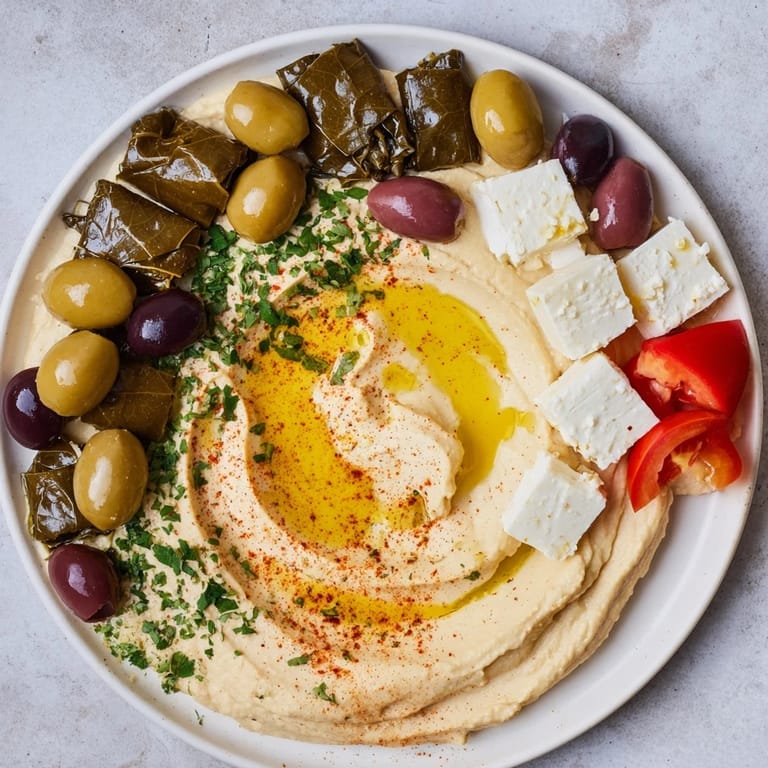
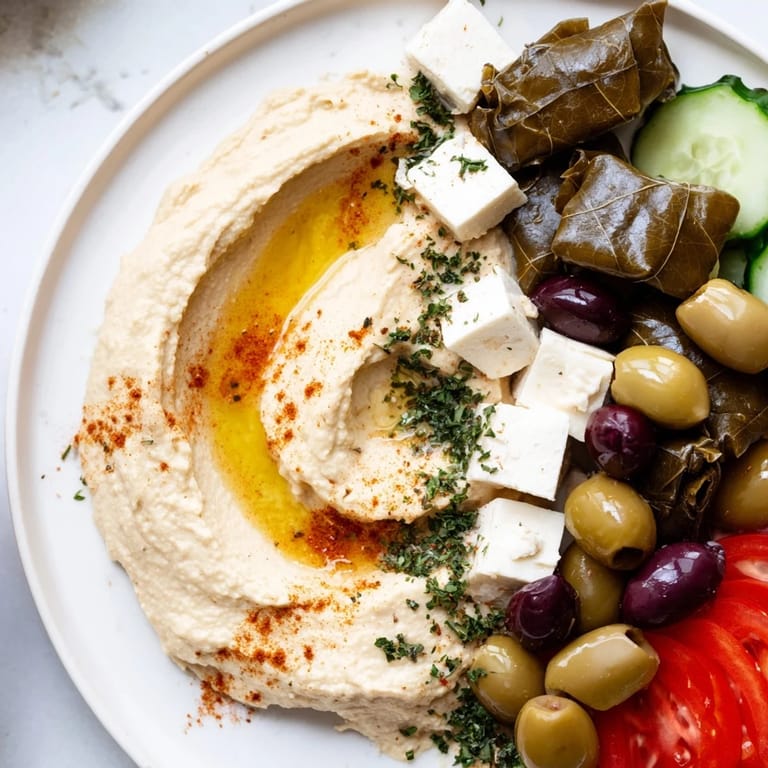
- Hummus is very forgiving, so don't be shy about adding more salt, lemon, or garlic until it tastes right to you. Pour it into your serving bowl and make a little well in the center with the back of a spoon, then drizzle olive oil into that well—it's both beautiful and practical.
- Arrange the dolmas with intention:
- These little rolls deserve their moment, so place them seam-side down in a small section of your platter so they don't get lost among everything else. They're substantial enough to stand on their own.
- Group your cheeses by type:
- Cut them into bite-sized pieces if they aren't already, then arrange them in clusters so people can try one of each without having to hunt. Different cheeses grouped together look more intentional than scattered randomly.
- Wake up your olives with oil and herbs:
- Toss them with olive oil and oregano just before assembling so the flavors are fresh and the oil glistens. If you like them warm, you can heat them gently, but cold is fine too.
- Build your platter like you're creating a painting:
- Start with the hummus bowl in the center or off to one side, then arrange everything else around it in a way that looks generous and colorful. Cucumbers and tomatoes should be fresh and visible, lemon wedges tucked into gaps, fresh parsley sprinkled over everything at the very end for that final pop of green.
- Warm your pita and serve:
- Whether you wrap it in foil in a low oven or hold it over a gas flame for a few seconds, warm pita tastes infinitely better than cold pita. Cut it into triangles and serve alongside, or let people tear off pieces as they go.
 Save
Save There's something about a meze platter that turns eating into a ritual—there's no rush, no "main course" coming next, just time stretching out while people pick at things and talk. I think that's when people actually relax, when they stop waiting for the meal to happen and realize the meal is already here.
Building Your Platter
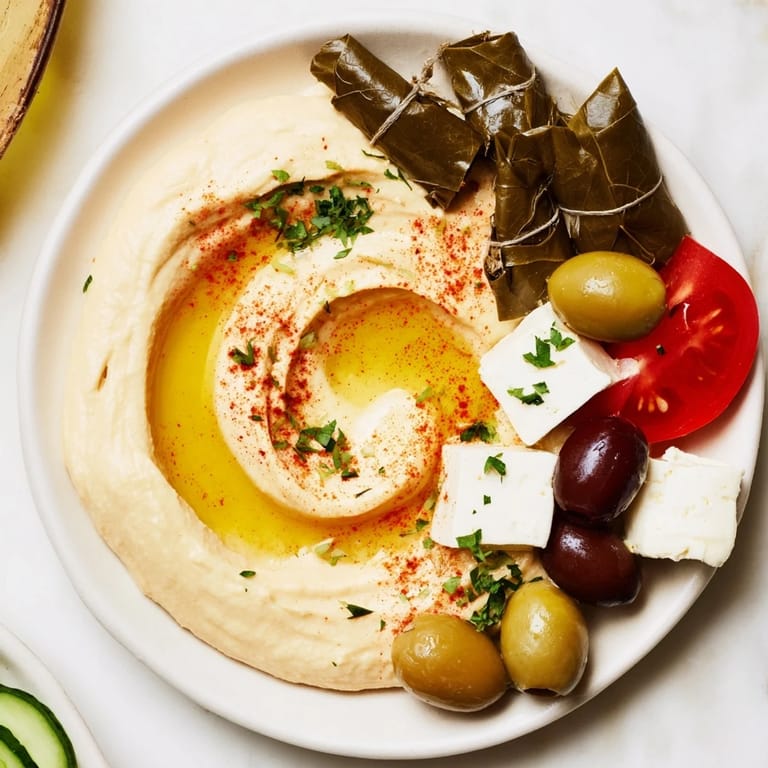
The secret to a meze platter that looks abundant without being overwhelming is negative space and repetition—you want people to see cucumber, tomato, and lemon scattered throughout rather than all in one corner, and you want the eye to travel across the whole surface. Think about the colors you have and distribute them evenly, not because there's a rule but because it looks inviting that way. A platter that looks like you threw it together last minute actually takes more thought than one where everything is crammed together.
Flavor Combinations That Work
The magic of a meze spread is that every combination tastes right—creamy hummus with sharp feta, briny olives with soft cheese, tangy lemon cutting through everything. But there's a rhythm to it: you might start with something bold (an olive, a piece of dolma) and then soften it with something creamy (hummus, kasseri), or you might do the opposite. There's no wrong sequence, which is partly why people stay seated at these platters for hours without thinking twice about it.
Making It Your Own
A Turkish meze platter is forgiving enough to adapt to what you have on hand or what you're in the mood for. The bones of it—hummus, cheese, olives, vegetables, bread—are always the same, but you can add roasted red peppers if you find good ones, or roasted eggplant with garlic, or even candied walnuts if you want something unexpected. The frame stays traditional, but the painting inside is yours to make.
- If you can't find beyaz peynir or kasseri, use more feta or add a mild cheddar—it won't be traditional but it will still taste good.
- Make the hummus a day ahead and store it covered in the refrigerator; it actually improves after a night of sitting.
- Set the platter out with small napkins and maybe small plates if people want them, and watch how it disappears slower when everyone's comfortable.
 Save
Save This is the kind of meal that doesn't need a beginning or an end, that's just as good at the start of an evening as it is two hours in. Make it when you want people to stay longer.
Recipe FAQ
- → What are dolmas and how are they prepared?
Dolmas are tender grape leaves stuffed with a seasoned rice mixture. They can be homemade by cooking rice with herbs and wrapping it in grape leaves, or purchased ready-made for convenience.
- → How is the hummus on this platter made?
The hummus is blended smooth using chickpeas, tahini, olive oil, garlic, lemon juice, cumin, salt, and pepper. It is served with an optional drizzle of olive oil and a sprinkle of paprika or sumac.
- → Which cheeses are featured on the platter?
The platter includes feta, beyaz peynir (a Turkish white cheese), and kasseri or halloumi, all sliced or cubed for easy sharing.
- → What garnishes accompany the Turkish meze platter?
Fresh cucumber slices, tomato wedges, lemon pieces, and chopped parsley add brightness and balance, while warm pita or flatbread completes the platter.
- → Are there wine pairings that complement this assortment?
Yes, crisp white wines like Turkish Narince or the traditional anise-flavored raki pair excellently with the fresh, savory flavors of the meze platter.