 Save
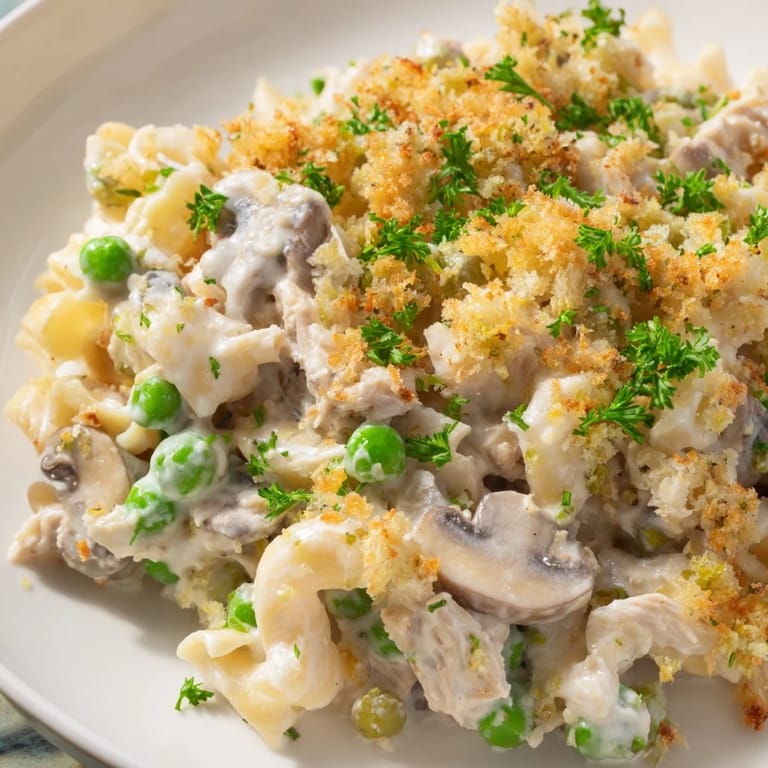
Save There's something about a baking dish of tuna noodle casserole that transports you instantly to someone's kitchen table, where comfort matters more than pretense. I stumbled upon this updated version while reorganizing recipe cards one rainy afternoon, realizing the casserole I'd been making for years was missing something—a little sophistication without losing its soul. The first time I assembled this newer take, with fresh mushrooms sautéed until golden and a sauce that actually tasted like something, my partner looked genuinely surprised when she took a bite. It turns out the dish that felt stuck in the 1950s just needed permission to evolve.
I made this for a potluck once, slightly nervous about bringing what felt like such a humble dish to a dinner party full of ambitious cooks. One of the guests—someone who'd spent time in a professional kitchen—came back for thirds and asked for the recipe with genuine curiosity. That moment completely shifted how I think about this casserole, transforming it from something to apologize for into something worth celebrating.
Ingredients
- Egg noodles (12 oz): Use a good quality brand that holds its shape; cheap noodles turn to mush in the oven's warmth.
- Solid white tuna in water (two 5 oz cans): Drain it thoroughly and gently break it apart with a fork so you get tender pieces rather than tight chunks.
- Frozen peas (1 cup): Thaw them completely beforehand so they distribute evenly and don't release excess water into the sauce.
- Cremini or white mushrooms (1 cup sliced): The earthiness here replaces the funk that canned soup used to provide, and they're worth cooking slowly until they release their moisture and caramelize slightly.
- Yellow onion and celery (1 small onion, 1 cup diced): These form your flavor foundation; don't skip the slow sauté or you'll miss the sweetness that develops.
- Garlic (2 cloves minced): Add it last in the vegetable step so it perfumes the oil without burning.
- Unsalted butter (3 tbsp plus 2 tbsp melted): Using unsalted gives you control over seasoning, and the melted portion binding the topping is essential for that golden crispness.
- All-purpose flour (3 tbsp): This thickens your sauce into silkiness; stir it constantly after adding so you avoid lumps.
- Broth and milk (2 cups broth, 1 cup whole milk): Low-sodium broth lets your Dijon mustard and other seasonings shine, and whole milk creates a richer sauce than lower-fat versions.
- Sour cream (1/2 cup): Whisk it in after you remove from heat so it doesn't curdle from direct high temperature.
- Dijon mustard (1/2 tsp): This small amount adds subtle depth and keeps the sauce from tasting one-note.
- Kosher salt and black pepper (1/2 tsp each): Taste as you season the final mixture; you may need slightly more depending on your broth's sodium level.
- Panko breadcrumbs (3/4 cup): Regular breadcrumbs won't achieve the same satisfying crunch, so don't substitute here.
- Grated parmesan cheese (1/2 cup): Freshly grated makes all the difference; pre-grated versions have anti-caking agents that prevent proper browning.
- Fresh parsley (2 tbsp chopped, optional): A scatter at the end brightens everything visually and adds a whisper of fresh herbal note.
Tired of Takeout? 🥡
Get 10 meals you can make faster than delivery arrives. Seriously.
One email. No spam. Unsubscribe anytime.
Instructions
- Heat your oven and prepare:
- Preheat to 400°F and lightly grease your 9x13-inch baking dish so the sides release cleanly when you serve.
- Cook the noodles:
- Boil them in salted water until just shy of fully tender, since they'll continue cooking in the oven—perfectly al dente noodles stay distinct and don't turn mushy. Drain and set aside.
- Build your vegetable base:
- Melt butter in a large skillet over medium heat, then add onion and celery, letting them soften for about 3 minutes until the onion becomes translucent. Add mushroom slices and cook another 4 minutes, watching as they release their moisture and begin to brown slightly at the edges, then add garlic and stir for just 1 minute until fragrant.
- Create the sauce:
- Sprinkle flour over the vegetables and stir constantly for about a minute to coat everything, creating a paste-like base. Gradually pour in the broth while stirring steadily to prevent lumps from forming, then add milk and let it all come to a gentle simmer. Cook for 3–4 minutes, stirring occasionally, until the sauce coats the back of a spoon.
- Season and finish the sauce:
- Remove the skillet from heat and stir in sour cream, Dijon mustard, salt, and pepper—the heat from the pan will be enough to warm the sour cream without breaking it.
- Combine everything:
- Fold in the drained tuna gently so it doesn't shred into tiny pieces, then add the thawed peas and cooked noodles, stirring until everything is evenly coated and distributed.
- Transfer to baking dish:
- Pour the entire mixture into your prepared dish, using a spatula to smooth the top.
- Make the topping:
- In a small bowl, mix panko breadcrumbs, grated parmesan, and melted butter with a fork until it resembles coarse sand, then sprinkle this mixture evenly over the casserole surface.
- Bake until golden:
- Bake for 20–25 minutes until the topping turns deep golden brown and the edges begin bubbling up around the sides—this is your signal that the casserole has heated through and the sauce is at its creamiest.
- Rest and serve:
- Let it stand for 5 minutes so the sauce sets slightly, making serving cleaner, then scatter with fresh parsley if using and bring it straight to the table.
 Save
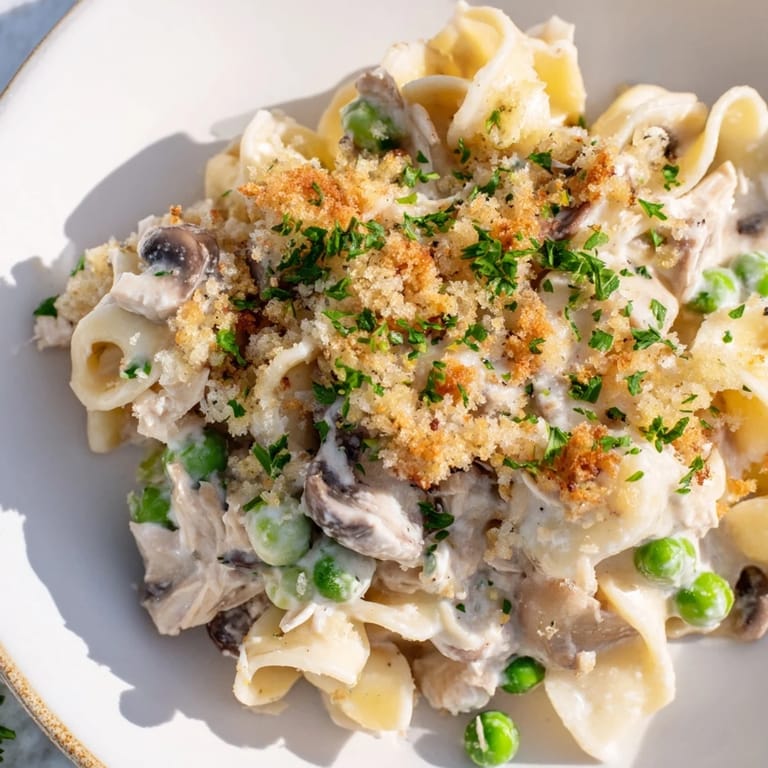
Save Years ago, a friend's child took a tentative first bite of this casserole at our table and actually asked for more—no hesitation, no pushing food around the plate. That's when I realized this dish had something profound to offer: it could bridge generational tastes without compromising on flavor.
Why Fresh Vegetables Matter Here
The magic of this casserole lies in the fact that every vegetable you sauté releases flavor into the butter and creates a base that feels handmade, intentional. When mushrooms cook in butter until their edges curl slightly, they develop an umami depth that canned cream soup never achieves. The celery and onion caramelize subtly, adding sweetness and body that anchor the entire dish. This upfront vegetable work is what separates a casserole that tastes like love from one that tastes like convenience.
The Sauce Is Everything
A proper béchamel base—butter, flour, and broth—teaches you a fundamental kitchen skill that applies everywhere from lasagna to mac and cheese. The sour cream stirred in at the end creates tanginess that prevents the dish from feeling heavy, while the Dijon mustard whispers sophistication without announcing itself. The entire sauce takes maybe 10 minutes to develop, but it's what transforms this from nostalgic into genuinely delicious.
Variations That Work Beautifully
This casserole is forgiving enough to welcome additions and swaps based on what's in your kitchen. A handful of shredded cheddar stirred into the sauce before baking adds sharp richness, or gruyère if you're feeling fancy. Some cooks swap half the sour cream for Greek yogurt and claim it's lighter while staying creamy. The day before serving, you can assemble the entire casserole, cover it, and refrigerate—just add 5 extra minutes to baking time since it'll start cold.
- Try adding a small can of peas and carrots instead of just peas for more color and nostalgia.
- A pinch of paprika or cayenne in the sauce adds warmth without heat.
- Fresh thyme or dill scattered over the topping before baking brings unexpected herbaceous notes.
 Save
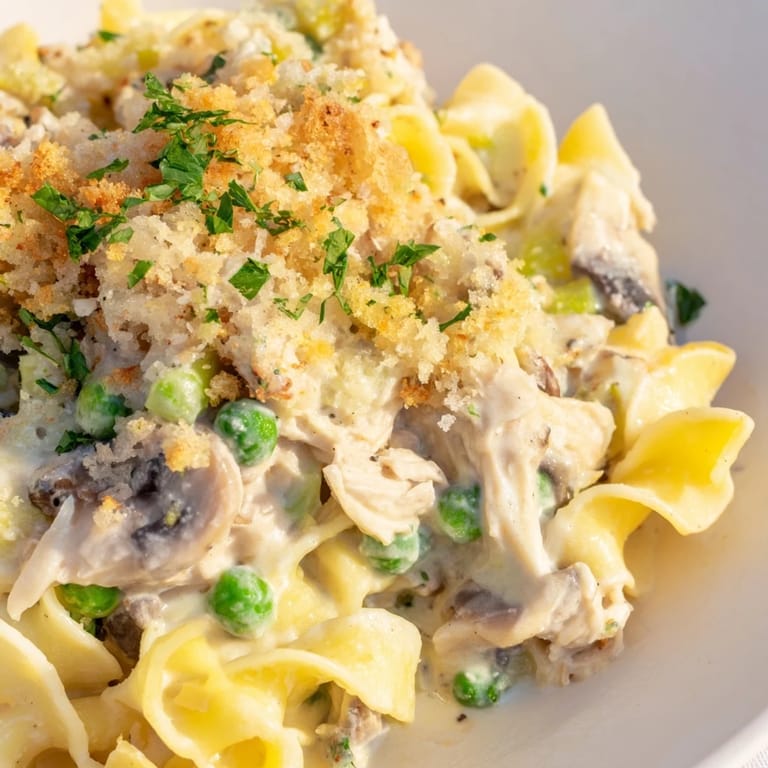
Save This casserole proves that updating a classic doesn't mean abandoning what made it beloved in the first place. It's still the dish people come home for.
Recipe FAQ
- → What type of pasta works best?
Egg noodles are ideal for holding the creamy sauce and blending well with the tuna and vegetables.
- → Can I use fresh vegetables instead of frozen?
Yes, fresh peas and mushrooms can be used; just adjust cooking times to maintain their texture.
- → How do you achieve a crispy topping?
A mixture of panko breadcrumbs, melted butter, and grated parmesan is sprinkled over the casserole before baking for a crunchy finish.
- → Is it possible to make this dish lighter?
Substituting sour cream with Greek yogurt and using low-fat milk can reduce richness while keeping creamy texture.
- → What wine pairs well with this dish?
A crisp white wine like Sauvignon Blanc complements the creamy and savory elements beautifully.