 Save
Save I'll never forget the first time I set out a spicy platter at a dinner party—it was meant to be elegant, but what really happened was pure magic. My friend reached for those vibrant chili flakes in the center, mixed them with the creamy cheeses, and suddenly everyone was crowded around, building their own flavor combinations like we were creating edible art together. That's when I realized this wasn't just about the heat; it was about bringing people into the kitchen moment, letting them be part of the story.
I made this platter for a late-night gathering during a particularly cold autumn, and watching my neighbors huddle around it—peeling peppers, spreading hummus, laughing about who could handle the most heat—reminded me that the best meals aren't always about cooking. Sometimes they're about creating a moment where people feel welcome to be themselves.
Ingredients
- Chili flakes: These are your flavor anchor and the reason guests keep coming back for more. I learned to taste before serving—mild versus hot can change everything, and your guests' preferences matter. Choose based on your crowd, not just your own heat tolerance.
- Fresh red chili peppers: Leave the seeds in if you want serious heat, remove them for a gentler spice that still brings color and flavor. The fresher they are, the brighter your platter looks.
- Fresh jalapeño: This adds a lighter green alongside the reds, but more importantly, it brings a slightly different heat profile that keeps things interesting.
- Sharp cheddar cheese: The aged sharpness stands up beautifully to the heat and cuts through the richness of the other components.
- Pepper jack cheese: This is where the cheese gets spicy itself, creating a dialogue with your central pepper core.
- Feta cheese: The tang here is unexpected and wonderful—it grounds the heat and adds brightness.
- Spicy chorizo: If you're including meat, this is non-negotiable. Its oils and spices are meant for moments like this.
- Soppressata: The cured, slightly peppery flavor complements the fresh heat beautifully.
- Cherry tomatoes: Halving them releases their juice and sweetness, which is your secret weapon against overwhelming heat.
- Red bell pepper strips: Sweet, crisp, and they absorb flavors from the dips like little vessels of delight.
- Cucumber slices: The cooling effect is real and appreciated by those building their tolerance throughout the evening.
- Radishes: Peppery in their own subtle way, they add crunch and an elegant pale pink color.
- Spicy hummus: Choose one with actual kick, not just the idea of kick. This becomes the bridge between raw and cooked elements.
- Roasted red pepper spread: The sweetness here is essential—it's the grace note that keeps the platter balanced.
- Pita chips and crackers: These are your vehicles. Choose crispy over soft; they'll hold up better under the weight of toppings.
- Vegetable sticks: Carrots add sweetness, celery adds an herbaceous crunch. Together they're restorative.
Tired of Takeout? 🥡
Get 10 meals you can make faster than delivery arrives. Seriously.
One email. No spam. Unsubscribe anytime.
Instructions
- Prepare Your Canvas:
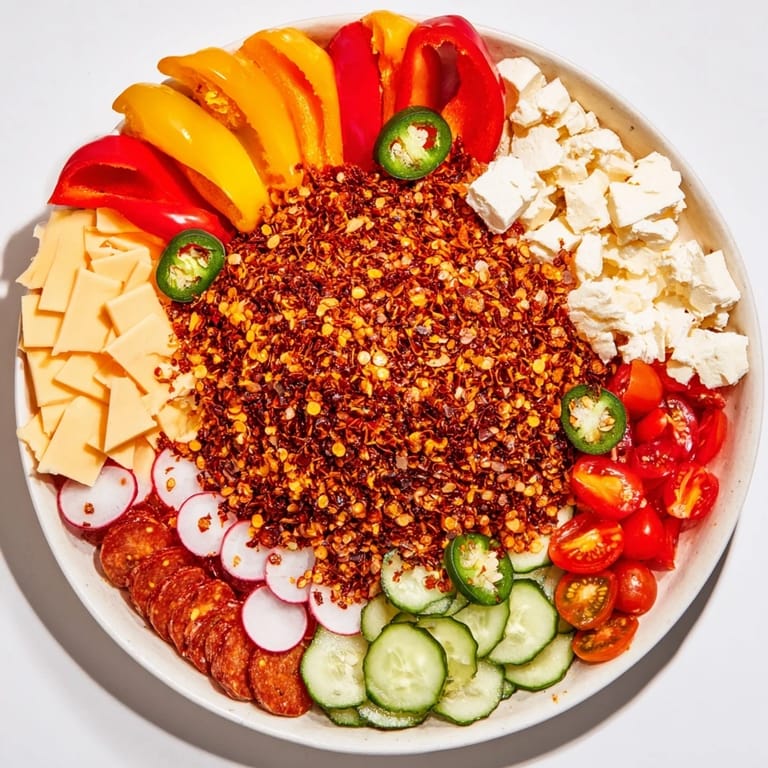
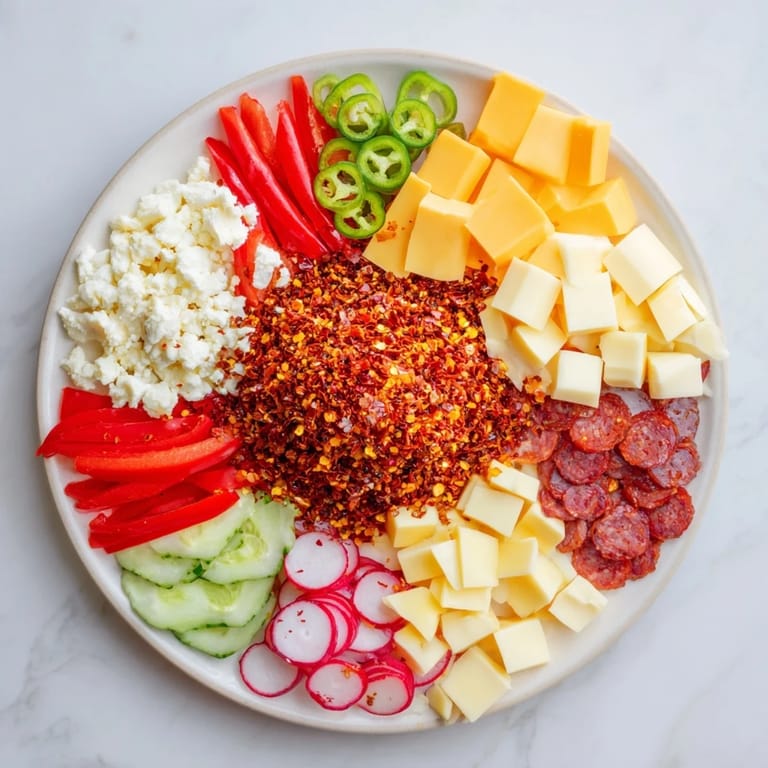
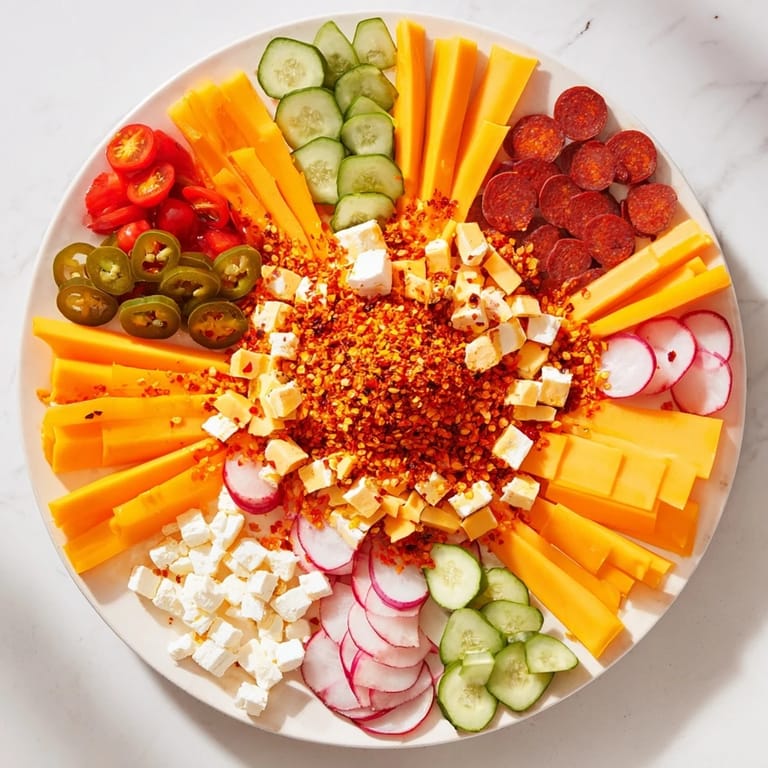
- Find your largest serving platter—this is important because the visual impact is half the appeal. If you're using a small bowl for the chili core, nestle it in the center. Otherwise, make a vibrant mound of chili flakes and sliced peppers right in the middle. Think of this as the heart of the platter, the reason everyone will gather close.
- Build the Inner Ring:
- Arrange your three cheeses around the central core, still relatively close. Let them touch slightly; this isn't about rigid geometry, it's about flow. I like to cluster similar colors together—the whites of feta here, the yellows and oranges of the cheddars there.
- Create the Meat Ring (If Using):
- Fan your cured meats in two sections on opposite sides. Let them overlap slightly so they look abundant and inviting. This step can be skipped entirely for vegetarian crowds.
- Arrange the Fresh Vegetables:
- Now fill in the remaining spaces with your peppers, tomatoes, cucumber, and radishes. Alternate colors intentionally—red next to green next to pale pink. This is where it gets beautiful. Don't overthink it, but do think about contrast.
- Nestle in the Dips:
- Find two good spots in the outer ring for your hummus and red pepper spread. Small bowls work well, or you can arrange them directly on the platter. These are destinations on your flavor map.
- Frame with Crunchy Sides:
- Fill any remaining gaps with pita chips, crackers, and vegetable sticks. These create the outer boundary and give your guests something to hold while they're deciding what to build.
- The Final Touch:
- Step back and look at it. Does it feel balanced? Are there patches where one color dominates? Make small adjustments. Then serve immediately while everything is fresh and the dips haven't started to separate.
 Save
Save What I treasure most about this platter is watching the journey—how someone starts tentatively with cucumber and hummus, gradually works up courage to sample the peppers, and by evening's end is boldly mixing chili flakes with cheese like a seasoned heat-seeker. Food shouldn't intimidate; it should invite exploration.
The Heat Conversation
Heat in food is deeply personal, and I've learned that the mark of a good spicy platter is that it creates a conversation, not a challenge. By placing the intense elements centrally and surrounding them with cooling, soothing flavors, you're saying to your guests: "I trust you to find your own level." Some people will barely touch the chili flakes; others will make them the foundation of everything they build. Both experiences should feel equally valid and equally delicious. The pepper jack cheese and spicy hummus act as bridges—they bring heat without overwhelming, teaching your palate to appreciate the journey rather than just the destination.
Presentation as Storytelling
I've learned that how we arrange food tells a story. The radiating pattern isn't just pretty; it's functional. It says: "Here is the center, the heart, the reason we're gathered." It also means every guest, regardless of where they sit, can reach something delicious. The colors matter too—the deep reds of the peppers next to the bright whites of the cheese, the pale pink of the radishes beside the green of the cucumber. These color conversations make people slower to load their plate, more intentional about their choices, more aware that they're creating something personal.
Customization and Flexibility
One of the truths I've discovered is that the best platters are the ones that bend to serve whoever's gathered. Vegetarian guests? Remove the meats and nobody notices anything's missing—the abundance is still there. Want it milder? Use one type of pepper instead of three. Want to push boundaries? Add pickled jalapeños, spicy olives, or roasted nuts for extra layers of flavor and texture. The core stays true: spice in the center, balance all around, and plenty of room for everyone to make it their own.
- Pickled jalapeños add brininess and extra punch for the brave
- Spicy olives and roasted nuts (if no allergies) bring umami depth
- A drizzle of good olive oil over the whole thing, just before serving, adds richness and helps flavors meld
 Save
Save This platter is really about permission—permission for your guests to play, to explore, to find their own balance between heat and comfort. That's the gift you're giving them.
Recipe FAQ
- → How can I adjust the heat level of the spicy core?
Use milder or hotter chili flakes and fresh peppers based on preference, and remove seeds to reduce heat if desired.
- → What vegetarian options are available for the cured meats?
Substitute cured meats with plant-based alternatives or simply omit them to maintain a vegetarian-friendly platter.
- → Which sides complement the spicy hot take platter best?
Crunchy sides like pita chips, multigrain crackers, and fresh vegetable sticks offer texture contrasts and complement the spicy elements.
- → Can this platter be prepared ahead of time?
Arrange the platter shortly before serving to preserve freshness and vibrant presentation, especially for fresh vegetables and dips.
- → What beverages pair well with this spicy platter?
Crisp white wines and light beers balance the spiciness, enhancing the overall tasting experience.