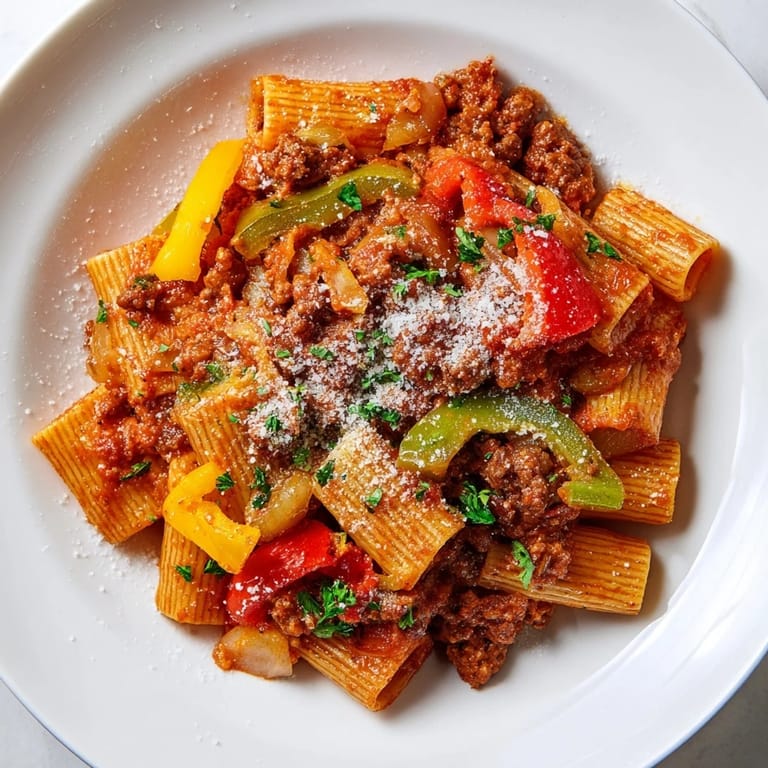
 Save
Save There's something about the smell of sausage hitting hot oil that instantly transports me back to my aunt's kitchen in New Jersey, where this dish was less a recipe and more a weekend ritual. She'd brown the meat while I'd stand at the counter slicing peppers, the bright reds and yellows catching the afternoon light coming through her window. The first time I made it on my own, I burned the garlic because I was too busy chatting on the phone, but somehow it still turned out delicious—which taught me that this dish is forgiving enough to handle small mistakes.
I remember serving this to my neighbors one random Thursday evening when we'd ended up chatting on the porch a little too long, and they showed up hungry and hopeful. I threw together what I had in the pantry, and by the time we sat down, there was this unspoken agreement that this simple bowl of pasta had solved something about the evening that needed solving. That's when I realized it wasn't really a fancy dish at all—it was just honest food that brings people together.
Ingredients
- Italian sausage: Use 1 lb with casings removed so it browns into the sauce rather than staying in chunks; the meat will break down and season everything around it.
- Red, yellow, and green bell peppers: Three different colors aren't just pretty—they give you layers of sweetness, from the mild reds to the slightly grassy greens.
- Large onion: Slice it thin and let it cook long enough to turn golden at the edges, which is where all the real flavor lives.
- Garlic: Mince it fresh and add it near the end so it perfumes the sauce without turning bitter.
- Penne or rigatoni pasta: The tube shapes hold the sauce better than spaghetti would, so every bite has something to grip onto.
- Crushed tomatoes: A 14 oz can provides the body of your sauce without the work of fresh tomatoes.
- Tomato paste: Just 2 tablespoons deepens the flavor and adds a subtle richness that makes people ask what your secret is.
- Dried oregano and basil: Don't skip these—they're what make it taste Italian-American and intentional rather than just tomato sauce on pasta.
- Red pepper flakes: Optional, but a half teaspoon adds a whisper of heat that wakes everything up.
- Olive oil: Use good oil for browning the sausage; it makes a difference in how the meat tastes.
- Fresh parsley: Chop it just before serving so it stays green and bright on top of the warm pasta.
- Parmesan cheese: Freshly grated tastes nothing like the pre-grated stuff in the green can, and your guests will notice.
Tired of Takeout? 🥡
Get 10 meals you can make faster than delivery arrives. Seriously.
One email. No spam. Unsubscribe anytime.
Instructions
- Get your water boiling and pasta started:
- Fill a large pot with salted water—it should taste almost like the sea—and bring it to a rolling boil. Add your pasta and follow the package timing, but start testing a minute or two early so you catch it at that perfect al dente moment. Once it's done, drain it but save a coffee mug of the starchy water before you do.
- Brown the sausage until it's golden:
- Heat 2 tablespoons of olive oil in a large skillet over medium heat and let it get shimmery. Add the sausage with its casing removed, breaking it into smaller pieces as it cooks with a wooden spoon, and let it sit undisturbed for a minute or two so it gets a proper golden crust. This takes about 5 to 7 minutes, and you'll know it's done when there's no pink left and it smells savory and rich.
- Soften the peppers and onions until they're almost caramelized:
- In the same skillet, add your sliced peppers and onions and let them cook for 5 to 6 minutes, stirring every minute or so, until the edges start to turn golden and everything softens. They should smell sweet and toasty, and if the bottom of the pan gets a little brown and crusty, that's exactly what you want.
- Add the garlic and let it perfume everything:
- Stir in your minced fresh garlic and cook it for just about 1 minute, until the whole skillet smells like an Italian kitchen. Don't let it sit too long or it'll turn bitter and lose its brightness.
- Build your sauce with tomato and spices:
- Add the tomato paste first and stir it around for a minute so it caramelizes slightly, then pour in the crushed tomatoes along with the oregano, basil, and red pepper flakes if you're using them. Season with salt and black pepper, then let it simmer gently for about 5 minutes so all the flavors can start talking to each other.
- Bring the sausage back in and meld everything together:
- Return the cooked sausage to the skillet and stir it through the sauce, then let everything simmer together for 3 to 4 minutes. If your sauce looks too thick or heavy, loosen it up with a splash of that reserved pasta water you saved.
- Toss the pasta with the sauce and finish:
- Add the drained pasta directly to the skillet and turn everything together gently so each piece gets coated in the sauce. Heat it through for just 1 to 2 minutes, then serve it immediately in bowls, topped with fresh parsley and a generous handful of grated Parmesan cheese.
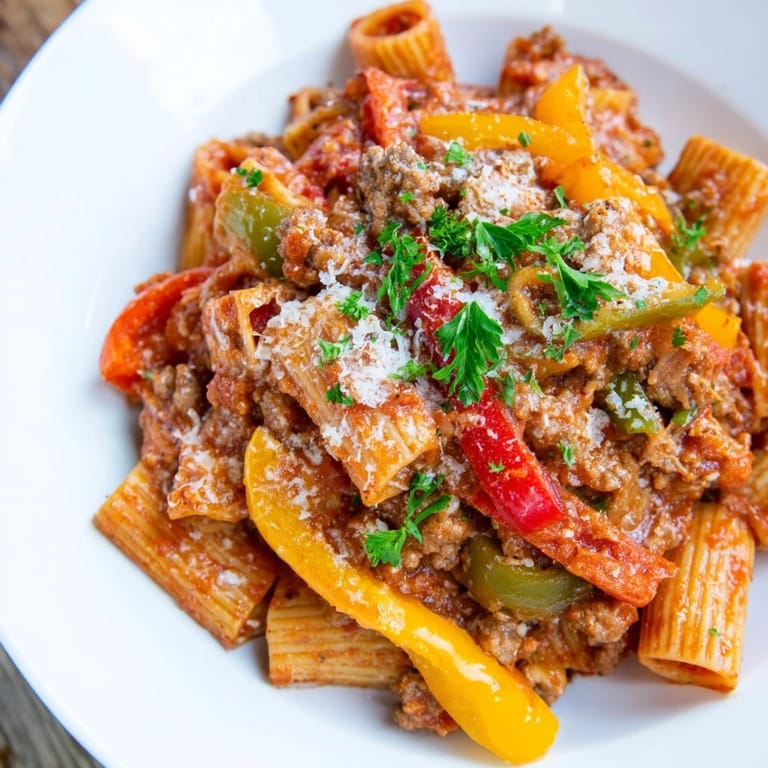 Save
Save I made this dish once for someone who said they didn't really like pasta, and they went back for seconds without thinking about it. There's something about the way the sauce clings to the tubes of penne and the sausage flavors everything so completely that it stops being just dinner and becomes something shared and real.
Why This Dish Matters
Sausage and peppers pasta sits right at the heart of Italian-American cooking—it's not haute cuisine, but it's the kind of food that says I care about feeding you something good. The peppers and onions lose their individual edges and become part of something bigger, which is maybe the whole point of cooking with someone else in mind. Every time I make this, I'm a little bit that kid watching my aunt brown the meat, and also exactly the person I am right now, in my own kitchen, trying to make something worth sitting down for.
The Small Moments That Matter
The most important part of this recipe isn't even written down—it's the moment when the sausage first hits the hot oil and the kitchen fills with the smell that makes you know something delicious is happening. That sensory snap is worth paying attention to, because it tells you the heat is right and you're in for something good. I've learned that rushing through that browning step doesn't save time; it just gives you sad, pale meat instead of the deep, rich foundation that holds everything else up.
How to Make It Your Own
Once you understand how this dish works, you can start playing with it in ways that feel natural to your own kitchen. Some cooks add a splash of red wine to the sauce, which gives it a deeper color and a subtle richness that lingers on your palate. Others swap in turkey or chicken sausage for something lighter, or add fresh basil at the very end instead of relying entirely on the dried version. The pasta water is the only thing I wouldn't change—that starch is what pulls everything together and makes it taste less like ingredients tossed in a pan and more like something intentional and complete.
- A splash of good red wine stirred into the sauce after the tomatoes adds depth and sophistication without tasting alcoholic.
- Keep a handful of fresh basil leaves torn up for the very end, for brightness that the dried herbs can't quite reach.
- If your crowd loves heat, don't be shy with the red pepper flakes—they bloom and mellow in the simmering sauce rather than staying sharp.
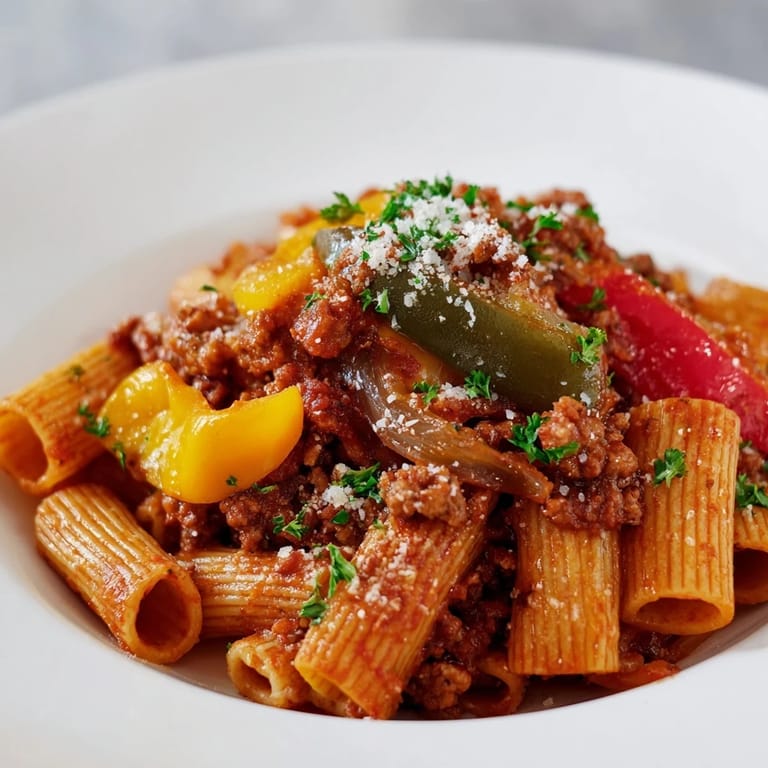 Save
Save This is the kind of meal that works just as well on a Tuesday night when you're tired as it does when you're cooking for people you want to impress. It's honest, it's straightforward, and it tastes like someone cared.
Recipe FAQ
- → What type of pasta works best for this dish?
Penne or rigatoni are ideal as they hold the sauce well and complement the sausage and peppers.
- → Can I use a different meat instead of Italian sausage?
Yes, turkey or chicken sausage makes a lighter alternative while maintaining great flavor.
- → How do I prevent the sauce from becoming too thick?
Add reserved pasta water gradually to thin the sauce to your desired consistency while simmering.
- → What herbs enhance the flavor of this pasta?
Dried oregano and basil add classic Italian aroma and depth to the sauce.
- → Can this dish be prepared ahead of time?
Yes, it reheats well and flavors may even deepen after resting overnight in the refrigerator.
- → What can I serve alongside this pasta?
A crisp salad or crusty bread pairs nicely to balance the hearty main.