 Save
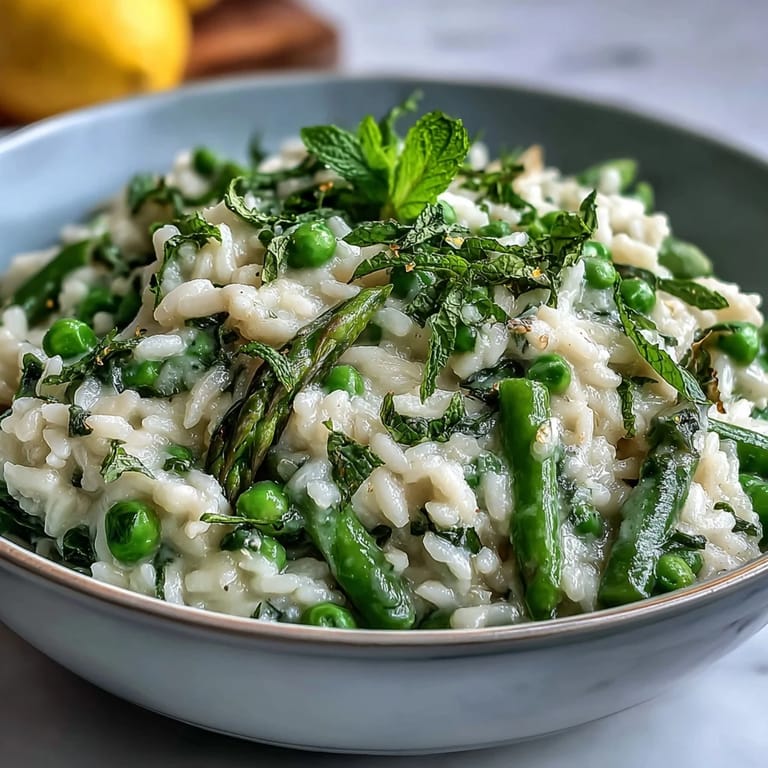
Save The first time I made this risotto was on a whim—spring had finally arrived, and I'd spotted the most vibrant snap peas at the farmers market that morning. My friend texted asking what I was cooking for dinner, and something about the season just said risotto. Two hours later, as I stirred in the mint and watched the steam rise off that creamy, pale green canvas, I realized I'd stumbled onto something that felt both effortless and impressive. It's become my go-to when I want to celebrate spring without overthinking it.
I'll never forget serving this to my in-laws the first time—they're the type who appreciate good food but rarely get excited about anything. When my mother-in-law asked for the recipe and actually wrote it down, I knew I'd nailed it. She made it the following week and told me it reminded her of a trattoria near Lake Como she visited decades ago, which somehow made the whole endeavor feel worth it.
Ingredients
- Fresh or frozen green peas (1 cup): The heart of this dish—frozen peas work beautifully because they're picked and frozen at peak ripeness, so don't feel bad choosing them over fresh if that's what you have.
- Arborio rice (1 1/2 cups): This specific rice releases starch as you stir, creating that signature creamy texture without any cream at all.
- Vegetable stock (4 cups, kept warm): Warm stock gets absorbed more readily into the rice and helps maintain the cooking momentum—cold stock will shock the rice and slow everything down.
- Dry white wine (1/2 cup): This adds acidity and depth; the alcohol cooks off, leaving a subtle sophistication that plain stock alone can't match.
- Unsalted butter (3 tbsp total): Divided between the beginning and end, butter is what makes risotto taste like risotto—it's worth using good quality.
- Freshly grated Parmesan cheese (1/2 cup plus extra): Grate this right before using; pre-grated cheese has anticaking agents that prevent it from melting smoothly into the risotto.
- Fresh mint (1/4 cup, finely chopped): Add this at the very end so it stays bright and fragrant rather than turning dark and muted from the heat.
- Lemon zest (from 1 lemon): This tiny addition lifts everything—it's the secret whisper that makes people ask what's different about your risotto.
Tired of Takeout? 🥡
Get 10 meals you can make faster than delivery arrives. Seriously.
One email. No spam. Unsubscribe anytime.
Instructions
- Build your flavor base:
- Melt 2 tablespoons of butter in a large saucepan over medium heat and let it foam gently. Add your finely chopped onion and let it soften for about 4 minutes, stirring occasionally until it's translucent and sweet-smelling. Add the garlic and stir for just 1 minute more—you want it fragrant, not browned.
- Toast the rice:
- Pour in the Arborio rice and stir constantly for about 2 minutes, coating each grain in butter. You'll notice the grains become slightly translucent at the edges while staying opaque in the center—this is exactly what you're after. The toasting gives the rice a subtle nutty flavor and helps it maintain its texture while absorbing liquid.
- Deglaze with wine:
- Pour in the dry white wine and stir constantly, letting it sizzle and reduce into the rice. When it's mostly absorbed (you'll see the wine disappear and smell the alcohol cooking off), you're ready for the stock.
- Add stock with patience and rhythm:
- Ladle in warm vegetable stock one ladleful at a time, stirring frequently. Wait until most of the liquid has been absorbed into the rice before adding the next ladle—this constant attention is what creates the creaminess. It takes about 18 to 20 minutes total, and your arm might get tired, but that's exactly when you know you're doing it right.
- Welcome the peas:
- During the last 5 minutes of cooking, stir in the peas so they heat through while staying bright green and tender. If you add them earlier, they'll turn dull and lose their delicate texture.
- Finish with the flourish:
- Remove the pan from heat and stir in the remaining 1 tablespoon of butter, grated Parmesan, fresh mint, lemon zest, salt, and pepper. Stir until everything is creamy and well combined—the residual heat will melt everything together beautifully. Taste and adjust the seasoning, remembering that Parmesan is salty, so go easy at first.
- Serve immediately:
- Risotto waits for no one, so have your bowls ready and your guests seated. Plate it quickly, top with extra Parmesan and a few fresh mint leaves, and watch the magic happen.
 Save
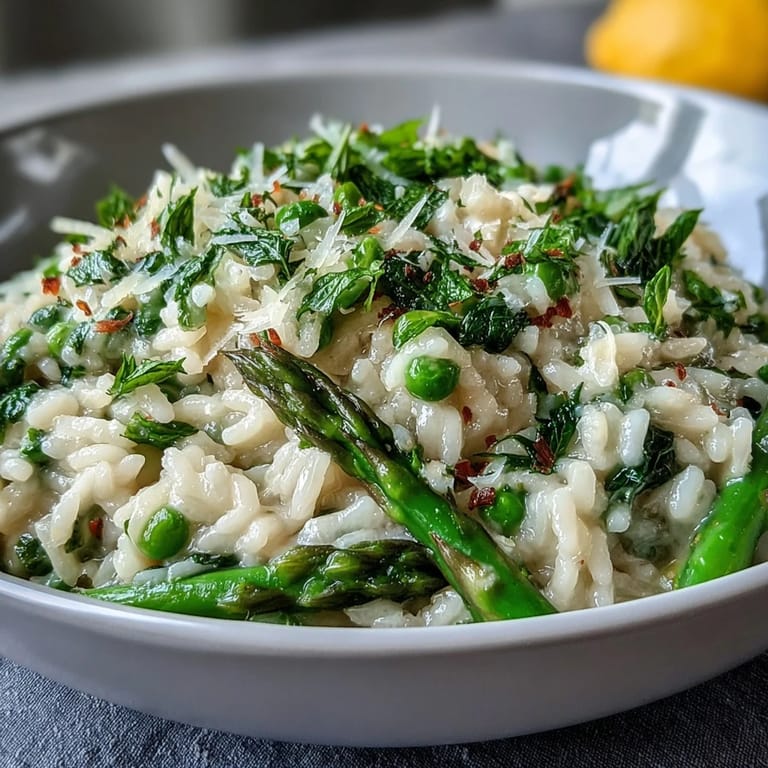
Save There's something about the moment when you finish a risotto and take a step back to look at what you've created—pale green, silky, steaming—that makes all the stirring feel worthwhile. My partner walked into the kitchen during my last batch and just stood there breathing in, saying nothing, which I've learned is the highest compliment in our house.
The Magic of Spring Produce
This dish truly shines when you respect the ingredients for what they are—simple, seasonal, and honest. Spring peas are delicate, and mint is intoxicating when it's fresh. I learned this the hard way when I once tried to make risotto in November with sad, out-of-season peas, and it was fine but forgettable. The same recipe in May tastes like a completely different dish. Don't force this recipe outside its season; instead, let it remind you that some dishes are meant to be celebrations of when they naturally occur.
Wine Pairing and Table Presence
A crisp white wine like Sauvignon Blanc or Pinot Grigio is the natural companion here—the acidity cuts through the richness of the risotto and echoes the brightness of the mint and lemon. I've served this at casual weeknight dinners and at formal gatherings, and it works beautifully in both contexts because it's elegant without being fussy. The plate itself looks like springtime, which means your table automatically feels more intentional and thoughtful.
Customization and Olive Oil Finishing
Once you've mastered the base recipe, you have a canvas for creativity—some nights I add a handful of asparagus tips, other times I stir in fresh ricotta for extra richness. A drizzle of good-quality olive oil before serving adds a final layer of flavor and a subtle richness that elevates the whole experience. The beauty of risotto is that it's forgiving once you understand the fundamental technique.
- For extra luxury, finish with a small dollop of mascarpone stirred in just before serving.
- If you can't find fresh mint, flat-leaf parsley alone works, though the dish will taste different.
- Always taste and adjust your seasoning at the very end—you might need more lemon zest or salt than you expect.
 Save
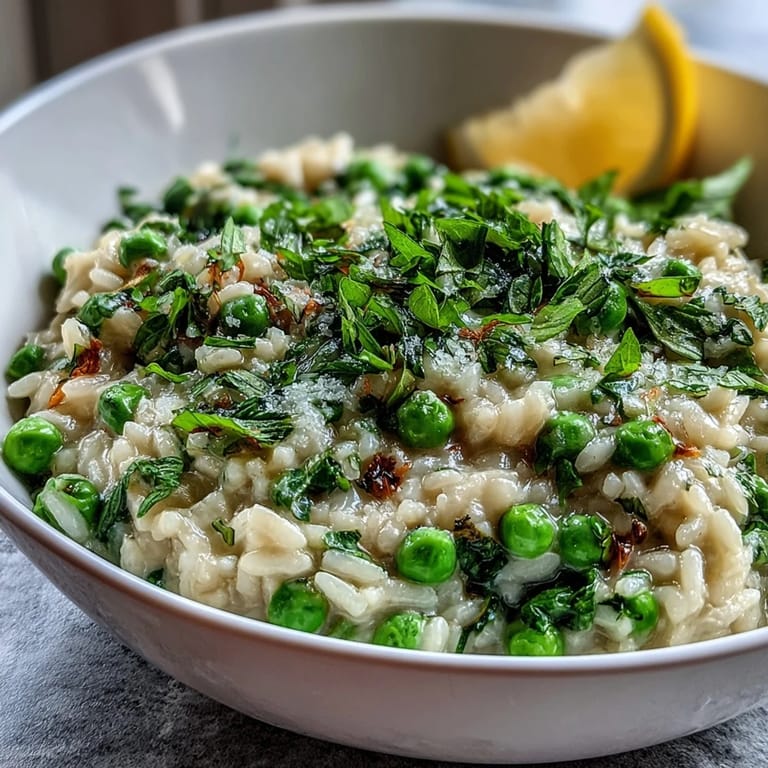
Save This risotto has become my answer to the question of what to cook when I want to feel capable and creative without burning myself out. It's the kind of dish that reminds me why cooking matters—not because it's complicated, but because it's genuine.
Recipe FAQ
- → What type of rice is best for this dish?
Arborio rice is ideal as it absorbs liquids well, releasing starch to create the creamy texture characteristic of this dish.
- → Can frozen peas be used instead of fresh?
Yes, frozen peas work well and can be added toward the end of cooking to retain their bright color and sweetness.
- → How does the white wine affect the flavor?
Dry white wine adds subtle acidity and depth, helping to balance the richness of butter and Parmesan.
- → What herbs complement the peas and mint?
Fresh mint and optional flat-leaf parsley enhance freshness and add layers of herbal aroma, brightening the dish.
- → How can the dish be made richer?
Adding a drizzle of good-quality olive oil just before serving can enhance richness and mouthfeel.
- → What is the recommended cooking time?
Plan about 30 minutes for cooking the risotto, including gradually adding stock until grains are tender yet firm.