 Save
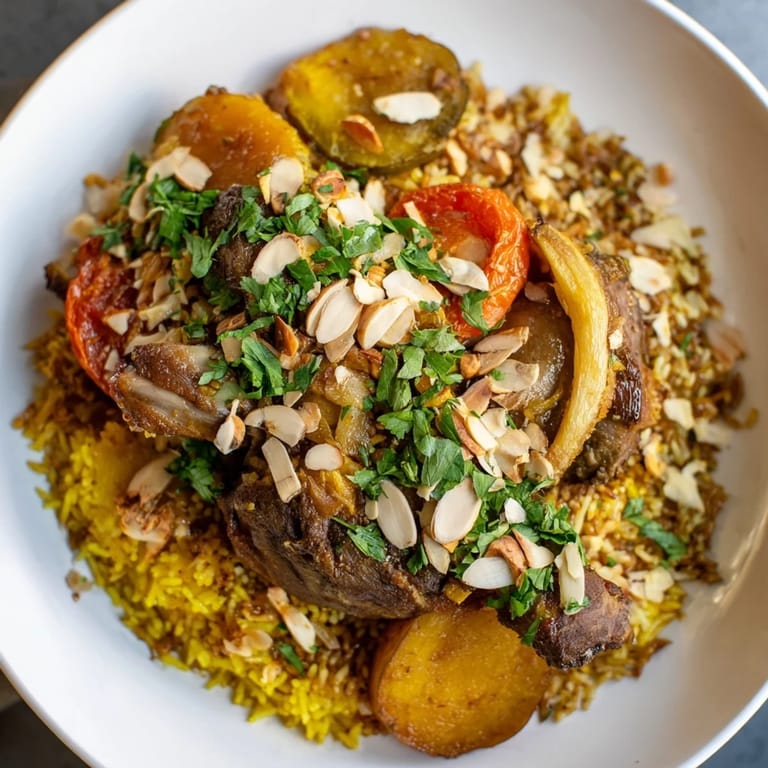
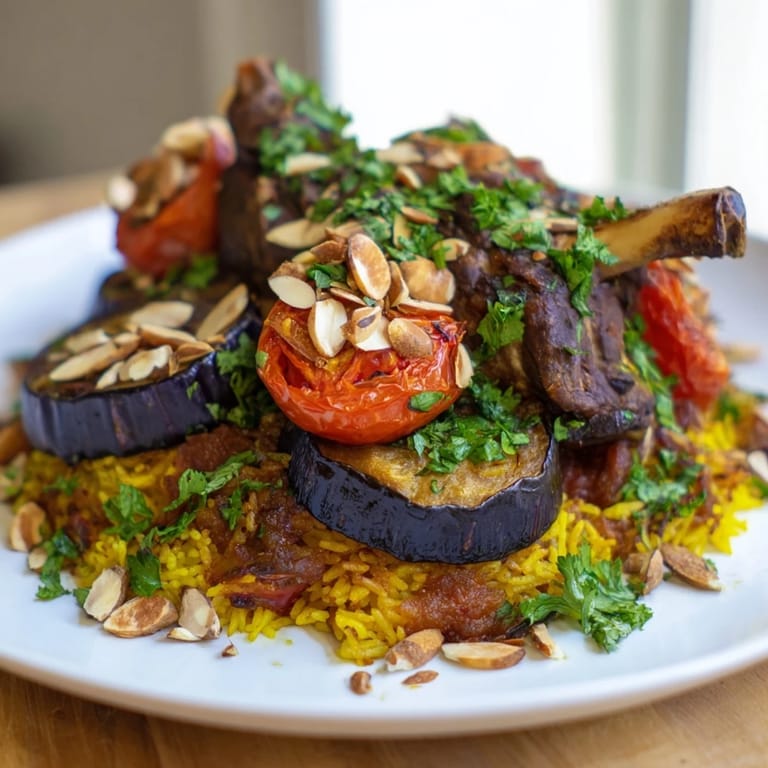
Save The first time I watched someone flip a pot of Maqluba onto a platter, I held my breath. The dramatic inversion revealed a perfectly golden dome of rice studded with caramelized vegetables and tender meat, and I understood instantly why this Palestinian dish has been passed down through generations with such reverence. It's not just dinner—it's theater, tradition, and comfort all at once, built on layers of flavor that reveal themselves as you eat.
I learned to make this properly at a friend's kitchen in Ramallah, where her mother moved through the steps with the kind of confidence that comes from muscle memory spanning decades. She didn't measure the broth or fret about timing—she trusted her senses, the smell of cinnamon mixing with toasted eggplant, the gentle sound of rice settling. Watching her flip it onto the platter was like witnessing someone tie a perfect knot blindfolded.
Ingredients
- Lamb shanks or chicken pieces (900g): Bone-in cuts matter here because they release collagen into the broth, creating depth you can't get from boneless meat—I learned this the expensive way the first time I tried shortcuts.
- Basmati rice (2 cups): Long-grain and fragrant, it needs rinsing until the water runs clear so each grain stays separate rather than clumping into paste.
- Eggplant (2 medium): Roasting it first prevents it from turning mushy and absorbing too much oil; the slight char adds sweetness.
- Potatoes (2 medium): Waxy varieties hold their shape better than starchy ones when layered and pressed.
- Tomato slices (2 large): These form the beautiful base when the dish is flipped, so choose tomatoes that are ripe but still firm enough to slice cleanly.
- Onion (1 medium): Sautéed until soft, it becomes almost dissolves into the broth, lending sweetness without texture.
- Spice blend (allspice, cinnamon, black pepper): The trinity that makes this recognizably Palestinian—warm, slightly sweet, never harsh.
- Turmeric and cumin for the broth: These go into the liquid that steams the rice, making every grain absorb the spice rather than just resting on top.
- Toasted almonds or pine nuts: The final garnish adds a satisfying crunch and a richness that balances the soft layers beneath.
Tired of Takeout? 🥡
Get 10 meals you can make faster than delivery arrives. Seriously.
One email. No spam. Unsubscribe anytime.
Instructions
- Prepare the rice foundation:
- Rinse your basmati rice in cold water several times, swirling it with your fingers until the water stays relatively clear—this removes excess starch. Soak for 30 minutes, then drain completely; wet rice won't layer properly in the pot.
- Season and sear the meat:
- Coat your lamb or chicken generously with black pepper, allspice, cinnamon, and salt, letting the spices cling to every surface. Heat oil in your heavy-bottomed pot and sear the meat until it's deeply browned on all sides, listening for that satisfying sizzle that tells you the color is real.
- Build the broth:
- Sauté the onion slices in the same pot until they soften and turn golden, then return the meat and pour in broth to cover it halfway. Let this simmer gently for 30–40 minutes—you're not rushing; you're letting the meat become tender while the broth becomes infused with all its flavors. Reserve every drop of that liquid.
- Roast the vegetables:
- While the meat cooks, brush your eggplant and potato slices with oil and spread them on baking sheets, then roast at 200°C until they're golden and tender—about 20–25 minutes. You want them cooked through but not mushy, with just enough char to taste like they've been loved.
- Layer the layers:
- Start with tomato slices covering the bottom of your pot like roof tiles, then layer roasted potatoes, then eggplant, then the cooked meat and softened onions. Crown it all with your drained rice, pressing it down very gently so the layers stay distinct. Stir turmeric, cumin, and salt into your reserved broth, then pour it over the rice until it just covers the top—the rice will absorb it as it cooks.
- The gentle steaming:
- Place a plate or heatproof lid smaller than the pot directly on the rice to keep everything compact, then cover the whole pot tightly with its lid. Bring it to a gentle simmer over medium heat, then reduce to low and let it cook undisturbed for 35–40 minutes; the sound becomes quieter as the liquid absorbs, which is how you know it's nearly done.
- The rest and flip:
- Remove from heat and let everything sit, covered, for 15 minutes—this resting period is crucial, letting the rice finish cooking from residual heat. Then comes the magic: place your serving platter over the pot, take a breath, and flip it all upside down in one confident motion, revealing the golden dome.
 Save
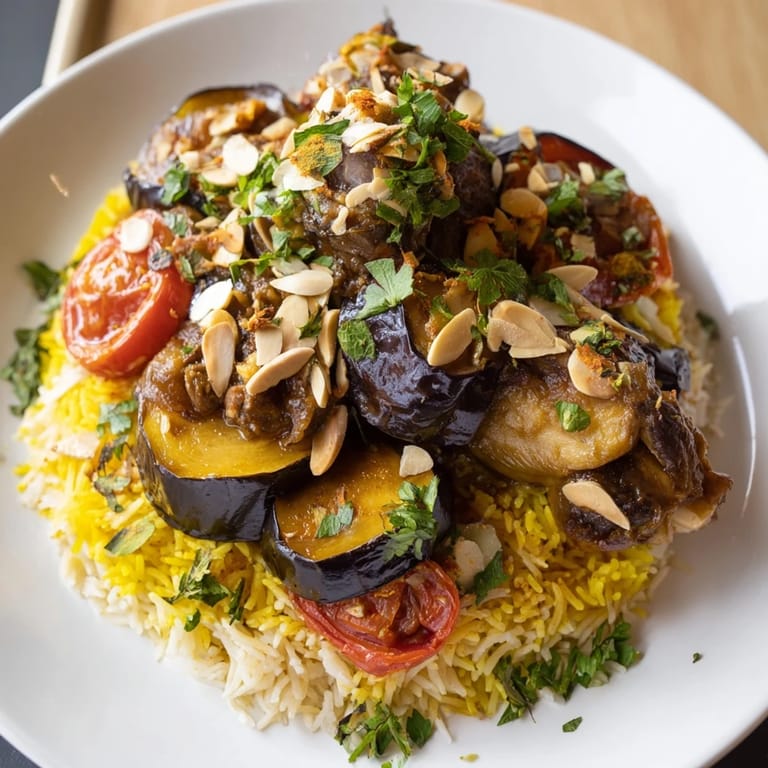
Save The moment that platter lifts to reveal the finished Maqluba—that perfect dome of golden rice with caramelized vegetables nested inside—is when you understand why this dish means so much. It's not just dinner; it's proof that patience, technique, and the right combination of ingredients can create something that looks impossible but feels inevitable.
The Spice Story
Cinnamon and allspice together are what makes Maqluba unmistakably Palestinian, a flavor profile that connects to centuries of Levantine cooking where sweet spices weren't reserved for desserts. The warmth of these spices doesn't overpower the meat; instead, they lift it, making the lamb taste like the best version of itself. When you add turmeric to the broth, you're not just adding color—you're adding an earthy undertone that makes the rice taste almost floral.
Why the Flip Matters
The inversion isn't theatrical for its own sake; it's how the dish is meant to be eaten and served. The vegetables that were on the bottom become the attractive crown on top, and the rice that absorbed all the broth and meat juices is now exposed and beautiful. The first time I made this, I was so nervous about the flip that I let it cool slightly, which was actually a mistake—the best moment to flip is when everything is still warm and holds together as one unified cake.
Serving and Storage Wisdom
Maqluba is best eaten the day it's made while it still has that structure and warmth, though leftovers keep well refrigerated for three days. Serve it with a cool cucumber-yogurt salad or simply with plain yogurt on the side—the acidity and creaminess cut through the richness of the meat and oil perfectly. You can reheat individual portions in a skillet with a splash of broth, though the presentation won't be as dramatic.
- A squeeze of fresh lemon right before eating brightens all the warm spices and ties the dish together.
- If you have leftover cooked rice and vegetables, don't throw them out—they transform beautifully into a fried rice for the next day.
- Make sure your serving platter is large enough and heatproof before you flip, or you'll have a moment of panic I've definitely experienced.
 Save
Save Maqluba teaches you that good cooking isn't about complicated techniques but about respecting ingredients, building layers of flavor patiently, and trusting the process enough to flip it all upside down. Once you make it, you'll understand why people pass this recipe down like a secret.
Recipe FAQ
- → What is the best meat for Maqluba?
Lamb shanks or chicken pieces with bone in provide rich flavor and tender texture, ideal for layering.
- → How do I prevent the rice from sticking during cooking?
Soak the basmati rice beforehand, drain well, and use just enough broth to cover for gentle, even cooking.
- → Can vegetables be substituted in this dish?
Yes, cauliflower florets can replace eggplant for a different taste and texture while maintaining the layered effect.
- → Why is the dish flipped after cooking?
Flipping unmolds the layered ingredients, showcasing a beautiful presentation with meat and vegetables on top.
- → What garnishes complement Maqluba?
Toasted slivered almonds or pine nuts and freshly chopped parsley add crunch and freshness to the final dish.