 Save
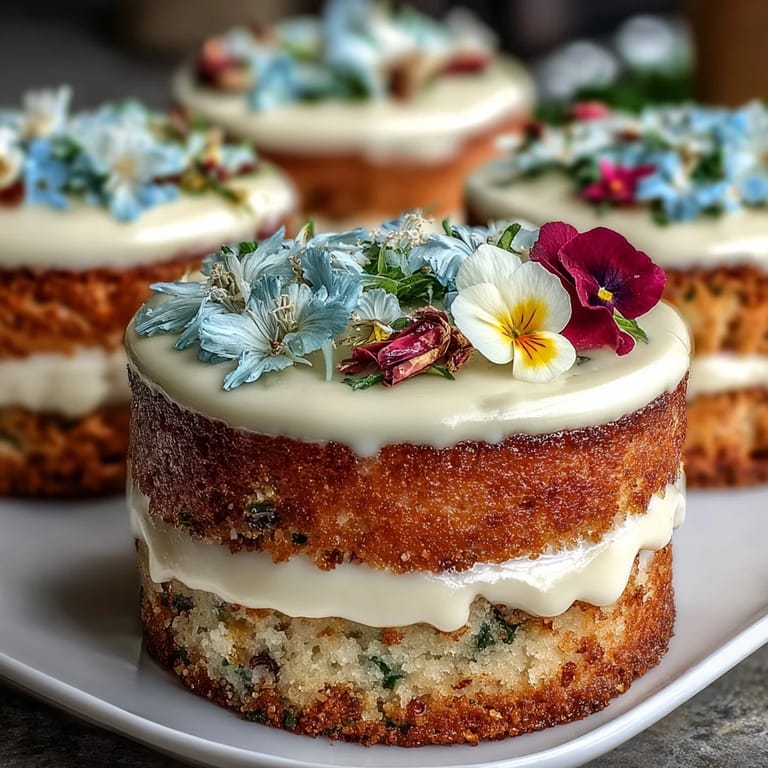
Save My sister called me three days before her birthday asking if I could make something that looked as special as it tasted. She mentioned wanting something delicate, something spring-like, and definitely something with flowers. I hung up and immediately thought of these mini layer cakes, which I'd been meaning to experiment with after seeing pressed flowers at a farmers market. The idea of baking individual cakes instead of one big sheet felt more intimate somehow, like each person would get their own small celebration.
I tested this recipe on a Saturday afternoon while my kitchen filled with spring sunlight. My neighbor popped over while the cakes were cooling and gasped when she saw the edible flowers I'd arranged on the counter—violas in purples and yellows, nasturtiums in cream and orange. We ended up decorating together, and she admitted she'd always been intimidated by anything involving flowers on food. By the time we finished, she was confidently piping buttercream and asking where to find edible flowers for her own kitchen.
Ingredients
- All-purpose flour (1 1/4 cups): The backbone of your cake, and measuring by weight rather than volume gives you the most reliable rise.
- Baking powder (1 tsp): This is what makes your thin cake layers tender instead of dense; don't skip or substitute with baking soda alone.
- Salt (1/4 tsp): Even in something sweet, salt enhances flavor and keeps the cake from tasting one-dimensional.
- Unsalted butter (1/2 cup for cake, 3/4 cup for buttercream): Room temperature butter creams better and creates a lighter crumb; cold butter will fight you every step.
- Granulated sugar (3/4 cup): The creaming step with butter is where your cake structure begins, so don't rush those three minutes of beating.
- Eggs (2 large, room temperature): Cold eggs won't incorporate smoothly into the butter mixture, so pull them out of the fridge beforehand.
- Vanilla extract (1 tsp for cake, 1 tsp for buttercream): Pure vanilla matters here because you want its flavor to shine through without any artificial notes.
- Lemon zest (1/2 tsp): Fresh is essential; bottled zest won't give you that bright, grassy citrus note that makes these cakes sing.
- Whole milk (1/2 cup, room temperature): Cold milk can cause your batter to seize, so let it sit on the counter while you cream your butter.
- Powdered sugar (2 cups, sifted): Sifting removes lumps that could make your buttercream grainy, which is worth the extra thirty seconds.
- Edible flowers (1 cup): Buy from reputable sources only; farmer's markets or specialty baking suppliers are your safest bet.
Tired of Takeout? 🥡
Get 10 meals you can make faster than delivery arrives. Seriously.
One email. No spam. Unsubscribe anytime.
Instructions
- Set your oven and prepare your pan:
- Preheat to 350°F and line your rimmed baking sheet with parchment paper, then give it a light grease. This prevents sticking without making your cake taste oily.
- Combine your dry ingredients:
- Whisk flour, baking powder, and salt together in a medium bowl. This distributes the leavening evenly throughout the batter.
- Cream the butter and sugar:
- Beat them together for a full three minutes until the mixture is pale and fluffy. This aerates the batter and creates the tender crumb you're after.
- Add the eggs one at a time:
- After each egg, beat well before adding the next; this prevents a separated, curdled mixture. Then mix in your vanilla and lemon zest.
- Alternate your wet and dry ingredients:
- Start with half the flour mixture, then the milk, then the remaining flour, mixing gently after each addition. Overmixing toughens the cake, so stop as soon as everything is combined.
- Spread and bake:
- Pour the batter onto your prepared sheet and spread it evenly. Bake for 18 to 22 minutes until a toothpick comes out clean; the cake should spring back lightly when touched.
- Cool completely before cutting:
- This takes patience, but a warm cake will fall apart when you cut it. Use a 2.5 to 3 inch round cutter and don't worry if you need to re-roll scraps to get twelve circles.
- Make your buttercream:
- Beat softened butter until creamy, then gradually add sifted powdered sugar, vanilla, salt, and milk. Beat until light and fluffy, about three minutes.
- Assemble your mini cakes:
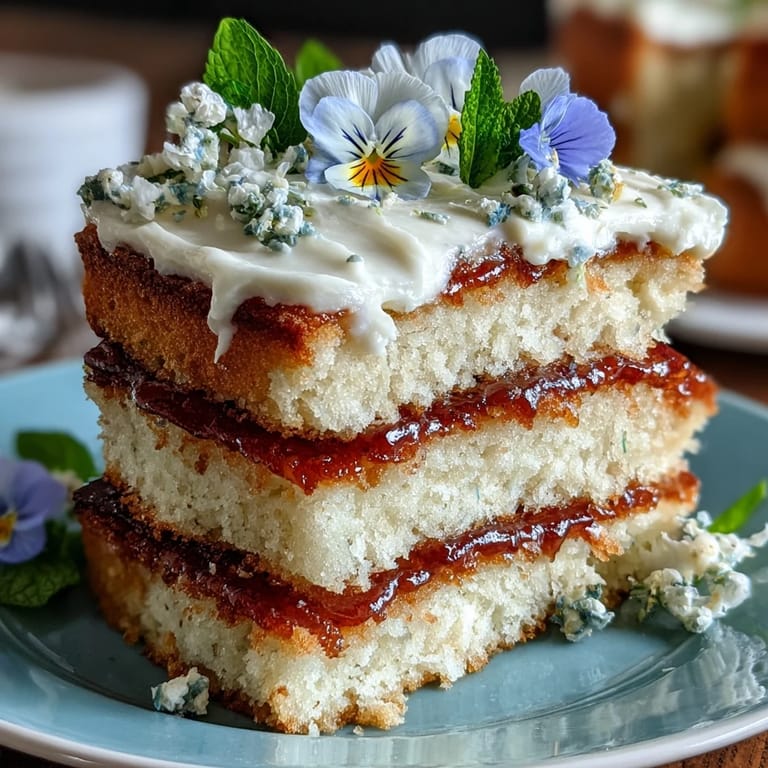
- Place one cake round on your plate, spread with buttercream, then top with a second round and another thin layer of buttercream. Don't overload the layers or they'll slip.
- Decorate with flowers:
- Pipe or swirl buttercream on top and arrange your edible flowers artfully. Chill for fifteen minutes before serving so the buttercream sets and the cake firms up.
 Save
Save When I delivered these cakes to my sister's birthday lunch, everyone fell silent for a moment. Not because they were trying to be polite, but because each person was holding this small, beautiful cake decorated with a purple viola or a golden nasturtium, and it felt like too pretty to eat. Then someone took the first bite, and the table erupted in conversation about the lemony brightness inside and the pillowy texture. That's when I knew these weren't just cakes anymore—they were little edible gifts.
The Joy of Individual Cakes
Making six small cakes instead of one large one changes the whole mood of a gathering. Each person feels celebrated with their own cake, and there's something undeniably special about the presentation. Individual cakes also mean you can customize slightly—brush some layers with a light citrus syrup if you want extra moisture, or leave others plain. They bake faster than a thick cake would, so you're less likely to end up with dry edges and an undercooked center.
Working with Edible Flowers
The first time I used edible flowers, I was terrified I'd accidentally poison someone. The truth is simpler than I expected: flowers from a farmers market or specialty baking supplier are grown specifically to be eaten, and florist flowers are explicitly treated with pesticides. Once you find a good source—and asking at your local farmers market is always a safe start—you'll wonder why you waited so long. Violas have a subtle peppery note, nasturtiums taste almost fruity, and pansies are nearly flavorless but gorgeous, which makes them perfect for people who are hesitant about eating flowers.
Flavor Layers and Color Play
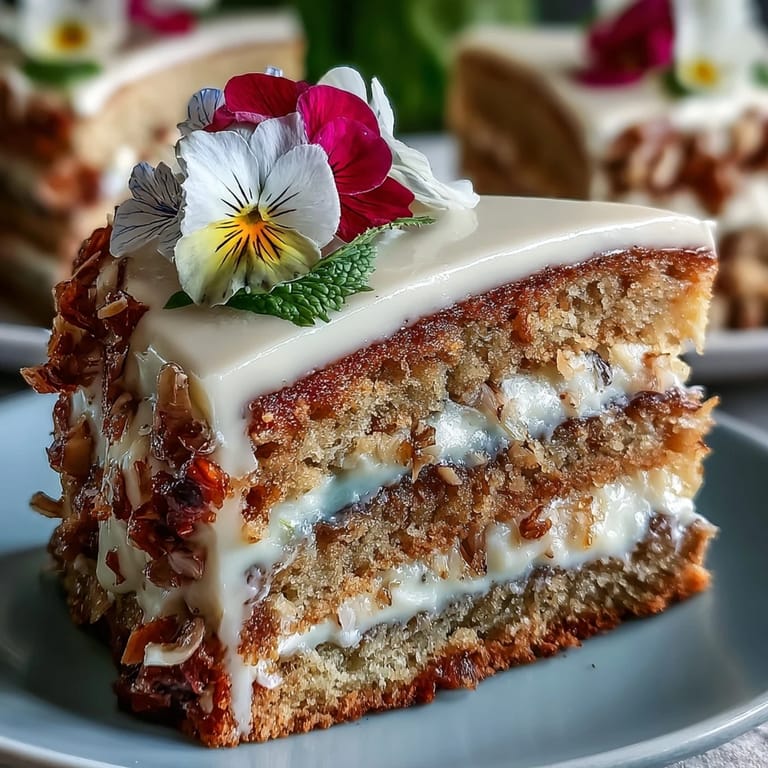
The vanilla-lemon combination in these cakes is both comforting and bright, which is why they work for spring celebrations but also transition beautifully into summer. If you want to add even more depth, brush each cake layer with a simple syrup made from equal parts lemon juice and sugar dissolved in a touch of water. For the buttercream, pastel colors in soft pinks, pale blues, and muted greens make the flowers look even more striking, and you only need a tiny drop of food coloring to achieve these subtle shades. The real magic happens when you don't overthink it and let the flowers be the stars of the show.
- Try tinting half your buttercream in one color and piping two-tone swirls on top of each cake.
- Reserve a few undecorated cakes to serve the next day for a quiet breakfast moment with coffee.
- Leftover cake scraps become exceptional cake pops if you crumble them and mix with a bit of buttercream.
 Save
Save These mini cakes have become my go-to celebration dessert because they're elegant enough to impress but not so complicated that you'll spend your entire day in the kitchen. They remind me that the best food moments aren't about perfection—they're about taking a little extra time to make someone feel special.
Recipe FAQ
- → What type of flowers can be used for decoration?
Use only verified edible flowers like violas, pansies, and nasturtiums, ensuring they are food-safe and pesticide-free.
- → How can I make the buttercream pastel-colored?
Add a few drops of food coloring to the buttercream while beating to achieve soft pastel shades.
- → Can cake scraps be reused?
Yes, leftover cake scraps can be re-rolled or used to make cake pops for a no-waste treat.
- → What’s the best way to achieve even cake layers?
Spread the batter evenly on the baking sheet and use a round cutter after baking for uniform layers.
- → Is it necessary to chill the cakes before serving?
Chilling for 15 minutes helps the buttercream set and improves the texture for easier serving.