 Save
Save I discovered the magic of a marble swirl appetizer at a gallery opening where I was too nervous to mingle properly. Instead, I orbited the food table, mesmerized by how one platter seemed to draw everyone in—not because of fancy complexity, but because the colors alone made people lean in closer. The dips swirled into each other like watercolor bleeding across wet paper, and suddenly strangers were talking to each other while reaching for crackers. I went home that night determined to recreate that moment, understanding finally that the most generous appetizers are the ones that make people want to gather.
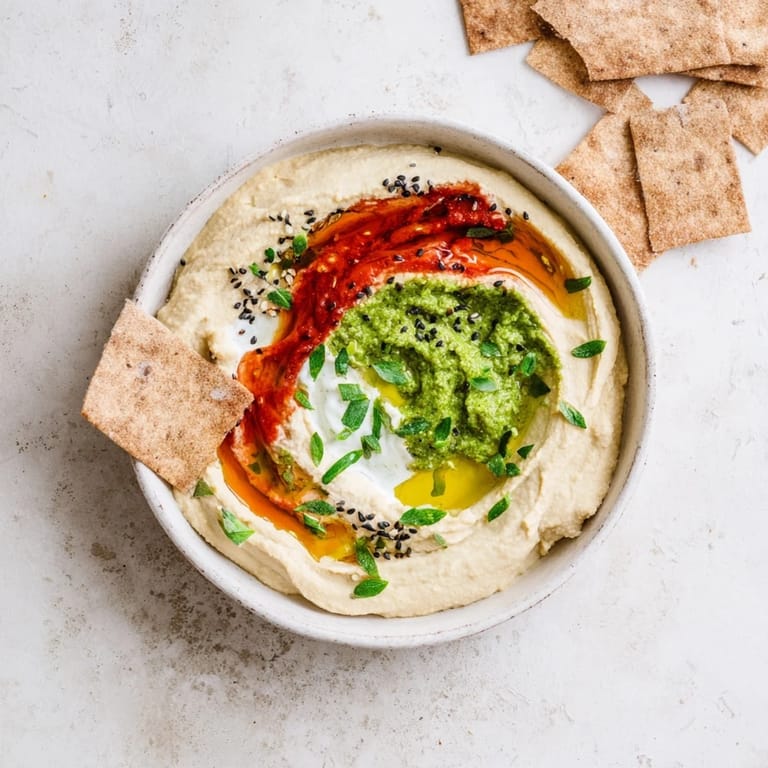
My partner once asked if I'd ever made something just for the sake of beauty, not to impress anyone in particular. I made this marble swirl on a Tuesday afternoon and we sat with it for an hour before eating, just looking at the interplay of beet reds, spinach greens, and cream. The crackers didn't matter as much as the moment of having created something intentional and unhurried together.
Ingredients
- Classic hummus: The neutral anchor that lets every other color shine without competing.
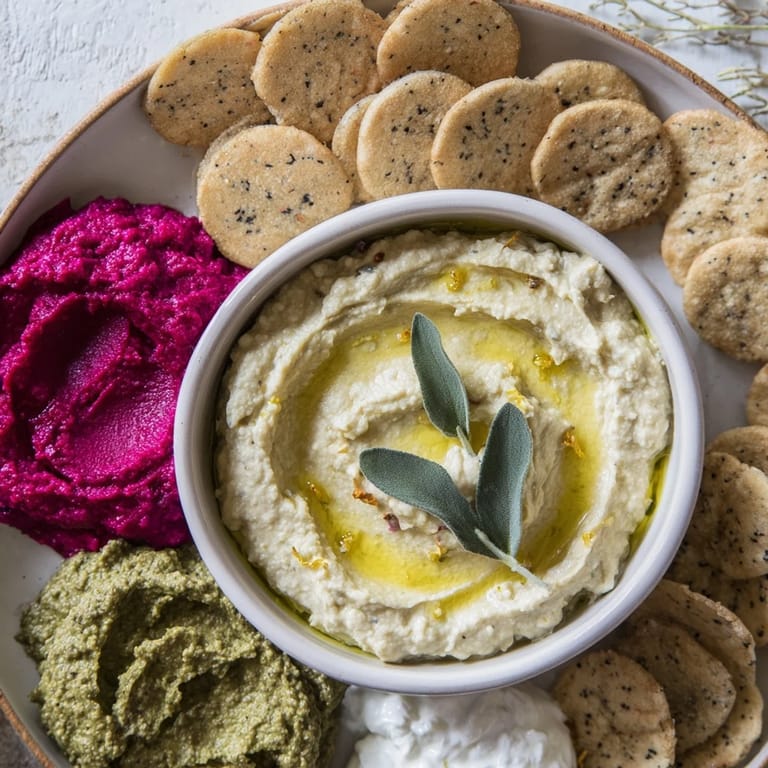
- Beet hummus: Brings an earthy sweetness and that stunning magenta tone that photographs like jewels.
- Spinach or basil pesto hummus: The herbal note that prevents the platter from feeling one-dimensional.
- Roasted red pepper dip: Adds warmth and brightness, the bridge between red and orange tones.
- Greek yogurt: Plain and unsweetened, it creates those delicate white veins that complete the marble effect.
- Black sesame rice crackers: A visual anchor that grounds the swirl, crispy without overwhelming delicate dips.
- Beetroot crisps: They echo the beet hummus and add textural contrast with their brittleness.
- Spinach or kale crackers: Connect visually to the green dip while staying light enough not to crack under a generous dollop.
- Classic water crackers: The neutral player, letting guests taste the dips without distraction.
Tired of Takeout? 🥡
Get 10 meals you can make faster than delivery arrives. Seriously.
One email. No spam. Unsubscribe anytime.
Instructions
- Gather your dips and mentally map the platter:
- Before anything lands on the platter, I look at the colors and decide where each one will anchor the composition. Don't overthink it, but do notice which dips you want to touch and which you want to keep separate.
- Dollop each dip in random, alternating spots:
- Use a large spoon to drop generous spoonfuls across the platter in no particular order, rotating through your colors. The more unplanned it looks, the more it resembles actual marble.
- Swirl with intention but not aggression:
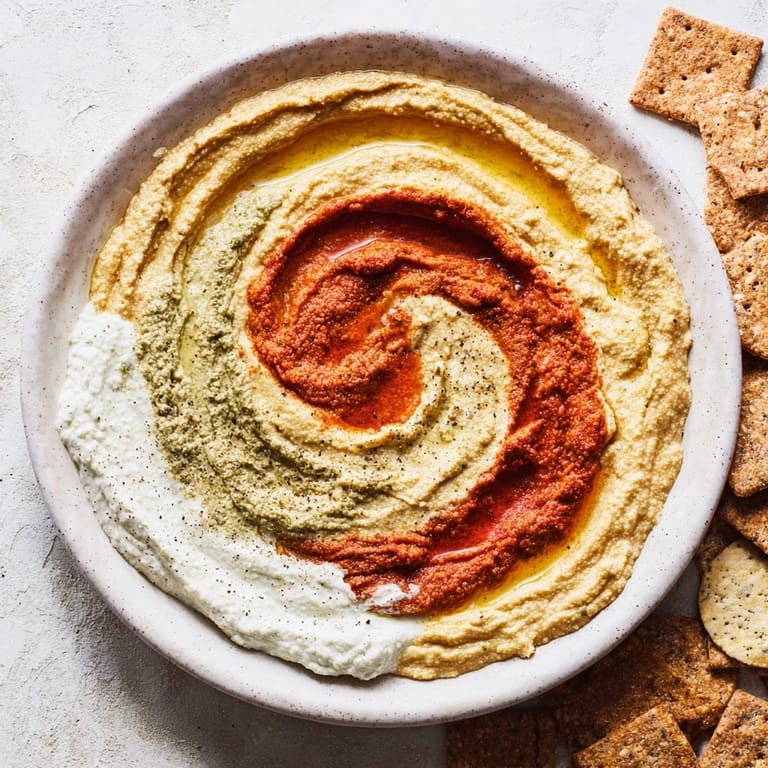
- With a butter knife or the back of a spoon, make slow, deliberate movements through the dips where they touch, creating streaks without obliterating the colors completely. Think of it as introducing colors to each other, not forcing them into a homogeneous soup.
- Add the yogurt as your highlighting touch:
- Drizzle a few spoonfuls of plain Greek yogurt across the swirl and drag it gently through one or two areas to create those delicate white veining details that make it feel truly marbled.
- Arrange crackers in color-coordinated clusters:
- Place groups of matching crackers around the perimeter of the platter, letting each cracker type echo the dip colors they surround. This visual reinforcement is what transforms the platter from random to intentional.
- Step back and breathe before serving:
- Take a moment to admire what you've made before anyone digs in. You've created something genuinely beautiful.
 Save
Save I once brought this to a potluck where everyone else had brought things that needed to be reheated or carved or explained. The marble swirl sat there at room temperature, needing nothing, asking for nothing, just being. Three people asked for the recipe that day, and two of them later told me they'd made it for their own gatherings. Food that gives confidence to others is food worth making.
Choosing Your Dips Wisely
The beauty of this appetizer lives entirely in contrast and color, so your dip selection is your entire design process. Hummus-based dips work perfectly because they hold their shape during swirling and have natural earthy tones that feel refined without pretension. If you want to venture beyond hummus, look for dips with visual personality—turmeric brings golden warmth, black bean dip creates dramatic depth, baba ganoush adds purple-grey sophistication. The key is choosing dips that genuinely want to share a platter together, colors that tell a story when they sit side by side.
The Cracker Strategy
Crackers aren't decoration here, they're the supporting actors that make the dips shine. I learned this the hard way by once using thick, assertive crackers that dominated the plate and overwhelmed the delicate flavor balance. Now I choose crackers that stay crispy without being hard enough to break teeth, thin enough to let the dip be the star, and visually aligned with what they're dipping into. Serving varieties means your guests aren't locked into one flavor path—they can explore, taste different combinations, and make small discoveries throughout the evening.
The Marble Magic
What makes this appetizer feel special isn't any single ingredient or technique, it's the restraint of knowing when to stop. The marble effect works because you're not trying to blend everything into unity—you're celebrating the moment where flavors touch without losing their identity. This matters beyond just appetite, it's a philosophy about how to share space with others, whether on a platter or in life.
- Keep your knife strokes confident but slow, like you're drawing rather than stirring.
- Leave some pure color pools visible so the eye can rest on distinct tones.
- Remember that the swirl will continue to shift slightly as guests eat, which adds to rather than detracts from the effect.
 Save
Save The best meals are the ones where people linger, where the appetite for conversation outlasts the appetite for food. This marble swirl has taught me that sometimes the most generous thing you can offer isn't technical perfection, but permission to slow down and enjoy something beautiful together.
Recipe FAQ
- → What types of dips are used to create the marble swirl?
The swirl is made from classic hummus, beet hummus, pesto hummus, roasted red pepper dip, and Greek yogurt for swirling.
- → How do you achieve the marbled stone-like effect?
Dollop spoonfuls of each dip in a pattern then gently swirl with a butter knife or spoon to mix colors without overblending.
- → What kinds of crackers pair well with the dips?
Black sesame rice crackers, beetroot crisps, spinach or kale crackers, and classic water crackers complement the colors and flavors nicely.
- → Can this dish accommodate dietary preferences?
Yes, it offers vegetarian and gluten-free options and can be adapted vegan by substituting coconut yogurt for Greek yogurt.
- → Are there suggestions to enhance the presentation?
Garnishing with edible flowers or fresh herbs adds extra flair, and using additional colored dips like turmeric or black bean can deepen tones.