 Save
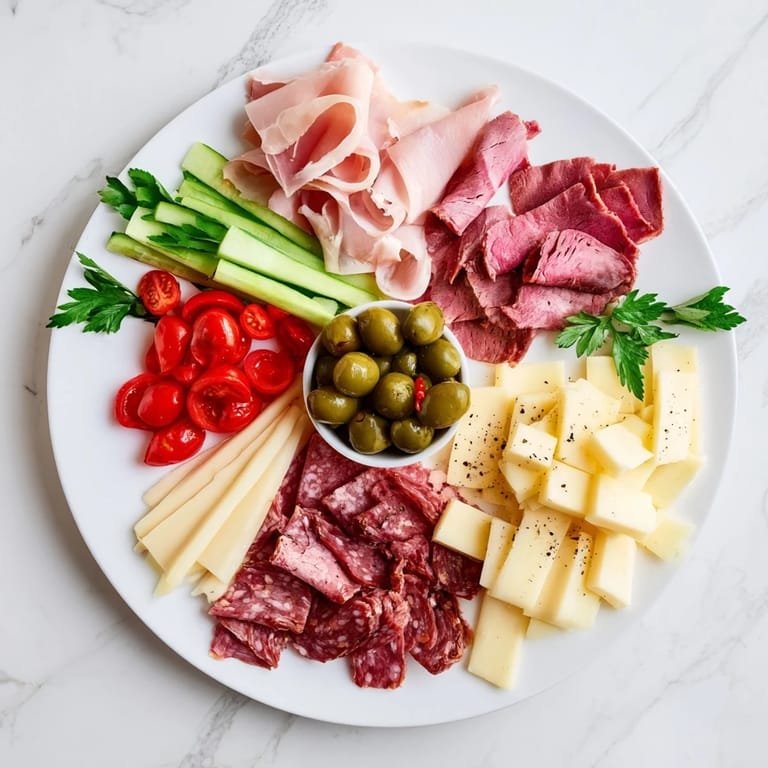
Save I'll never forget the afternoon I discovered that the most impressive dish doesn't always require hours at the stove. A friend was hosting a last-minute gathering, and I found myself standing in her kitchen with an array of beautiful ingredients—premium meats, aged cheeses, crisp vegetables—and suddenly realized these elements didn't need cooking at all. They needed arrangement, intention, and an understanding of how flavors and textures could speak to each other without any heat. That moment changed how I thought about entertaining. The Keto Power Plate became my secret weapon for feeding people well, quickly, and with a presentation that felt like I'd spent all day preparing.
I made this for my sister's book club, thinking it would be a simple appetizer platter to have on hand. What happened instead was remarkable—three women came back to the kitchen asking what was in the cheeses, two asked if I'd made the cured meats myself, and by the end of the evening, everyone had gravitated toward the platter multiple times. That's when I understood: when you give people permission to eat real, satisfying food without guilt, they relax. They enjoy it. They come back for more.
Ingredients
- Sliced roast beef (120 g): Choose a high-quality cut that's been properly stored—this is your protein anchor and sets the tone for the entire platter. The slight marbling makes all the difference in flavor.
- Smoked turkey (120 g): This gives you a leaner option and a different flavor profile. I've learned that variety in textures keeps people interested.
- Prosciutto (120 g): The salt and delicate saltiness of prosciutto is irreplaceable. Slice it paper-thin if you can, or ask your butcher to do it—it changes everything.
- Salami (100 g): Choose a quality salami with good marbling. The oils in quality salami are what make it shine on a platter like this.
- Aged cheddar, cubed (100 g): Aged cheddar has complexity that mild cheese simply doesn't offer. The crystalline crunch is part of what makes this platter special.
- Gruyère, sliced (100 g): This is the cheese that surprised me—it's nutty, it's sophisticated, and it pairs beautifully with the cured meats in a way that feels intentional.
- Manchego, sliced (100 g): A Spanish cheese that brings something slightly different to the group without overwhelming the other flavors.
- Cherry tomatoes, halved (1 cup): The acidity cuts through the richness of the meats and cheeses. This is your palate cleanser built into the arrangement.
- Cucumber, sliced (1 cup): Cool, crisp, and essential. Cucumber is the grounding element that keeps the platter from feeling heavy.
- Radishes, sliced (1 cup): Their peppery bite is the surprise that makes people pause and notice. Never underestimate the power of radishes on a platter.
- Baby bell peppers, sliced (1 cup): Sweet without being cloying, and they add genuine color structure to the visual composition.
- Celery sticks (1 cup): Yes, it's humble, but celery's clean flavor is essential for resetting the palate between rich bites.
- Green and black olives (1/2 cup total): These are your flavor anchors in the vegetable sections. Choose ones with pits if possible—they taste better and signal quality.
- Fresh parsley, chopped (2 tbsp): The final garnish that brings everything into focus. It's not decoration; it's the finishing note of the composition.
- Extra virgin olive oil (2 tbsp): A light drizzle awakens the vegetables. Don't skip this step or use regular olive oil—the quality here matters.
- Freshly ground black pepper: Grind it just before serving. Pre-ground pepper has lost its essence.
Tired of Takeout? 🥡
Get 10 meals you can make faster than delivery arrives. Seriously.
One email. No spam. Unsubscribe anytime.
Instructions
- Gather your elements and take a breath:
- Before you arrange anything, unwrap all your meats and cheeses and let them sit for a few minutes. Cold items just pulled from the refrigerator don't show their true colors or flavors. Take a moment to appreciate what you're working with. This is about presence, not rushing.
- Create your meat foundation:
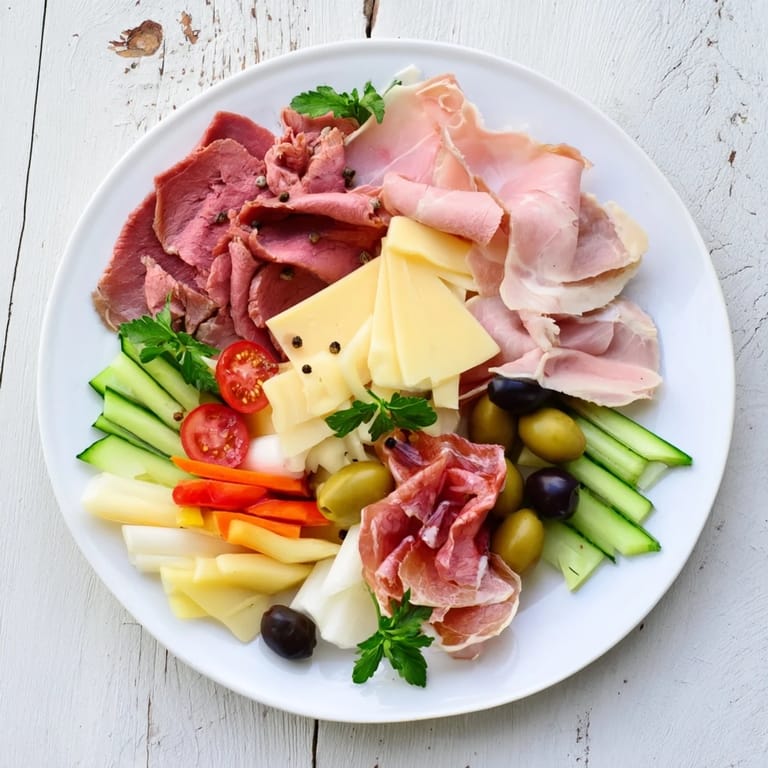
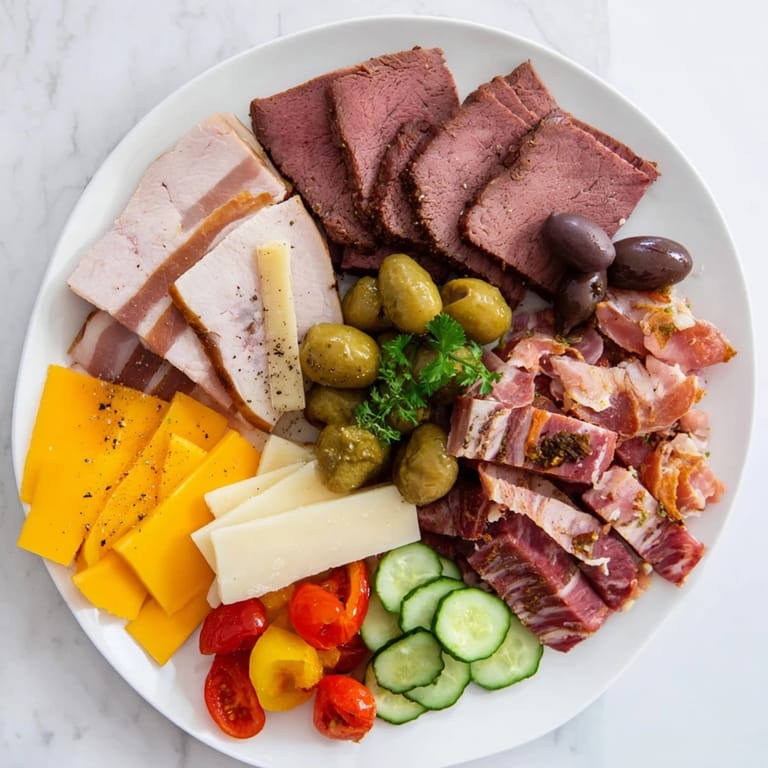
- Start with the four meats arranged in dense, organized clusters. Group each type together—all the roast beef in one cluster, the prosciutto draped elegantly in another. Leave natural space between them. The separation actually makes each meat shine rather than blur together. This is where the visual architecture begins.
- Introduce the cheeses with intention:
- Now place your three cheeses beside the meat clusters. The cubed cheddar, the sliced Gruyère, and the Manchego should alternate in color and shape. Step back and look. You're creating a conversation between elements, not just filling a platter.
- Fill the remaining spaces with vegetables:
- This is where it becomes a puzzle that's genuinely satisfying to solve. Take the tomatoes, cucumbers, radishes, peppers, and celery and cluster them by type. The radishes together, the tomatoes together. This creates visual rhythm and makes it easy for people to grab what they want without chaos.
- Distribute olives for flavor punctuation:
- Scatter the green and black olives throughout the vegetable sections. They're small enough to fill gaps but significant enough to catch the eye. They're the commas and periods in the visual sentence you're creating.
- Dress and finish:
- Very lightly drizzle the vegetables (not the meats or cheeses) with olive oil. A light hand is essential here—you're enhancing, not drowning. Crack fresh pepper over everything. Scatter the parsley across the platter last, giving it one final moment of presence before it's served.
 Save
Save My favorite memory involving this platter happened on a random Tuesday when my mother came over unexpectedly. Instead of panicking about dinner, I made this plate while we talked. She watched me arrange it, asked questions about why I was placing things where I was, and by the time we sat down to eat, she understood something I'd been trying to explain for years: that feeding people well is about presence and intention, not complexity. We ate slowly that afternoon, and she kept saying, "This is so simple, but it tastes like you've been working all day." That's exactly the feeling I chase with this recipe.
The Art of the Platter
There's a real skill to arranging a platter that looks effortless but feels thoughtful. It's not about perfection or symmetry. It's about understanding that our eyes eat first, and when we see something beautiful, our brain already expects it to taste good. Every cluster should have a purpose, every gap should feel intentional. I've learned this through trial and error—arranging platters for friends, for family dinners, for moments when I wanted the food itself to say something. The Keto Power Plate teaches you that arrangement is its own form of cooking, and presentation is genuinely part of the flavor experience.
Building Flavor Balance
This platter works because it's built on contrast and balance. The salty meats need the fresh acidity of tomatoes and cucumbers. The rich cheeses benefit from the peppery snap of radishes. The cool, crisp vegetables provide relief from the intensity of aged cheddar and prosciutto. Every element on this platter has a reason for being there, and when you understand those reasons, you can improvise with confidence. Swap the Manchego for Emmental, replace the radishes with jicama, substitute the smoked turkey for roast chicken—as long as you're maintaining that balance between rich and fresh, salty and acidic, familiar and surprising, you're staying true to the spirit of the dish.
Making It Your Own
The beauty of a platter is that it's inherently personal. I've made versions with pickled vegetables for tang, with fresh mint instead of parsley, with different cheeses based on what the season offers or what my farmers market is celebrating. Some versions include hard-boiled eggs for extra protein. Others have crispy prosciutto chips scattered on top for textural variation. The structure stays the same, but the details are entirely yours. This is a recipe that invites you to make decisions, to taste as you build, to adjust based on what you're drawn to. That's how a recipe becomes something you actually want to make again and again.
- Always choose the highest quality ingredients you can access—this recipe has nowhere to hide mediocrity
- Taste every cheese and meat individually before serving so you understand what you're offering people
- Remember that arrangement can be adjusted right up until serving time with zero consequences
 Save
Save This platter has become my answer to the question, "What should I make?" when I'm short on time but long on the desire to feed people something that feels special. It's taught me that simplicity, when done with intention, is its own kind of elegance.
Recipe FAQ
- → What types of meats are included in the power plate?
The plate features sliced roast beef, smoked turkey, prosciutto, and salami, offering a variety of flavors and textures.
- → Which cheeses complement this platter?
Aged cheddar, Gruyère, and Manchego are selected for their distinct tastes and firm textures that pair well with the meats and vegetables.
- → What vegetables are used to add freshness?
Cherry tomatoes, cucumber, radishes, baby bell peppers, and celery sticks contribute crispness and color to the dish.
- → How is the platter seasoned?
A drizzle of extra virgin olive oil, fresh parsley, and freshly ground black pepper provide subtle flavor enhancements.
- → Can the ingredients be substituted for variety?
Yes, meats like roast chicken or cheeses such as Emmental can be swapped, and pickled vegetables or fresh herbs may be added for variety.