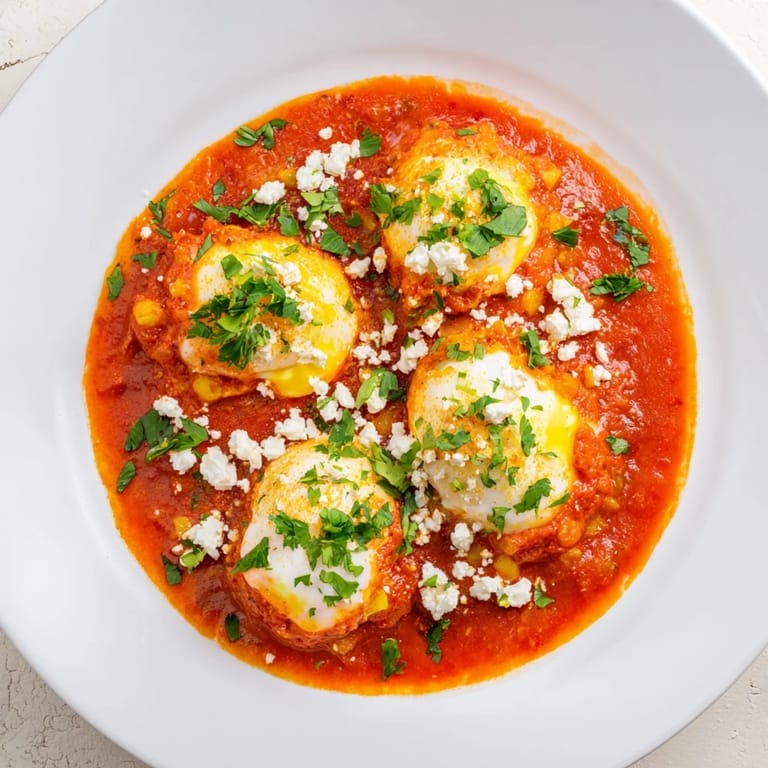
 Save
Save There's something about the smell of cumin and paprika hitting hot oil that makes everything stop. I discovered shakshuka years ago at a tiny café in Tel Aviv, watching a chef slide eggs into a bubbling tomato sauce like they were the most precious things in the world. What struck me wasn't just how beautiful it looked—it was how simple it was, how the dish seemed to celebrate that simplicity. Now when I make it at home, I chase that same feeling of generosity on a plate.
I made this for my roommate on a Sunday morning after we'd stayed up talking until 3 AM, and she literally cried a little when we ate it. It wasn't fancy, but there was something about sharing food you'd made with your own hands that shifted the whole mood of the day. Since then, shakshuka has become my go-to when I want to feed someone and mean it.
Ingredients
- Olive oil (2 tbsp): Use good quality here—it's one of the few ingredients you really taste, and it carries the whole dish.
- Yellow onion (1 medium, finely chopped): The foundation of flavor; don't rush the sauté, let it turn golden and soft, which takes about 5 minutes.
- Red bell pepper (1, diced): Adds natural sweetness that balances the spices; I prefer red over other colors for that silky texture when cooked.
- Garlic (3 cloves, minced): Toast it briefly so it gets fragrant but not burnt, which only takes a minute or so.
- Red chili (1 small, finely chopped): Optional, but if you add it, most of the heat mellows as it simmers, so be generous.
- Crushed tomatoes (1 can, 400g): The backbone of the sauce; the acidity needs time to develop, so canned tomatoes do better here than fresh alone.
- Fresh tomatoes (2 medium, chopped): These add brightness and chunks of texture; use ripe ones or skip them if they're mealy.
- Tomato paste (1 tsp): A small amount concentrates flavor without overwhelming everything.
- Ground cumin (1 tsp): Warm and earthy; toast it in your mind as you smell it going in.
- Sweet paprika (1 tsp): The signature spice here, giving color and a gentle depth.
- Ground cayenne (1/4 tsp): Optional but worth it if you like heat that builds slowly.
- Ground coriander (1/2 tsp): A subtle citrus note that lifts everything.
- Salt and black pepper: Taste as you go; you'll likely need more than you think once everything combines.
- Large eggs (4): Room temperature is ideal so they cook more evenly, though cold ones work too.
- Fresh parsley and cilantro (2 tbsp each, chopped): Don't skip these—they're not decoration, they're part of the flavor.
- Crumbled feta (optional): If you use it, add just before serving so it doesn't melt into oblivion.
Tired of Takeout? 🥡
Get 10 meals you can make faster than delivery arrives. Seriously.
One email. No spam. Unsubscribe anytime.
Instructions
- Heat your pan and start the base:
- Pour olive oil into a large skillet over medium heat and let it shimmer for about a minute. Add your chopped onion and diced red pepper, stirring occasionally as they soften together—this should take 5 to 7 minutes, and you're looking for the onion to turn golden and sweet.
- Build the aromatics:
- Stir in the minced garlic and chopped chili, cooking for just about a minute until the smell is almost overwhelming and your kitchen suddenly smells like somewhere far away.
- Add the tomatoes and paste:
- Pour in both the crushed and fresh tomatoes, add the tomato paste, and stir everything together so there are no dry spots on the bottom of the pan.
- Season and simmer:
- Sprinkle in the cumin, paprika, cayenne if you're using it, coriander, salt, and pepper, stirring well. Let this bubble away for 10 to 12 minutes, stirring occasionally—the sauce will thicken, the flavors will deepen, and the raw edge of the tomatoes will soften into something warm and complex.
- Create wells for the eggs:
- Using the back of a spoon, make 4 gentle indentations in the sauce, spacing them so they won't run into each other. These wells keep the eggs in place and let them cook evenly.
- Crack and cook the eggs:
- Crack an egg into each well, trying to keep the yolk intact. Cover the pan with a lid, turn the heat down slightly, and let it cook for 6 to 8 minutes—watch it only if you're the anxious type, but resist the urge to poke at it.
- Finish and serve:
- When the egg whites are set but the yolks still jiggle slightly when you gently shake the pan, you're done. Remove from heat, scatter fresh parsley and cilantro on top, add feta if you like, and serve immediately with warm pita or crusty bread for scooping.
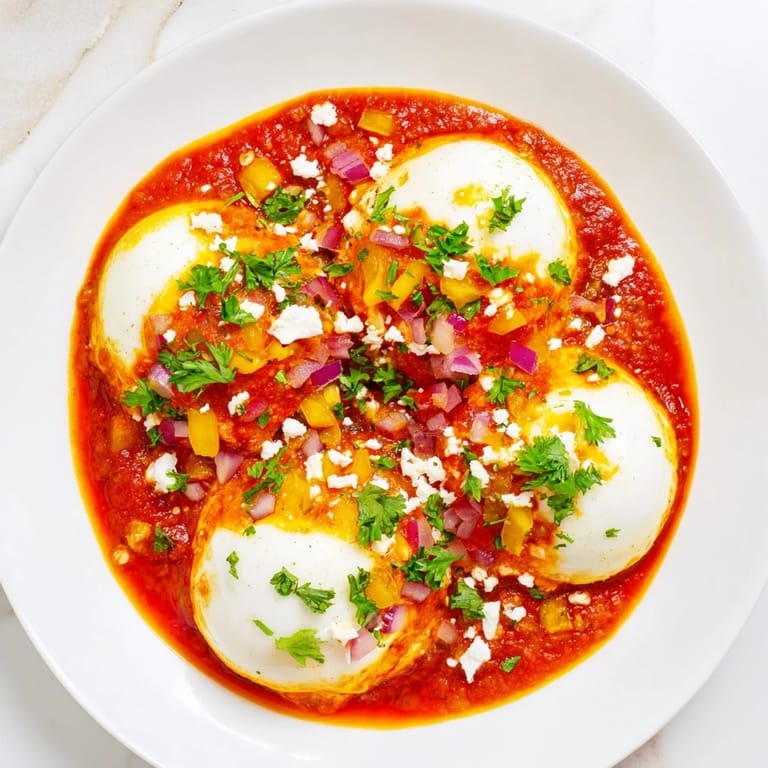 Save
Save My neighbor knocked on my door once because the smell was making her hungry, and we ended up eating this together straight from the pan, passing feta between us, speaking in half-sentences because we were too busy eating. That's when I knew this recipe wasn't just good—it was the kind of food that brings people closer without trying.
Why the Spices Matter
Shakshuka isn't about individual bold flavors—it's about how they weave together. Cumin brings a warm earthiness, paprika adds a sweet depth and that gorgeous color, coriander gives a whisper of citrus, and cayenne builds heat slowly so it doesn't shock you. When they simmer together in that tomato base, they create a sauce that tastes like it's been cooking for hours, even though you've only been standing there for 20 minutes. I learned to appreciate this after making versions where I'd overpower everything with too much spice; the restraint here is what makes it work.
The Sauce Is Everything
The eggs are just the final act in this dish—the real star is what's in the pan. The sauce needs time to lose its raw tomato edge and develop into something silky and complex. I used to rush this step, cracking eggs in after just 5 minutes of simmering, and the sauce would taste thin and one-note. Once I committed to the full 10 to 12 minutes, everything changed. The flavors merged, the sauce reduced slightly and clung to a spoon better, and suddenly the eggs had something worthy to sit in. This is also your window to adjust seasonings—taste it before you add the eggs and don't be shy with salt and pepper.
Variations and Twists
Once you understand the base, this dish becomes a canvas. I've added sautéed spinach to make it more substantial, layered in chunks of eggplant that get silky soft, and even thrown in chickpeas when I wanted more protein without using more eggs. The sauce is flexible enough to hold these additions without losing its identity. One time I added a pinch of smoked paprika instead of regular paprika, and the whole thing took on a different mood—still recognizable as shakshuka, but deeper and moodier. The point is you can trust your instincts here; this dish welcomes improvisation.
- Try stirring in fresh spinach a few minutes before adding the eggs, letting it wilt into the sauce.
- Serve alongside labneh or Greek yogurt instead of feta for a different richness.
- If you want more substance, add cooked chickpeas right after the sauce thickens.
 Save
Save There's a reason shakshuka has lasted centuries and traveled across continents—it's because it's honest food that doesn't ask for much but gives everything. Make it when you want to slow down, when you want to feed someone you care about, or when you just need to remember that the best meals are the simplest ones.
Recipe FAQ
- → What spices enhance the flavor of the tomato sauce?
Ground cumin, sweet paprika, ground coriander, and a touch of cayenne pepper create a rich, warm, and slightly smoky flavor profile.
- → How do I know when the eggs are cooked perfectly?
Cook until egg whites are set but yolks remain soft and slightly runny, usually about 6–8 minutes covered over medium heat.
- → Can I adjust the heat level in this dish?
Yes, adding red chili or cayenne pepper controls spice intensity. You can omit or increase them for milder or spicier results.
- → What are good serving suggestions for this dish?
Serve warm with crusty bread or pita to scoop up the sauce, or pair with labneh or Greek yogurt for a creamy balance.
- → Are there alternative vegetables to include?
Sautéed spinach or eggplant can be added for extra texture and flavor variations within the tomato sauce base.