 Save
Save The first time I tasted fesenjan, I was sitting in my aunt's kitchen in Tehran, watching her stir a pot that seemed to hold liquid gold. The aroma was unlike anything I'd encountered—pomegranate tang mingling with toasted walnuts and warm spices—and I remember thinking this couldn't possibly be just a stew. Years later, when I finally asked for the recipe, she laughed and said the secret was patience and a willingness to let the flavors argue with each other until they reached a truce. Now, every time I make it, I'm transported back to that kitchen, and I understand why this dish has graced Persian tables for centuries.
I made this for my friends during a cold November evening, and someone asked if I'd learned to cook from a Persian grandmother. I hadn't, but fesenjan has a way of making you feel like you're channeling generations of kitchen wisdom. The way the sauce gradually thickens and transforms, the way the walnuts release their oil to create that glossy surface—it feels like magic, but it's really just the dish teaching you as you go.
Ingredients
- Chicken thighs or duck (700 g / 1.5 lbs, cut into large pieces): Dark meat holds up beautifully to long cooking and absorbs the sauce like a sponge. Duck is traditional and adds richness, but chicken thighs are equally forgiving and more accessible.
- Salt and black pepper (1/2 tsp each): Don't skip the seasoning step—it's your foundation.
- Vegetable oil (2 tbsp): Use something neutral that can handle medium heat without smoking.
- Onion (1 large, finely chopped): One onion becomes the aromatic backbone; don't rush browning it.
- Walnuts, ground (250 g / 2 cups): This is the soul of the dish—the walnuts create body, richness, and that signature nutty depth. Grind them finely so they integrate into the sauce rather than staying gritty.
- Pomegranate molasses (500 ml / 2 cups): This is what gives fesenjan its distinctive tang and color. It's concentrated pomegranate juice with an almost wine-like complexity.
- Water (500 ml / 2 cups): This dilutes the intensity slightly and lets the spices breathe.
- Sugar (2 tbsp, adjust to taste): The sweetness should never overpower the sour—think of it as a whisper, not a shout.
- Ground cinnamon (1/2 tsp): Warm and slightly sweet, it bridges the gap between the fruity and nutty elements.
- Ground turmeric (1/4 tsp): This adds earthiness and a subtle golden hue.
- Ground cardamom (1/4 tsp, optional): If you use it, you'll notice a floral note that elevates the whole dish; skip it if you want something more straightforward.
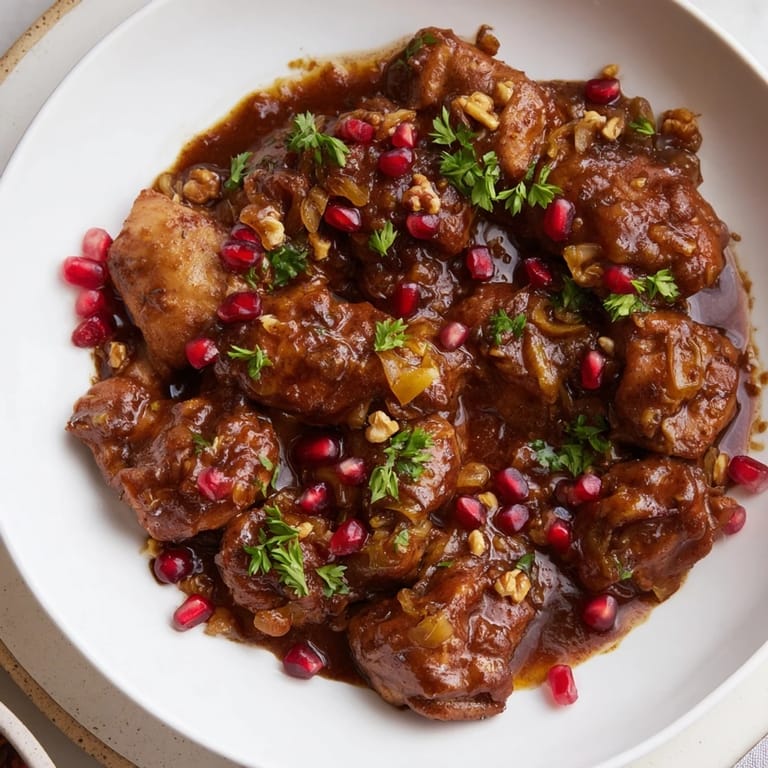
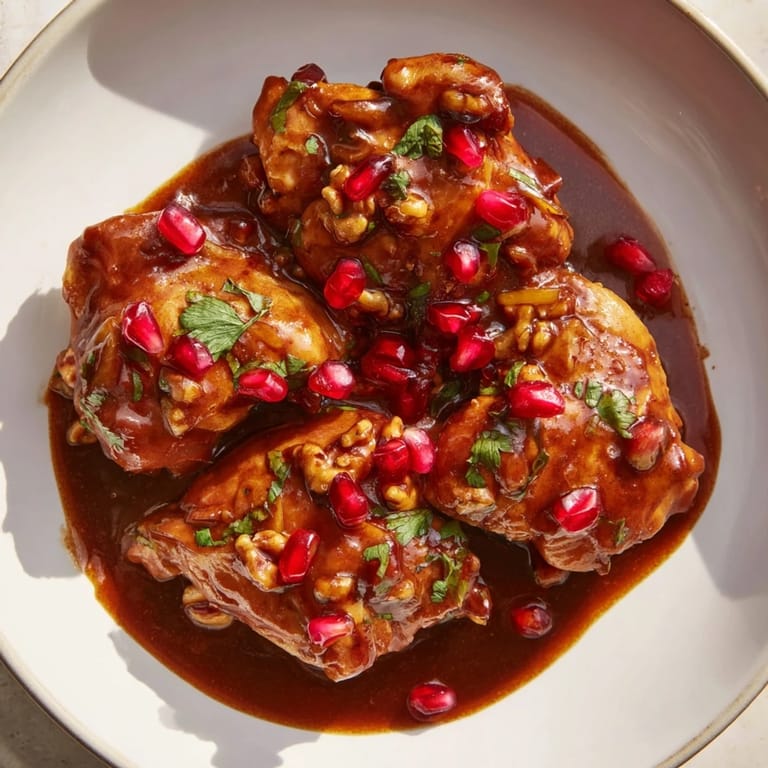
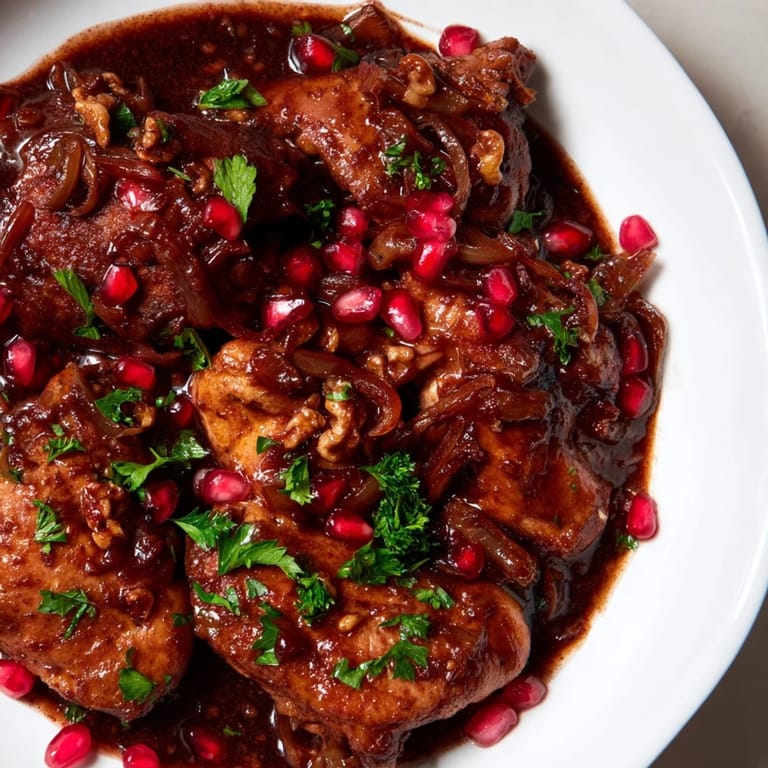
- Pomegranate seeds and fresh parsley (optional garnish): These add brightness and a visual reminder of what makes this dish special.
Tired of Takeout? 🥡
Get 10 meals you can make faster than delivery arrives. Seriously.
One email. No spam. Unsubscribe anytime.
Instructions
- Season and prepare your meat:
- Pat your chicken or duck dry and season generously with salt and pepper. This step matters more than you'd think—it's when the meat begins to develop flavor.
- Build your aromatic base:
- Heat oil in your pot over medium heat and add the chopped onion. Let it soften and turn golden brown, which will take about 8–10 minutes. You're not rushing; you're building sweetness that will complement everything that comes next.
- Sear the meat:
- Increase heat slightly and add the meat to the pot, stirring occasionally until all sides are browned, about 5–7 minutes. The browning creates a flavorful crust that adds depth to the final dish.
- Toast the walnuts:
- Add the ground walnuts to the pot and stir constantly for 2–3 minutes. This toasting step is crucial—it awakens the walnuts' nutty character and prevents them from becoming muddy in the sauce.
- Introduce the sauce:
- Pour in the pomegranate molasses, water, sugar, and all your spices. Stir well, making sure nothing sticks to the bottom of the pot. This is the moment the dish begins to come together.
- First simmer:
- Bring everything to a gentle boil, then reduce the heat to low, cover, and simmer for 1 hour, stirring occasionally. The meat will become incredibly tender, and the flavors will start to marry.
- Finish the sauce:
- Uncover the pot and simmer for another 30 minutes, stirring more frequently now. You're watching for the oil from the walnuts to rise to the surface and the sauce to thicken into something silky and concentrated. Taste and adjust sweetness or tang as needed.
- Serve:
- Transfer to a serving dish and garnish with pomegranate seeds and parsley if you have them. Serve alongside steamed basmati rice to soak up every drop of sauce.
 Save
Save There's a moment near the end of cooking when the kitchen fills with this warm, slightly sweet, slightly sharp aroma that makes everyone pause. That's when you know the dish has arrived—it's no longer just ingredients in a pot, but something that commands attention and promises comfort.
The Sweet and Sour Philosophy
Fesenjan is a meditation on balance. The pomegranate molasses brings brightness and tang; the walnuts add body and richness; the spices—cinnamon, turmeric, cardamom—create warmth and depth. None of these flavors should dominate. Instead, they should create a kind of culinary conversation where each element supports the others. If you find yourself tasting something that feels one-dimensional, you haven't reached the finish line yet; keep adjusting.
Choosing Your Protein
Traditionally, fesenjan was made with duck, which has richer, fattier meat that stands up beautifully to the intense sauce. But chicken thighs work wonderfully too—they're more forgiving, less expensive, and widely available. The key is using dark meat, not white; it stays moist during the long cooking and absorbs flavors rather than drying out. If you're vegetarian, roasted mushrooms or eggplant can take the place of meat, though the character of the dish will shift from hearty to more meditative.
Timing and Storage
Fesenjan is actually better the next day, after the flavors have had time to settle and deepen. Make it ahead if you can, refrigerate it, and reheat gently on the stovetop. It also freezes beautifully for up to three months, which means you can have a taste of Persian comfort whenever you need it. One final thought: this dish teaches patience, and that lesson extends beyond the kitchen.
- Serve fesenjan with saffron rice (chelow) to capture every drop of sauce and add a subtle floral note.
- Leftovers taste even richer after a night in the fridge, so don't hesitate to make extra.
- This stew pairs beautifully with a simple green salad dressed with lemon juice to cut through the richness.
 Save
Save Fesenjan is one of those dishes that reminds you why people gather around tables. It's not quick, but it's worth every minute of waiting.
Recipe FAQ
- → What type of meat is best for this stew?
Traditionally duck is used, but boneless chicken thighs are a popular and convenient choice for tender, flavorful results.
- → Can I make a vegetarian version of this dish?
Yes, mushrooms or eggplant can be substituted for the meat to maintain texture and absorb the rich sauce flavors.
- → How do I achieve the right balance of sweetness and tang?
Adjust the sugar and pomegranate molasses to taste, gradually balancing the sweet and sour notes to your preference.
- → What aromatics and spices are key to the flavor?
Onions sautéed until golden form the base, while cinnamon, turmeric, and optional cardamom add warm, complex layers to the sauce.
- → What is the best way to serve this dish?
Serve hot, garnished with fresh parsley and pomegranate seeds, alongside steamed basmati or Persian saffron rice for an authentic experience.
- → How do I ensure the sauce thickens properly?
Simmer the stew uncovered for the final 30 minutes, stirring frequently to allow the sauce to reduce and thicken naturally.