 Save
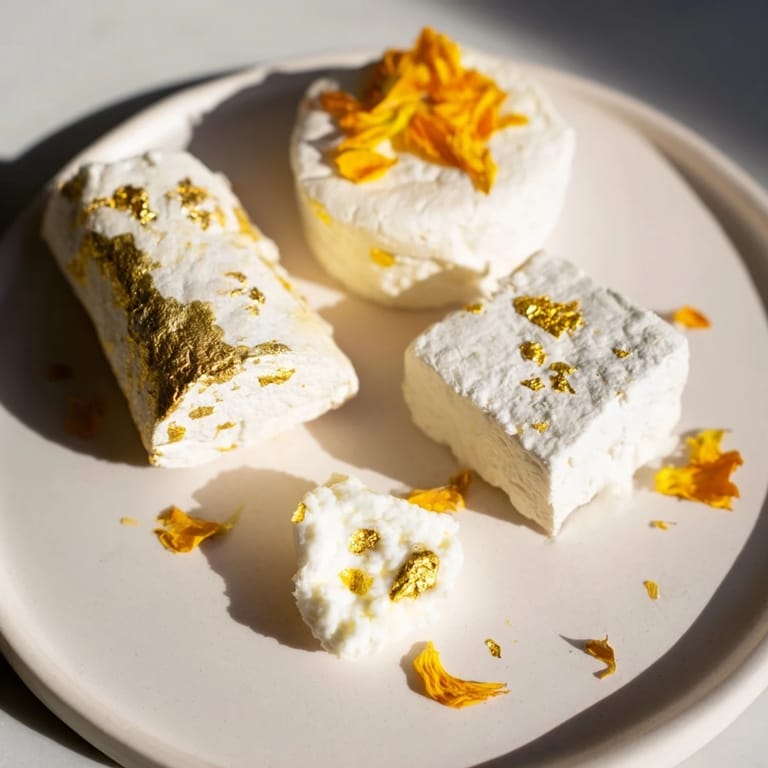
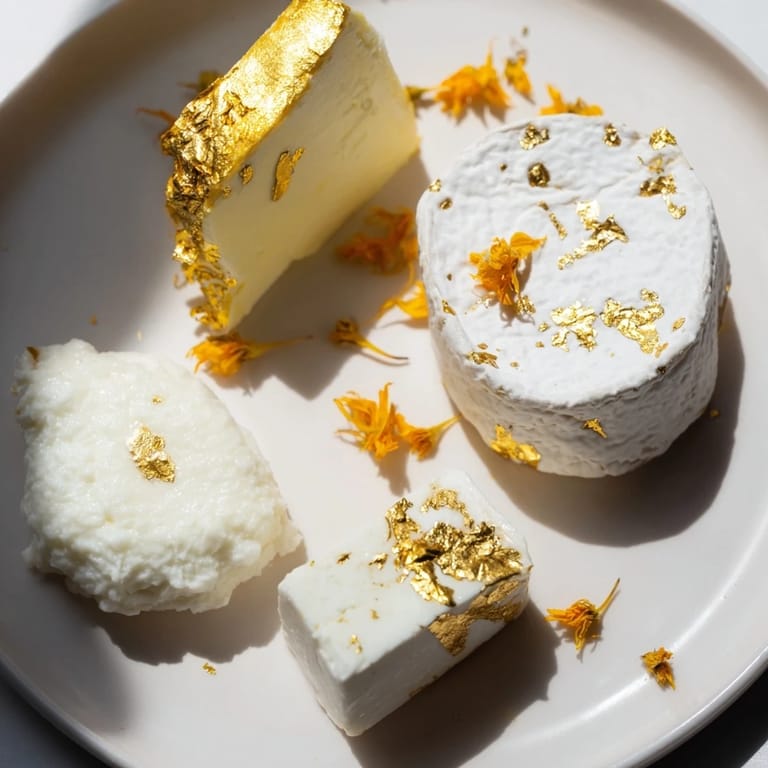
Save The first time I assembled a cheese board that actually stopped conversation at the table, it wasn't the fancy names or rare imports that did it—it was the shimmer. A friend had left behind a tiny square of edible gold leaf, and on impulse, I pressed it onto a wedge of fresh ricotta. The way it caught the light made the whole platter feel like an occasion. Now, when I want people to know they're worth celebrating, this is what I make.
Last spring, I made this for a small garden dinner, and my neighbor brought her daughter, who'd never had goat cheese before. Watching her discover that bright, lemony flavor paired with the sweetness of the petals—she came back for thirds. That's when I realized this platter isn't fancy because it's expensive; it's fancy because it makes people feel noticed.
Ingredients
- Goat cheese log (chèvre): 150 g of pure tang; its acidity cuts through richness and gives the platter personality.
- Triple-cream brie: 150 g of almost buttery indulgence that melts on your tongue the moment it hits warmth.
- Fresh ricotta: 150 g of mild sweetness that becomes a blank canvas for honey and flowers.
- Feta (block-style, drained): 150 g of salty, crumbly contrast that keeps the palate interesting.
- Edible gold leaf: 1–2 sheets for that unmistakable shimmer that makes people lean in closer.
- Yellow edible flower petals: 2 tbsp of marigold, calendula, or chrysanthemum; they're not just pretty, they taste faintly floral and bitter in the best way.
- Honey: 2 tbsp optional, but it's the bridge between salt and sweetness that ties everything together.
- Fresh microgreens or herbs: Optional, but a handful of peppery greens adds life and texture.
- Baguette: 1 sliced thin for vessels that won't overpower the cheese.
- Assorted crackers: Choose ones you actually want to eat; they're your co-stars here.
Tired of Takeout? 🥡
Get 10 meals you can make faster than delivery arrives. Seriously.
One email. No spam. Unsubscribe anytime.
Instructions
- Arrange your canvas:
- Pull out your best platter—it doesn't have to be enormous, just wide enough that each cheese has room to breathe. Spoon the goat cheese, brie, ricotta, and feta onto it, leaving space between so they feel like distinct moments rather than a crowded mess. You want people's eyes to travel.
- Gild with intention:
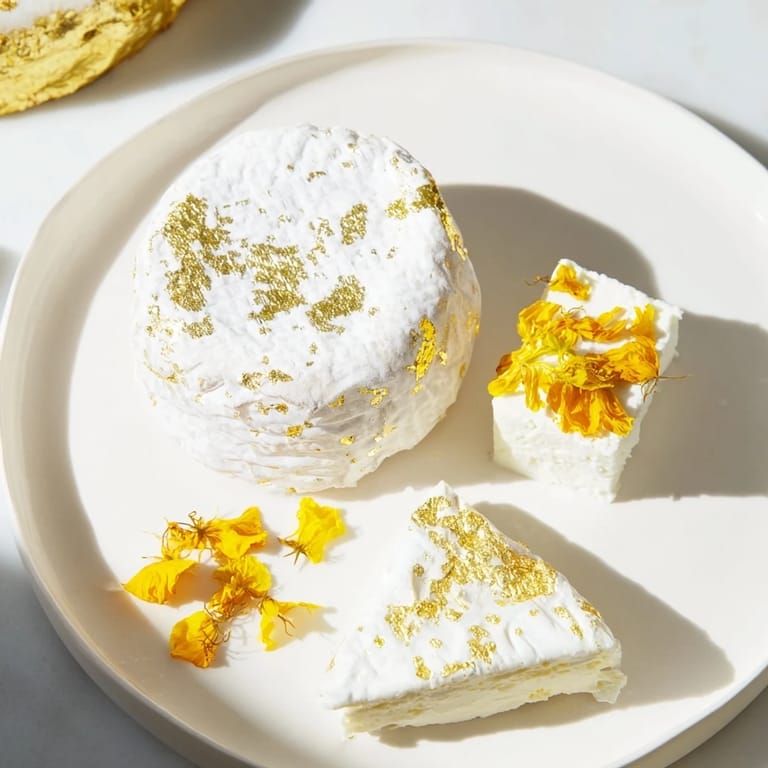
- Clean, dry tweezers are your tool here; gold leaf clings to dampness and crumples under pressure. Tear the leaf into smaller pieces and press each gently onto the surface of the cheeses, letting them catch light from different angles. It doesn't need to be perfect—intentional imperfection feels more real.
- Scatter the petals:
- Let them fall casually across the platter, some landing on cheese, some on the bare white surface. They should look like they drifted there, not been placed in a pattern.
- Balance sweet and savory:
- A light drizzle of honey pooled near the brie or ricotta, then a scatter of microgreens or fresh herbs for color and a hint of pepper. Step back and look; you're building visual rhythm.
- Finish and serve:
- Set out the baguette slices and crackers nearby—not on the platter, so people can build their own bites. Serve right away while the cheese is still cool and everything is at its most beautiful.
 Save
Save There's a moment, just before people arrive, when you step back and see what you've created—this thing that looks like it belongs in a gallery, made entirely of things you probably already had in your kitchen. That's when it hits you: elegance isn't about ingredients you've never heard of. It's about attention and care made visible.
Choosing Your Cheeses
The magic of this platter lives in the contrast between the cheeses. Goat cheese brings brightness and tang, brie brings richness and creaminess, ricotta brings sweetness and delicate texture, and feta brings salt and structure. If you love sharp flavors, go heavier on the feta and goat cheese. If you lean toward mild and creamy, use more brie and ricotta. There's no rule that says you need all four—use three if that's what speaks to you, and use more of what you love.
Working With Edible Gold Leaf
Gold leaf is intimidating until you realize it weighs almost nothing and sticks to itself more than anything else. The secret is working with clean, completely dry hands and tools; any moisture and it bunches up like foil. Tear pieces rather than trying to apply whole sheets, and press gently so they adhere without tearing. If a piece crumples, just pick it off and try another. Nobody will notice, and even a few glimmers of gold change the whole mood of the platter.
Flowers, Flavor, and Celebration
Edible flowers aren't just decoration; they taste like what they look like—marigold brings pepper and slight bitterness, calendula tastes faintly honey-like, and chrysanthemum petals have an herbal snap. They bridge the gap between the sharp cheeses and the sweet baguette, adding complexity to every bite. A platter without them is delicious but ordinary. With them, it's a conversation.
- Always buy edible flowers from specialty grocers or online suppliers who source for food, never from florists or garden centers.
- Check the petals are completely dry before scattering them, or they'll stick to your fingers instead of staying pretty on the cheese.
- If you can't find edible flowers, thin slices of fresh pear or candied nuts do the same visual and flavor work.
 Save
Save This platter is your secret for making people feel celebrated without spending hours in the kitchen. It whispers, 'You are worth beauty and care,' which is what all the best food does.
Recipe FAQ
- → What cheeses are best for this platter?
Soft white cheeses like goat cheese, triple-cream brie, ricotta, and feta provide creamy textures and mild flavors ideal for pairing with delicate garnishes.
- → How should the edible gold leaf be applied?
Use clean, dry tweezers or a fine brush to gently place small pieces of edible gold leaf onto the cheese surfaces without tearing.
- → Are all edible flowers safe to use?
Only use flowers explicitly labeled as edible and sourced from reputable suppliers to ensure safety and quality.
- → Can this platter accommodate dietary restrictions?
Yes, it suits vegetarian and gluten-free diets; use gluten-free bread or crackers and consider plant-based cheeses for vegan options.
- → What accompaniments complement this cheese display?
Thinly sliced baguette, assorted crackers, fresh microgreens, honey drizzle, and optional fresh herbs enhance flavor and presentation.
- → How to store leftovers?
Wrap cheeses tightly and refrigerate separately to maintain freshness and avoid flavor transfer between components.