 Save
Save I'll never forget the first time I realized that the best gatherings don't need elaborate dishes—they need generosity on a platter. Years ago, when my sister was hosting her book club on a tight budget, I helped her throw together a spread of sliced meats, cheeses, and vegetables on her grandmother's worn wooden board. What started as a practical solution became the most talked-about part of the evening. People lingered around that platter, loading up crackers and sharing stories, and I learned that day that feeding people well is really about abundance and ease.
I still remember my colleague bringing this exact setup to our office potluck during the holidays, and watching how it transformed our break room. People who usually grabbed lunch at their desks came back for thirds, building different combinations each time. That's when it hit me—a good platter isn't about fancy ingredients, it's about making people feel welcomed and taken care of.
Ingredients
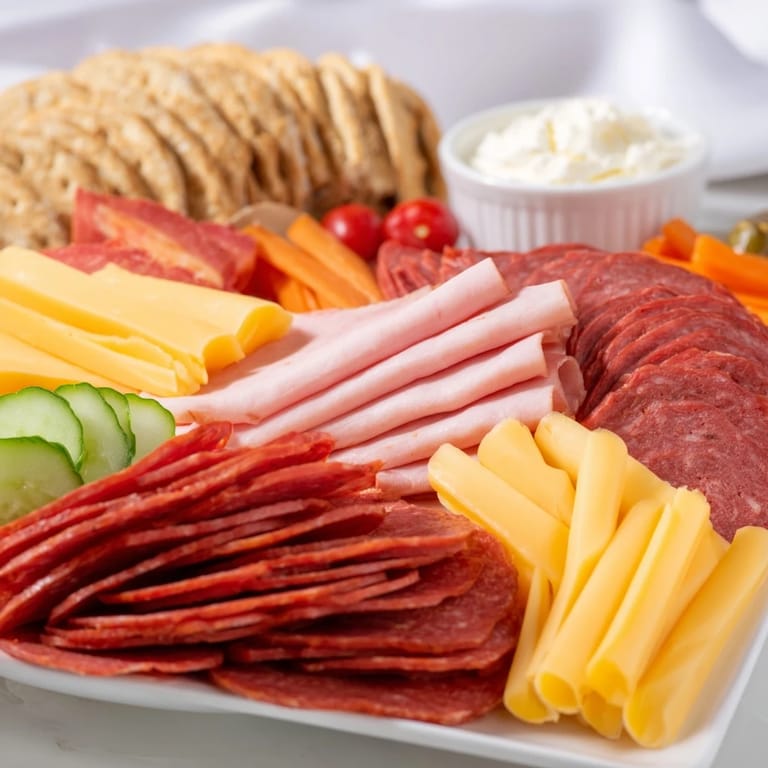
- Sliced cooked ham (200 g): Choose a quality brand without too much water content; it'll hold up better on the platter and feel more substantial in each bite.
- Sliced turkey breast (200 g): Turkey is mild and pairs beautifully with almost any cheese, making it the versatile backbone of your spread.
- Sliced salami (150 g): This adds a flavor punch and a touch of richness; the slight saltiness keeps people reaching for more.
- Mild cheddar, sliced (200 g): Cheddar is forgiving and beloved by most; it melts gently against warm crackers and doesn't compete with other flavors.
- Swiss cheese, sliced (150 g): Those little holes aren't just pretty—they make Swiss feel special and add a subtle nuttiness to every bite.
- Cream cheese (100 g): This becomes your secret spread that transforms simple crackers into something more elegant; a little goes a long way.
- Carrots, sliced into sticks (2 large): The bright orange catches the eye and gives hands something fresh to reach for between the richer bites.
- Cucumber, sliced into rounds (1): Cool and crisp, cucumber is the palate cleanser nobody expects but everyone appreciates.
- Red bell pepper, sliced (1): Sweet and colorful, peppers make your platter look alive and add natural crunch.
- Cherry tomatoes (1 cup): These little gems are the easiest vegetable to eat standing up, and their natural sweetness balances salty meats beauli>.
- Assorted budget-friendly crackers (400 g): Buy a mix—some sturdy, some delicate—so people have choices. The mix actually looks more inviting than one type alone.
- Baguette, sliced (1): A few slices of crusty bread add substance and that satisfying crunch that takes a platter from simple to special.
- Hummus (1 cup): This creamy dip is naturally vegetarian-friendly and gives everyone a lighter option alongside the meats and cheeses.
- Green olives (1/2 cup): Briny and bold, olives are for the adventurous eaters and add a sophisticated touch.
- Pickles (1/2 cup): Tangy and crunchy, pickles cut through the richness and keep the flavor journey interesting.
Tired of Takeout? 🥡
Get 10 meals you can make faster than delivery arrives. Seriously.
One email. No spam. Unsubscribe anytime.
Instructions
- Start with the anchor items:
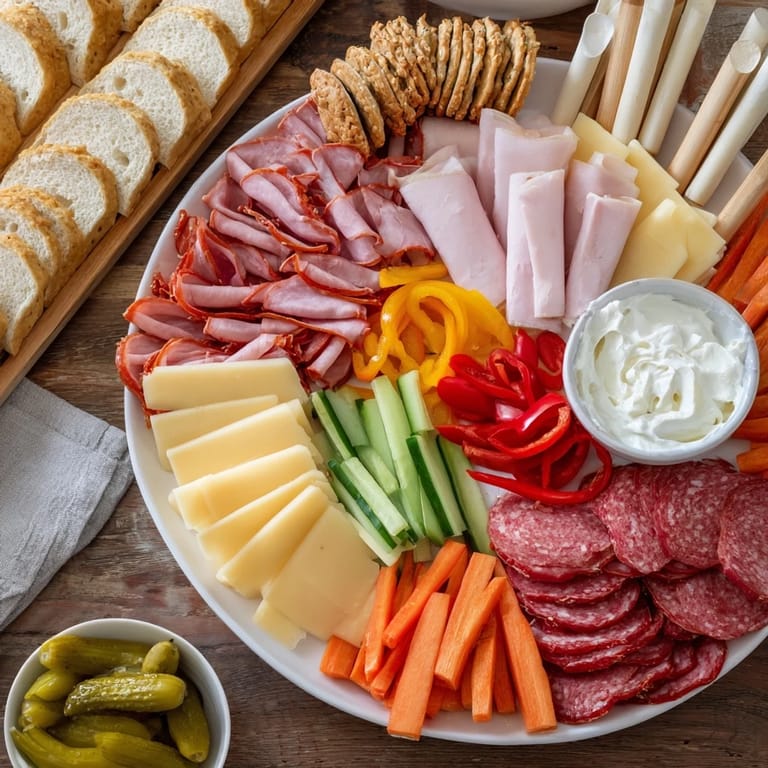
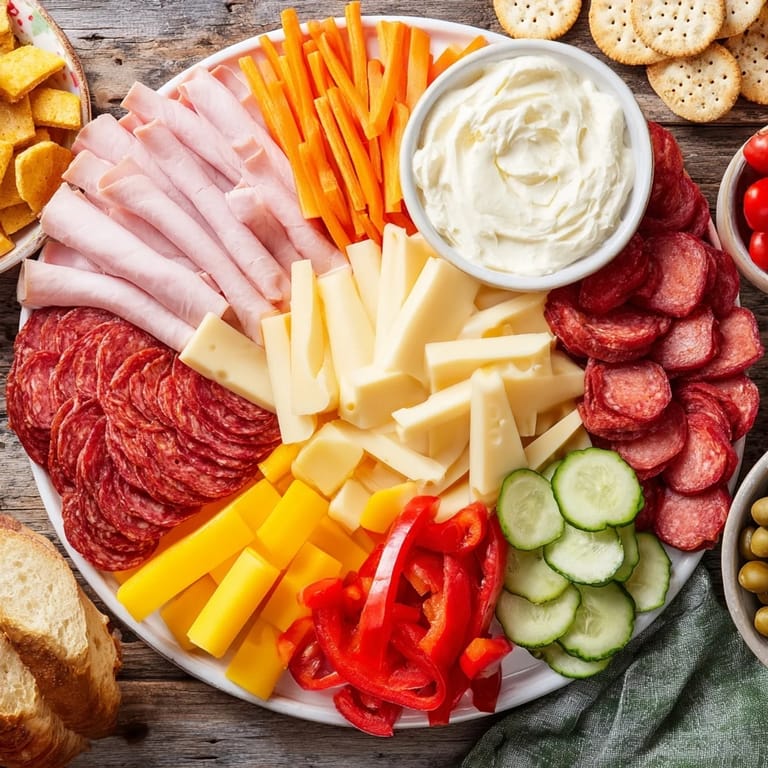
- Arrange your sliced meats in generous, confident piles at different corners of your platter. Don't be shy—pile them high. This sends a signal that you want your guests to feel welcome and abundant. Think of these piles like anchors; they help organize everything else.
- Fan out the cheeses:
- Next to each meat pile, arrange your cheese slices in a gentle fan pattern. Overlapping them slightly makes them look more generous and easier to grab without the whole stack tumbling down. The visual appeal matters here; you're creating an edible landscape.
- Build vegetable mountains:
- Place your vegetables in accessible heaps, keeping like items together—all the carrot sticks in one corner, the peppers in another. This organized approach is actually more inviting than scattered vegetables; it tells people exactly where to find their favorites.
- Settle in the dips:
- Pour your cream cheese, hummus, olives, and pickles into small bowls and tuck them around the platter where there's space. These are your flavor surprises, so place them strategically where people will discover them.
- Build the cracker foundation:
- Create high, accessible stacks of crackers and baguette slices in the remaining spaces. Stack them where they can be reached from all sides of the platter—this prevents that awkward reach across someone's hand.
- Step back and assess:
- Before you serve, take a moment to look at your platter. You should see color, generous piles, and inviting negative space. If something looks sparse, add more. If it looks crowded, give it some breathing room. This is your moment to adjust before guests arrive.
- Serve and refresh:
- Place your platter where everyone can reach it easily. As items disappear (and they will), take quiet moments to replenish the crackers and refill the dips. The gesture of replenishment is part of the hospitality.
 Save
Save There was a moment at my friend's retirement party when I watched her grandmother pick up a cracker with ham and Swiss cheese, close her eyes, and smile like she was tasting something from her childhood. That's what a good platter does—it doesn't just feed stomachs, it feeds memories and connection.
Building Your Perfect Platter
The secret to a platter that people rave about isn't in fancy ingredients—it's in proportion and variety. The most successful platters I've made follow a simple ratio: about one-third meats and cheeses, one-third vegetables, and one-third crackers and dips. This balance ensures nobody runs out of one element before another and that every bite feels complete. Think of your platter as a blank canvas where you're inviting people to create their own perfect bite each time.
Making It Work for Your Crowd
Over the years, I've learned that one platter doesn't fit all occasions. For a book club of eight, you might make a single generous spread. For a family gathering of twenty, create two smaller platters placed in different rooms—people will naturally spread out and you'll have fewer bottlenecks. If you're feeding vegetarians, simply double the cheese and add roasted vegetables, nuts, and fresh fruit; nobody misses the meat when the rest is abundant and thoughtful.
The Art of Replenishing
What separates a good platter from a memorable one is the quiet work of keeping it fresh throughout the gathering. I've discovered that people eat crackers faster than anything else, so always have extra ready. The meats and cheeses can look a bit depleted and still feel generous, but sparse crackers signal the party is winding down. Watch your dips too; they're often the first thing to run out because they're the most interactive. The beauty of paying attention to these small details is that your guests never feel like they're running out of options—they just enjoy the abundance.
- Keep extra crackers and baguette slices standing ready in the kitchen, off to the side
- Refill dips about halfway through, before they completely disappear
- Move items around slightly as you replenish to keep the platter looking fresh and intentional
 Save
Save A platter is never just food—it's an invitation to slow down, enjoy each other, and taste what's possible when simplicity meets generosity. That's the gift you're giving when you arrange one with care.
Recipe FAQ
- → How should I arrange the meats and cheeses on the platter?
Place sliced meats in generous piles at different corners of a large tray and fan out sliced cheeses nearby for easy grabbing.
- → What vegetables work best for this spread?
Fresh carrots, cucumbers, red bell peppers, and cherry tomatoes provide color and crunch when sliced and arranged in clusters around the platter.
- → Are there vegetarian alternatives for this spread?
Omit the meats and increase cheese portions or substitute with roasted vegetables and plant-based deli slices to suit vegetarian preferences.
- → What dips or extras complement this platter?
Include bowls of cream cheese, hummus, green olives, and pickles placed around the spread for added flavor variety.
- → How can I serve crackers and bread effectively?
Stack assorted budget-friendly crackers and sliced baguette in accessible piles to allow easy reaching from all sides of the platter.
- → Can I add any fruit to this spread?
Seasonal fruits like apple slices or grapes add freshness and vibrant contrast to the savory items on the platter.