 Save
Save I discovered blue cheese platters quite by accident at a friend's dinner party, where someone had casually arranged Roquefort and Gorgonzola on a board, and it struck me how the wedges caught the light like tiny geological formations. That visual spark stuck with me, and I started thinking about how food could tell a story just through arrangement. Now when I set one of these together, I'm not just plating cheese—I'm creating a little landscape that makes people pause before they dig in, and that moment of delight is worth every careful placement.
I made this for a small gathering on a grey November afternoon, and as people arrived, they genuinely stopped to look before reaching for anything. One guest said it reminded her of a mountain range she'd hiked years ago, and suddenly everyone was sharing their own travel memories while eating cheese and crackers. That's when I realized this platter does more than feed people—it gives them permission to be playful and nostalgic at the same time.
Ingredients
- Roquefort cheese: The king of blue cheeses with a creamy center and sharp bite; at 80 grams it anchors your platter with authority.
- Gorgonzola cheese: Slightly milder and more buttery than Roquefort, it adds complexity and visual variety through its unique veining patterns.
- Stilton cheese: The English option brings a nuttier quality and a different shade of blue, essential for creating genuine mountain ridge variation.
- Bleu d'Auvergne cheese: The fourth peak completes the range with its own distinct character, proving that four good things together beat three great things alone.
- Artisanal whole-grain crackers: The foundation matters—cheap crackers will soften and collapse, while good ones stay crispy and add texture that complements the cheese's creaminess.
- Honey: A single tablespoon is all you need to bridge the gap between salty and sweet, hitting that moment when the cheese becomes irresistible.
- Toasted walnuts: The crunch is essential; raw nuts disappear into the background, but toasted ones announce themselves with warmth and bitterness that plays against the cheese.
- Fresh grapes or sliced figs: These add color and a gentle sweetness that keeps the platter from becoming one-note, plus they look intentional scattered across the board.
- Fresh herbs: Rosemary sprigs are optional but not really—they add an herbal whisper and make everything look like you knew what you were doing.
Tired of Takeout? 🥡
Get 10 meals you can make faster than delivery arrives. Seriously.
One email. No spam. Unsubscribe anytime.
Instructions
- Cut your cheese into peaks:
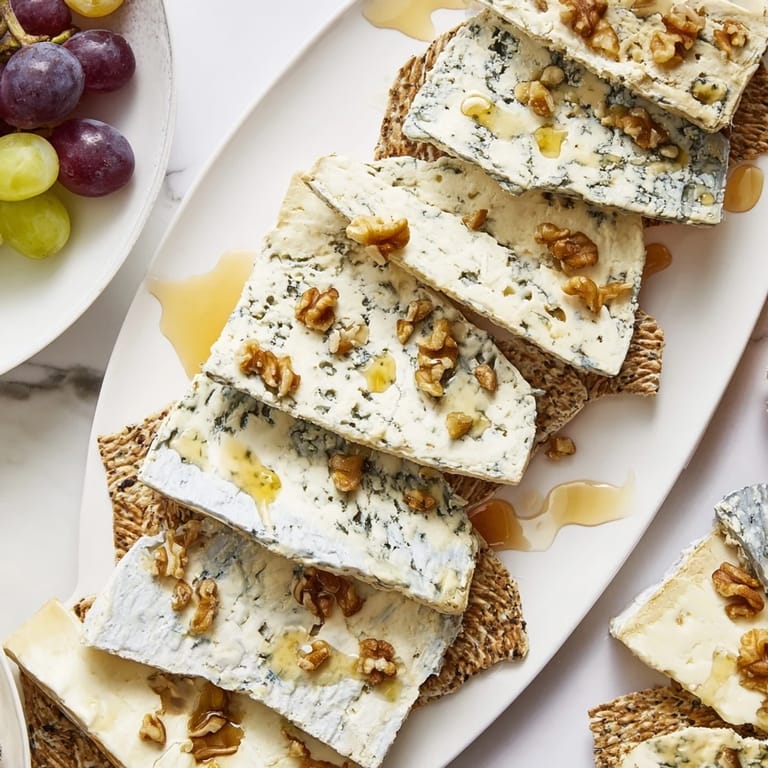
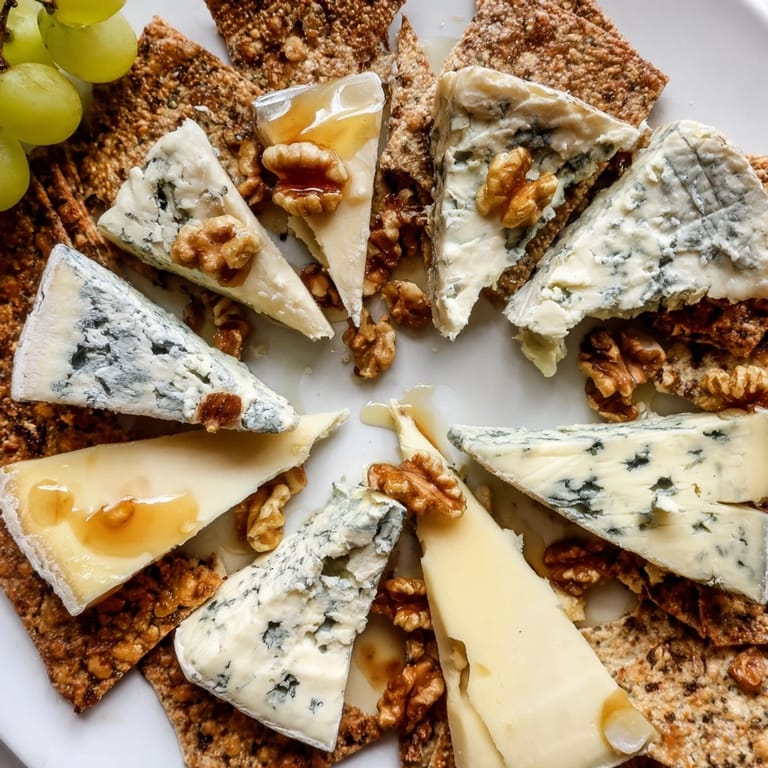
- Slice each blue cheese into rough, irregular wedges that look nothing like perfect triangles—the jaggedness is the whole point. You want heights and angles that catch light differently, so don't overthink it; let the knife fall where it will.
- Build your sky base:
- Lay your crackers across a large board or platter in a single layer, overlapping them slightly if needed. This is your foundation, your negative space, the thing that makes the mountains pop against something simpler.
- Arrange your range:
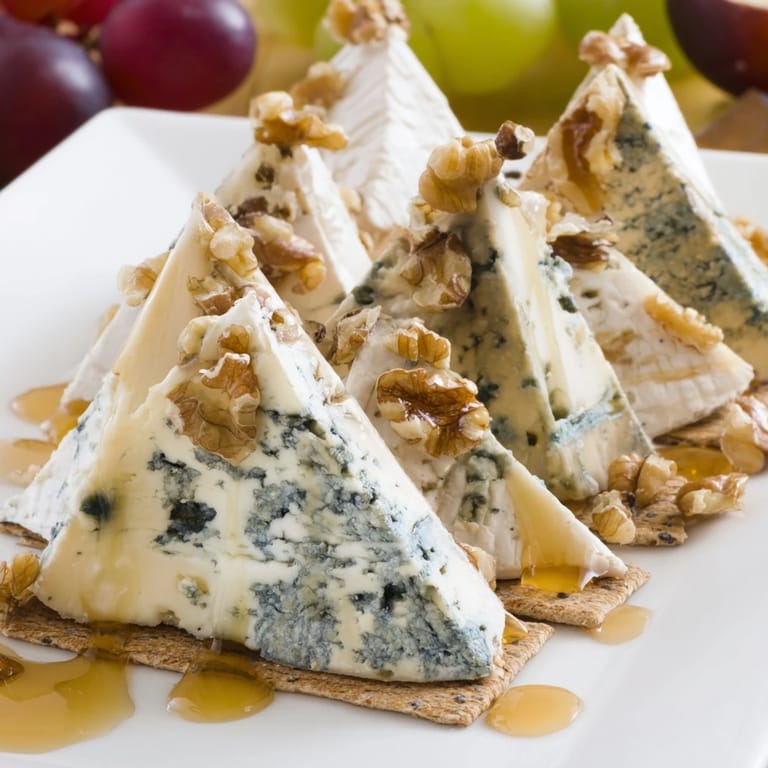
- Position the four cheeses in a gentle line across the platter, varying their heights and tilting some forward and some back. Think less geometric and more geological—real mountains don't line up in a row, so let yours be a little chaotic.
- Drizzle and scatter:
- Warm honey directly over the cheeses and their immediate surroundings; you want glossy patches, not puddles. Sprinkle the toasted walnuts over and around, letting some fall onto the crackers too.
- Add color and life:
- Scatter your grapes or fig slices across the empty spaces of the platter. They're not just decoration—they're the meadow at the base of the mountains, the thing that draws the eye around the whole composition.
- Finish with green:
- If using fresh herbs, tuck small rosemary sprigs between cheeses and alongside fruits. Serve immediately while the crackers are still crisp and the cheese hasn't begun to sweat.
 Save
Save The real magic happened when my nine-year-old niece looked at the platter and said, 'It's like a fairy tale.' She built a whole story about tiny mountain creatures living in the cheese peaks while everyone else was eating, and somehow that innocence made the adults around the table slow down and actually taste things instead of just consuming them. That's when I knew this platter was more than clever—it was permission to see food as something that connects to wonder.
Choosing Your Cheeses
Each blue cheese brings its own personality to the mountains, and learning their differences makes you a better platter builder. Roquefort is the dramatic one—intense and almost peppery, it demands attention. Gorgonzola is the charmer, buttery and slightly sweet. Stilton is the earthy storyteller with its dense texture and complex funk. Bleu d'Auvergne is the bridge between them all, grounded and approachable. Buying them at a good cheesemonger who lets you taste small pieces before committing is the difference between a good platter and one that surprises everyone who tastes it.
The Art of Arrangement
There's a reason this platter works as theater—it's because you're not trying to be perfect, you're trying to be honest about what mountains actually look like. They're jagged and uneven, catching light at strange angles, casting shadows in unexpected places. When you arrange the cheeses, forget about symmetry. Let one peak be higher than the others. Tilt one forward. Leave gaps that feel natural rather than carefully measured. The best platters look like they happened almost by accident, like you were arranging things and stumbled into something beautiful without meaning to.
Serving and Pairing Strategies
The crackers are your vehicle, your foundation, the thing that keeps this from being blue cheese chaos—but they're also the first thing to disappear. Make sure you have extra crackers on hand, set slightly to the side, because once people realize how good cheese and cracker together really are, they'll want more. A glass of Sauternes is the classic pairing because its sweetness plays against the cheese's salt and funk in a way that feels almost romantic, though a bold red wine works too if that's your crowd. The honey and walnuts bridge the gap between sweet and savory so elegantly that even people who claim not to like blue cheese often find themselves reaching for one more piece.
- Always have backup crackers ready—they disappear faster than you'd expect and there's nothing worse than beautiful cheese with nothing to serve it on.
- Set the platter out thirty minutes before guests arrive so everything comes to room temperature and flavors wake up properly.
- Don't be shy about the honey; it's the secret weapon that makes people understand why blue cheese is worth the price.
 Save
Save This platter taught me that the best entertaining doesn't require hours in the kitchen—it requires presence and intention. When you take time to arrange something carefully, people taste the care in every bite, and that's when food becomes more than fuel; it becomes a moment.
Recipe FAQ
- → What cheeses are best for this platter?
Blue cheeses like Roquefort, Gorgonzola, Stilton, and Bleu d'Auvergne create a striking visual and flavor contrast with rich, veined textures perfect for this arrangement.
- → How can I mimic the mountain effect with cheeses?
Slice the cheeses into irregular wedge shapes and arrange them in a staggered row to resemble jagged mountain peaks for an artistic appearance.
- → What garnishes complement the cheese and crackers?
Drizzling honey, sprinkling toasted walnuts, and adding fresh grapes or fig slices offer sweetness, crunch, and freshness that balance the sharpness of the cheeses.
- → Are there alternatives for nut allergies?
To accommodate nut allergies, omit walnuts or replace them with pumpkin seeds, retaining texture without compromising flavor.
- → What drink pairs well with this platter?
Chilled Sauternes or a robust red wine perfectly enhance the creamy, tangy flavors of the blue cheeses and the sweetness of the garnishes.
- → Can this be prepared ahead of time?
For best freshness and texture, assemble the platter shortly before serving, although slicing cheeses and prepping garnishes in advance is possible.