 Save
Save I'll never forget the first time I attempted an elaborate charcuterie board at a dinner party—it was supposed to be simple, just some cheese and cured meats on a platter. But then I watched a friend arrange one with such care, draping prosciutto like silk ribbons and sculpting cheese into delicate roses, that I realized this wasn't just food—it was edible art. That night, I discovered that a charcuterie board could be a centerpiece that tells a story, and people gathered around it like it was a work of art worth admiring before eating.
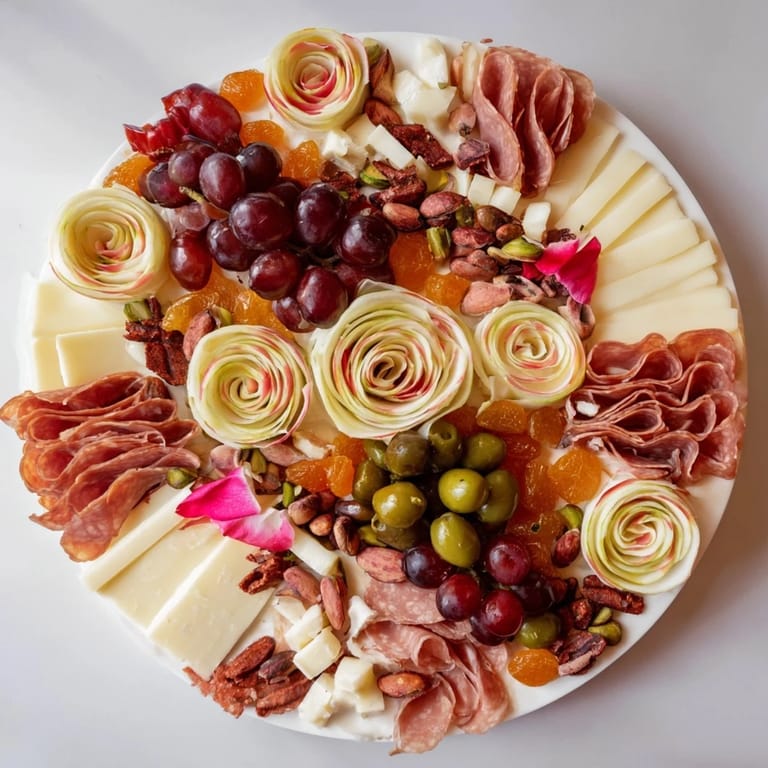
I remember assembling this board for a winter celebration, and as I carefully fanned out paper-thin slices of soppressata and positioned those little cheese roses I'd nervously sculpted, my partner walked in and just stopped. They didn't say anything at first—they just looked. That's when I knew I'd created something special, not just nourishing, but genuinely moving in its beauty.
Ingredients
- Prosciutto (100 g, thinly sliced): The delicate, salty foundation of any charcuterie board—buy it fresh from the counter and use it the same day for the silkiest texture.
- Soppressata (100 g, thinly sliced): This peppery Italian salami adds complexity; its subtle spice plays beautifully against sweet fruits.
- Capicola (100 g, thinly sliced): The slightly sweet cousin of prosciutto, it brings another flavor dimension and folds like a dream.
- Chorizo (100 g, sliced): A bolder presence that grounds the board with smoky, paprika warmth.
- Mortadella (100 g, sliced): Creamy and studded with peppercorns, it's the luxurious choice that adds richness.
- Brie (150 g, chilled): Keep it cold until the last moment so it stays creamy but holds its shape when you cut it.
- Manchego (150 g): This Spanish cheese has a nutty, slightly caramel-like sweetness that pairs wonderfully with dried fruits.
- Aged Cheddar (150 g): The sharpness cuts through the richness and prevents the board from feeling one-note.
- Goat Cheese (150 g): Tangy and bright, it's the perfect counterpoint to sweet accoutrements like honey and fig jam.
- Gouda (150 g): Buttery and approachable, it's the cheese that makes everyone happy.
- Provolone (100 g, for sculpting roses): Choose a softer provolone that bends without cracking—this is your sculpting clay.
- Red and Green Grapes (2 bunches): The pops of color and refreshing sweetness that cleanse the palate between savory elements.
- Fresh Figs (2, quartered): Luxurious and jammy, they feel indulgent and pair perfectly with salty cured meats.
- Pomegranate (1, seeded): Those jewel-like arils add brilliant color and a tart brightness.
- Apple and Pear (1 each, thinly sliced): Slice just before assembly to prevent browning, and they provide crispness and light sweetness.
- Dried Apricots, Cherries, and Figs (150 g total): Concentrated sweetness and chewy texture that makes every taste more interesting.
- Marcona Almonds and Pistachios (150 g total): Toasted nuts add crunch and richness; their buttery quality complements both cheese and cured meats.
- Cornichons and Mixed Olives (150 g total): Briny and tangy, these are palate cleansers and flavor anchors all at once.
- Roasted Red Peppers and Artichoke Hearts (100 g total): Soft, slightly sweet, and elegant in appearance.
- Whole Grain Mustard, Fig Jam, and Honey (300 g total): The flavor enhancers that make people go back for another bite.
- Baguette, Crackers, and Grissini (250 g total): Vehicles for the main players—choose a mix of textures and flavors.
- Fresh Rosemary, Thyme, Edible Flowers, Microgreens, and Radish Roses: These garnishes transform a nice board into an artistic statement.
Tired of Takeout? 🥡
Get 10 meals you can make faster than delivery arrives. Seriously.
One email. No spam. Unsubscribe anytime.
Instructions
- Set the Stage:
- Wipe your board clean with a soft cloth and let it come to room temperature. Arrange small bowls for jams, honey, and pickles around the edges—these are your anchors, so place them with intention, creating natural stopping points that guide the eye.
- Sculpt Your Cheese Roses:
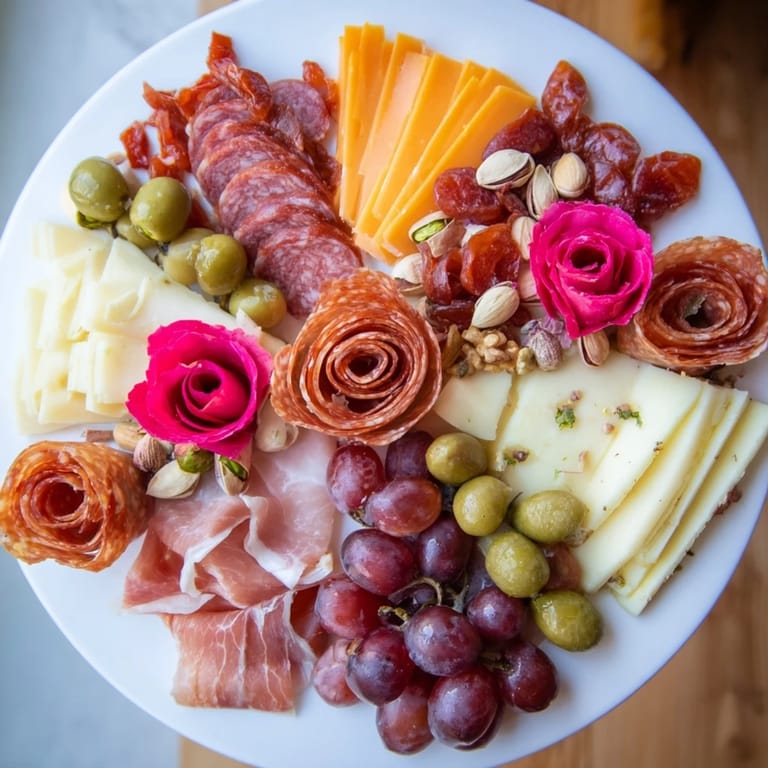
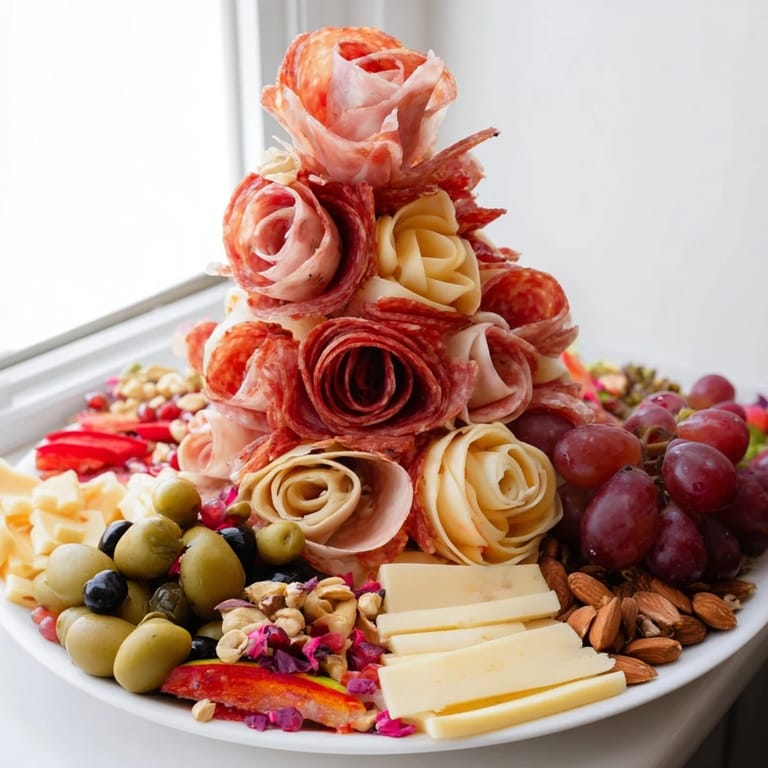
- Take a slice of provolone and lay it flat on your work surface. This is meditation time. Roll it tightly from one corner, then gently fan out the edges with your fingers to mimic rose petals. You're creating something delicate; it should feel precious. Make several of these, and don't worry if the first one looks imperfect—by the third, your hands will understand the motion.
- Create Meat Ribbons:
- Arrange your cured meats with intention, draping them in loose, overlapping waves. Think of them as fabric—prosciutto should be ethereal and barely there, soppressata can be a bit bolder. Fill gaps deliberately, creating depth and movement. This is where the board starts to feel alive.
- Cut and Position Cheeses:
- Cut each cheese variety into varied shapes—wedges, cubes, shards—creating visual interest. Distribute them across the board so no two of the same cheese are touching. Place your sculpted cheese roses as focal points, letting them catch light.
- Nest the Fruits:
- Group fresh fruits in clusters, letting colors pop against the meats and cheeses. Slice your apple and pear right before assembly to keep them pristine. The jewel tones of pomegranate arils and the deep purple of figs create natural resting places for the eye.
- Scatter Nuts, Olives, and Vegetables:
- Arrange these in small piles and bowls, treating them like punctuation marks in a sentence. They shouldn't be randomly scattered—each placement should feel intentional, creating balance and leading the eye on a visual journey.
- Fill the Gaps with Bread:
- Fan out baguette slices and arrange crackers in the remaining spaces like puzzle pieces. Leave some breathing room; a crowded board is beautiful, but an airless one feels chaotic. This is your moment to step back and see the whole composition.
- Crown with Garnishes:
- Scatter fresh rosemary sprigs, position edible flowers like they're growing from the board, sprinkle microgreens for texture, and place radish roses as delicate accents. This is the final flourish that transforms food into art.
- Present with Pride:
- Serve immediately so everything is at its best, or cover and refrigerate until your guests arrive. When you place this on the table, pause for a moment. You've just created something genuinely beautiful.
 Save
Save There was a moment during that winter dinner when everyone had gathered, forks and small plates in hand, and the conversation just naturally slowed. People were genuinely savoring each bite, experimenting with different combinations, and I realized this board had done more than just feed them—it had created a rhythm to the evening that felt special and unhurried.
The Art of Arrangement
Building a charcuterie board is like conducting an orchestra—every ingredient has a voice, and your job is to make sure they all get heard. Think about color first: reds, whites, golds, purples should be distributed evenly so no one corner feels heavy. Then consider texture: next to something creamy, place something crisp; next to something soft, place something crunchy. Balance these opposites and the board becomes more than just food—it becomes an experience where every element makes the others taste better.
Pairing with Wine and Conversation
This board is made for celebration and connection. A bold Syrah plays beautifully with the salty, spiced meats, while a sparkling wine cuts through the richness of the cheeses with elegant acidity. But beyond the wine, understand that this board is a vehicle for lingering. Its abundance invites people to slow down, to try combinations, to discover what they love. The time people spend gathered around it, talking and tasting, is as important as the flavors themselves.
Making It Your Own
While this recipe is designed to impress, it's also deeply personal. The beauty of a charcuterie board is that it reflects the maker's taste and creativity. If you love chocolate, add some dark chocolate shards. If you're drawn to spice, include some hot pepper jelly. If candied nuts make your heart sing, scatter them across the board. The rules are simple: balance flavors, play with textures, and arrange with intention. Everything else is your signature.
- Try adding candied nuts or smoked cheeses for extra complexity and visual interest.
- Don't forget that the board itself is part of the presentation—a beautiful wooden or marble surface sets the tone for the entire experience.
- Remember that you can prepare most elements hours ahead; just assemble the delicate pieces and garnishes in the final 30 minutes for maximum impact.
 Save
Save This board isn't just about the ingredients; it's about the moment you create when you place it on the table and watch people's faces light up. That's the real recipe here.
Recipe FAQ
- → How do you create cheese roses for the board?
Use pliable cheeses like provolone, slicing thinly and rolling into tight spirals. Fan out edges to mimic petals to sculpt delicate rose shapes.
- → What meats work best for intricate folding?
Thinly sliced cured meats such as prosciutto, soppressata, and capicola fold easily and provide rich flavor and striking texture.
- → How can I keep the board fresh before serving?
Cover the assembled board tightly with plastic wrap and refrigerate until ready to serve, ideally within a few hours for freshness.
- → Which garnishes add the most visual impact?
Fresh herbs like rosemary and thyme, edible flowers, microgreens, and radish roses elevate the board with vibrant color and texture.
- → What pairings enhance the tasting experience?
Bold reds like Syrah or sparkling wines complement the rich meats and creamy cheeses, balancing flavors beautifully.